Another eclipse vacation.
And a successful one. Good viewing position, no cloud obscuring the sun. Everything went well.
I'm starting with that, because every trip to see an eclipse essentially depends on a few minutes. (In this case, about 1 minute and 34 seconds). Regardless of the rest of the trip, if you fail to properly see the eclipse, the whole thing is going to be a bummer. A trip where you might say afterwards "yeah, that was kind of nice, more or less", but you will always remember it as a trip that failed.
So I wanted to get this out of the way and not try to build any suspense on the main question. (Did I manage to see the eclipse?)
Things were fine.
I usually don't write much about hotels. Unless it's a really unusual one, like an Ice Hotel or a Trojan Horse (which are the ones I do mention), they're all pretty much the same. And I don't care much whether these have designer faucets in the bathroom or whether the paint peels from the ceiling. Essentially, they're little more than somewhere to sleep during travels and I don't find it exciting whether there are two pillows on the bed or a dozen.
But this time, there were some hotels that I found noteworthy, even though they weren't that unusual or extreme.
The first one was an 'adults only' hotel.
I stayed in an 'adults only' hotel in Greece in 2018. That, essentially, means that it was a somewhat upscale designer hotel and some of the features (like the terraced swimming pool, the steep stairs to the beach or the water 'moat' around the dining area) weren't kid-safe.
Also, presumably, they were catering to tourists that wanted a nice and quiet vacation without noisy kids running around.
This time, the 'adults only' had one of the other two meanings.
And I wasn't entirely sure which one.
Either it was the Spanish equivalent of a Japanese 'love hotel', which means it is a place where local couples go to have some fun night away from the family. Or it was an euphemism for a brothel.
I assumed (as it turned out, correctly) that it was the first one. It was bookable through a regular hotel booking site and the rooms looked nice. And the rates were per night, not per hour. (Though when I checked in, it turned out that they did have reduced prices for four hour stays.)
I did book one of the normal rooms, not one of the suites. (They all have a specific theme, like Egyptian, Roman, Aztec, Medieval or US Diner style. They are all like regular hotel rooms, but with different wall decorations. Again, nothing overly sexual - no BDSM torture racks in the Medieval Suite or anything like that. You could put any of the rooms into a theme hotel at Disneyland and nobody would really notice.)
As far as I could tell, everything was aimed at local couples - there weren't any other 'services' offered and it also didn't look like this was an area where street-walkers were active.
Which also meant that the rooms were nice. If you are a couple and want to go somewhere, you want to enjoy it. And not go to some shitty place. Otherwise, you might as well stay in the back of the car or find a secluded area in a park. Or whatever.
I liked the place.
The lower level of the room was actually a garage. (The obvious reason is that you don't want to have outside parking where a local might recognize his neighbour's car. Or, in a bad soap opera plot, his wife's car.) You drive right in and close the garage door behind you.
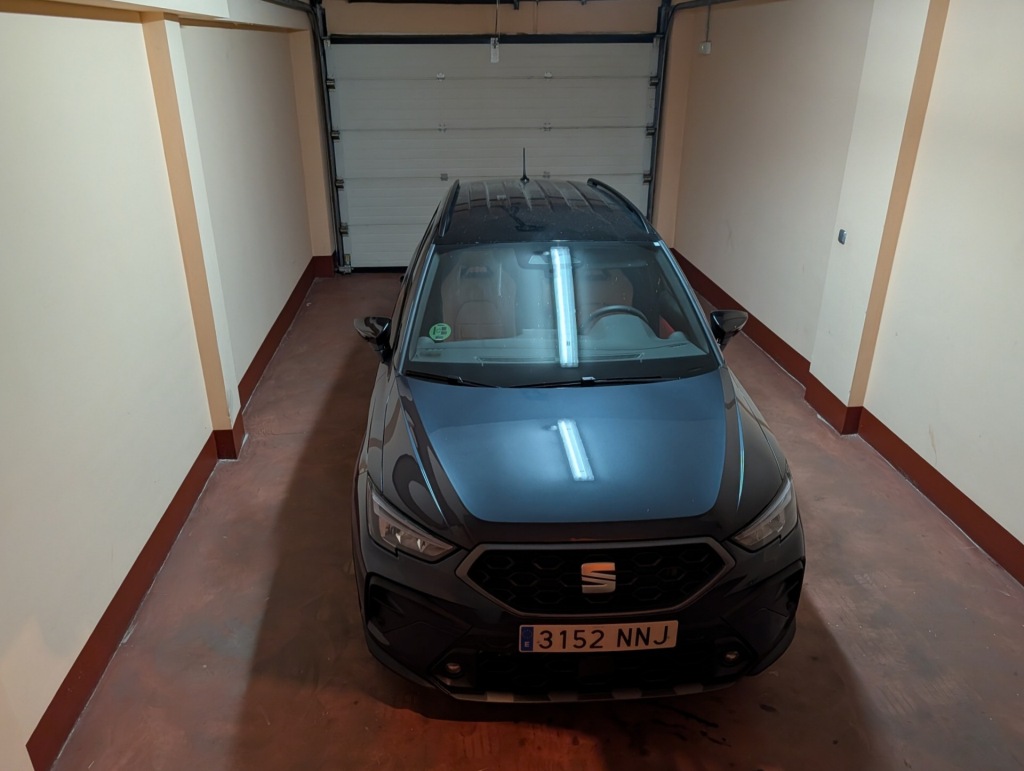
When you go up the stairs, you go into a little 'neutral zone', which has a locked door to the staff corridor. The idea is that you can order, for example, breakfast (the place has a full dinner and breakfast menu) and someone will put it into that area and leave again, so you can pick it up without encountering anyone.
The room itself has two 'levels', one with a small table, two seats and a couch. And then the upper one with the bedroom; both separated by a shelf with some (in my room) Buddha statues lit by colour LEDs. And some UV light.
Having a breakfast table is needed as there's (quite obviously) no common breakfast room (or restaurant) in the hotel. It would be a bit pointless to go through all the trouble of staying mostly unseen. And then meet the neighbours at breakfast.
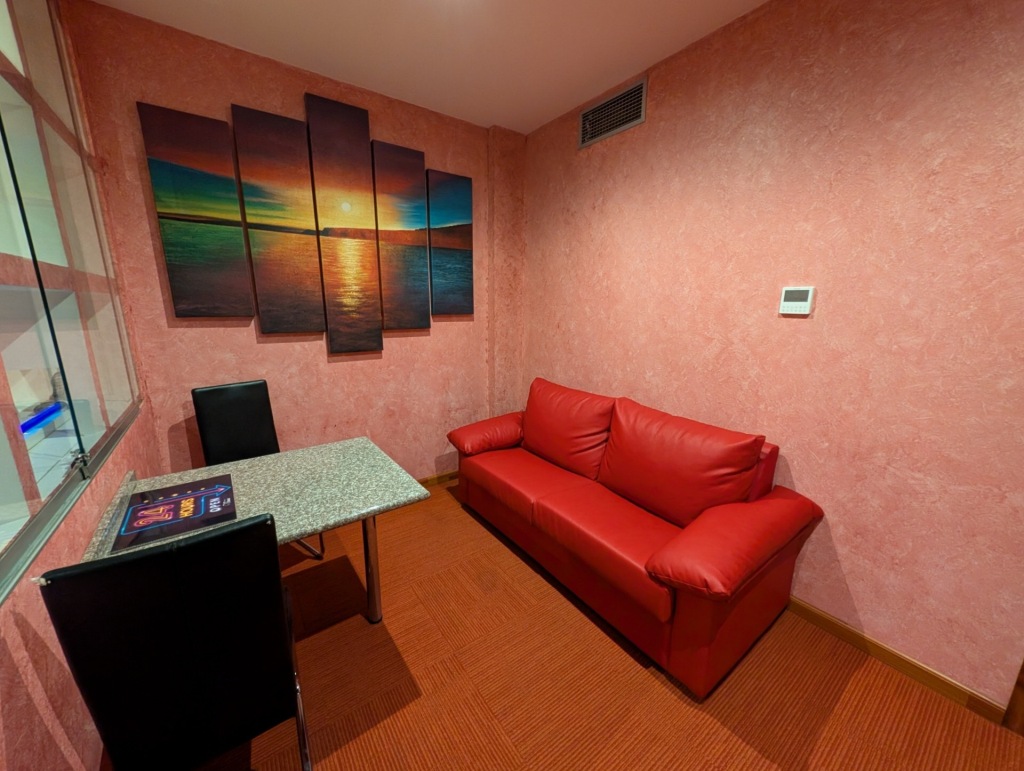
The upper level has a large double bed. (Obviously. Having separate beds would kind of defeat the purpose of the place.) And then there's a large whirlpool behind, separated by some cute cloud-shaped glass wall. (The toilet itself is behind that and separated by a proper wooden door. Usually not worth mentioning, but I've been in a number of regular hotels that had glass walls between the main room and the sanitation area (though usually some way to draw curtains or make the glass look 'frosted' by the flip of a switch). I found it interesting to see that in this place, there is some modesty preserved. At least for the toilet part. There's no way to curtain off the shower / whirlpool.)
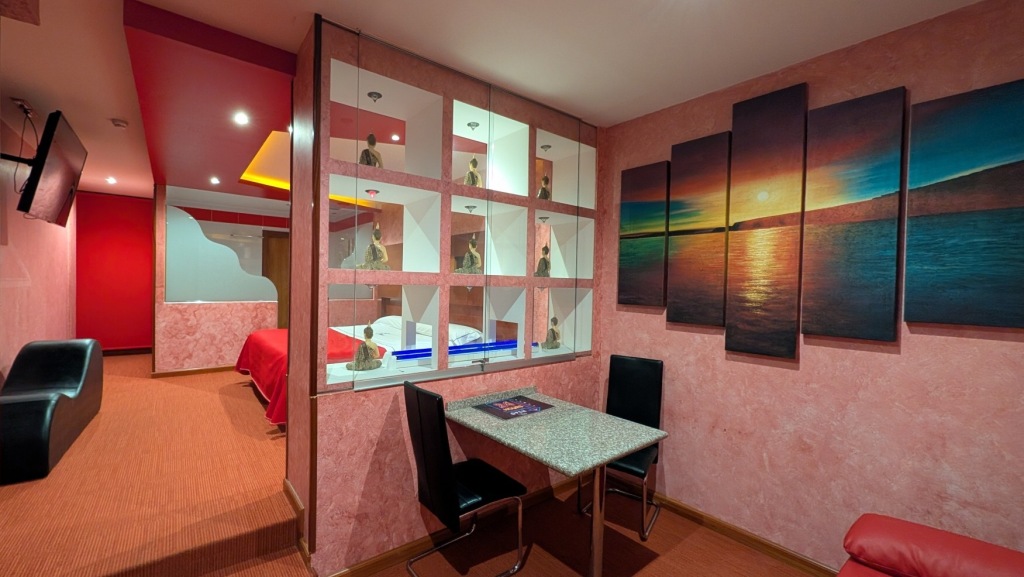
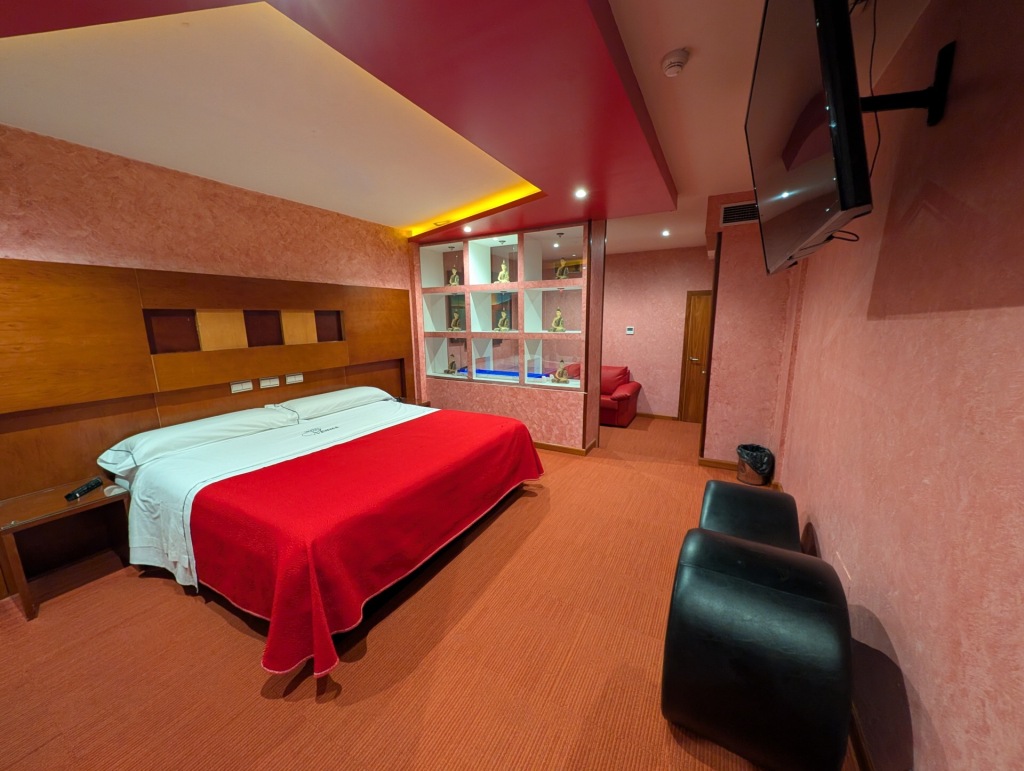
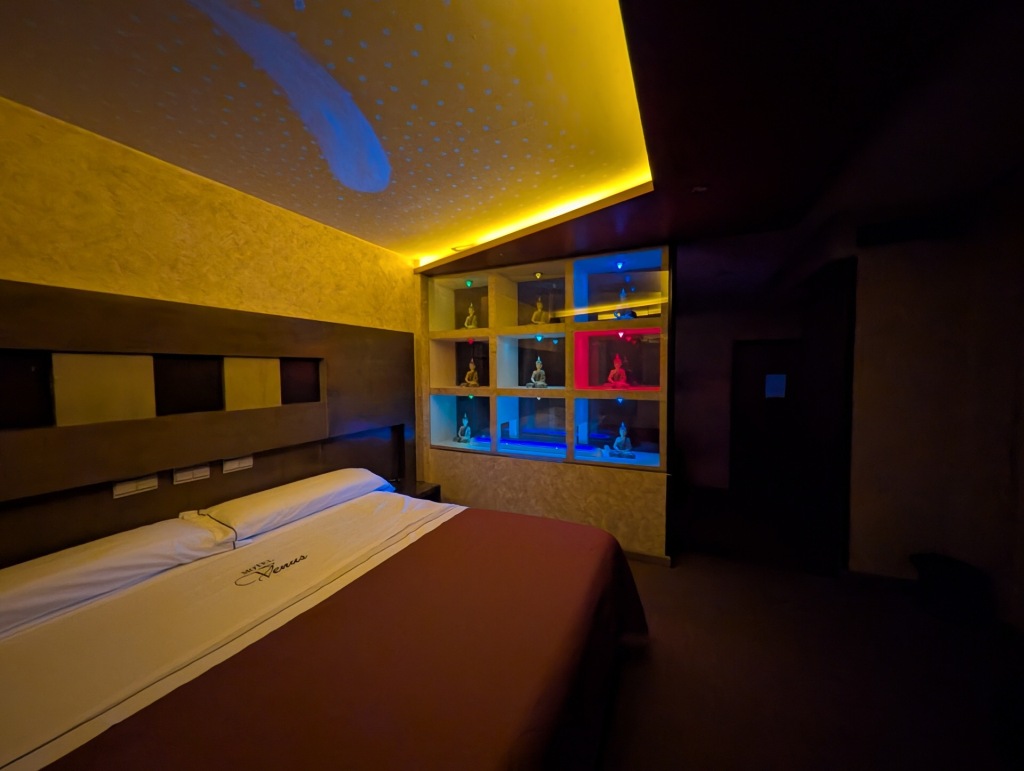
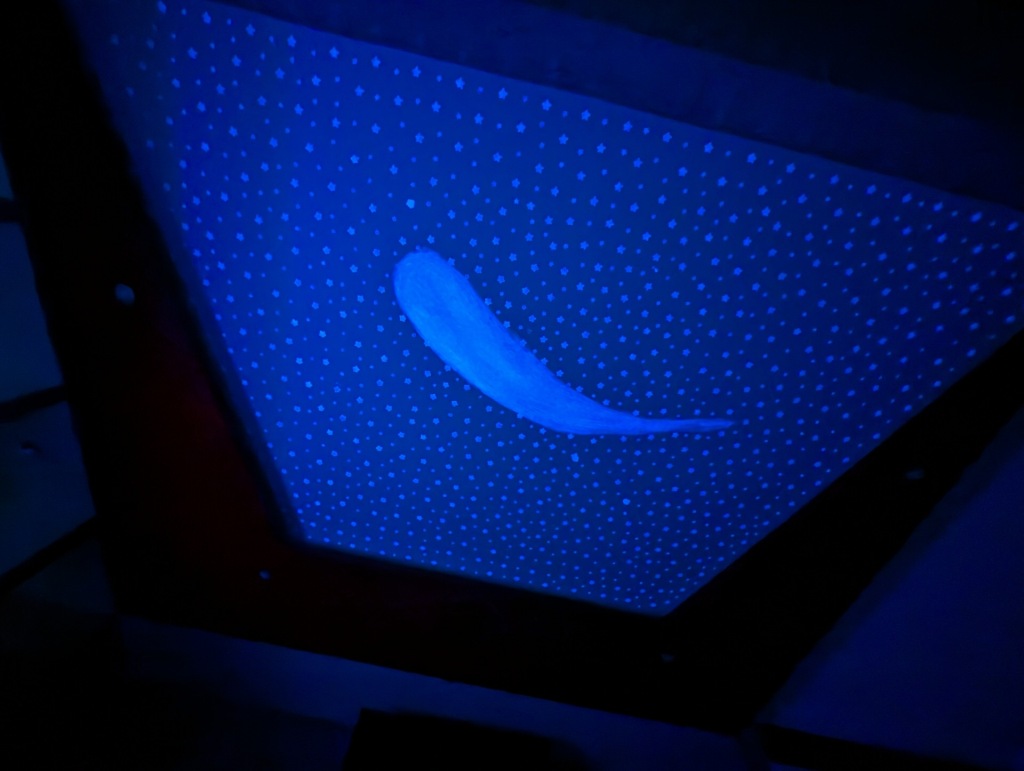
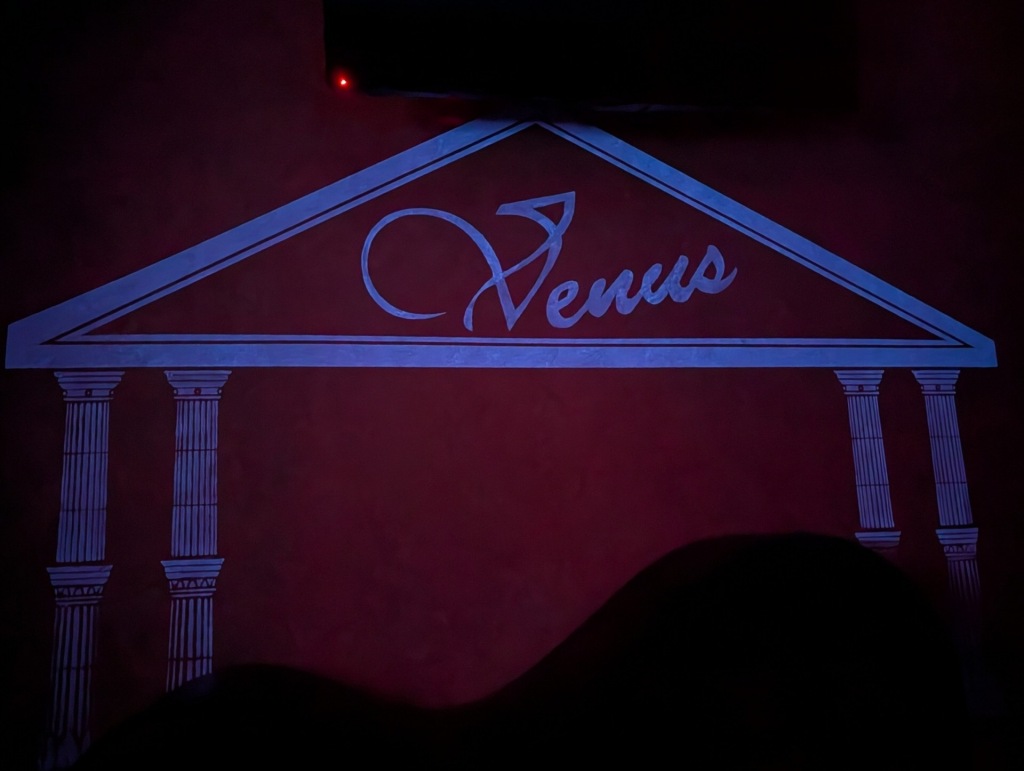
It feels somewhat odd to be in this kind of hotel (maybe even more so as a single traveller), but it was nicer than most regular hotel rooms. I like having a whirlpool. And there was a nice 'effect' when turning off the regular lights, as someone had painted a 'starry sky' on the ceiling (and some Venus temple on the wall), which could only be seen when the UV light was on.
The only thing that looked at least slightly kinky was that black leather chaise longue (which they call a "Tantric Erotic Sofa") on one side of the room.
All in all, a nice and unusual hotel room, which was more interesting than the cookie-cutter hotel rooms of most other hotels.
From Venus, goddess of love, the next deity to turn to was Bacchus, the god of wine.
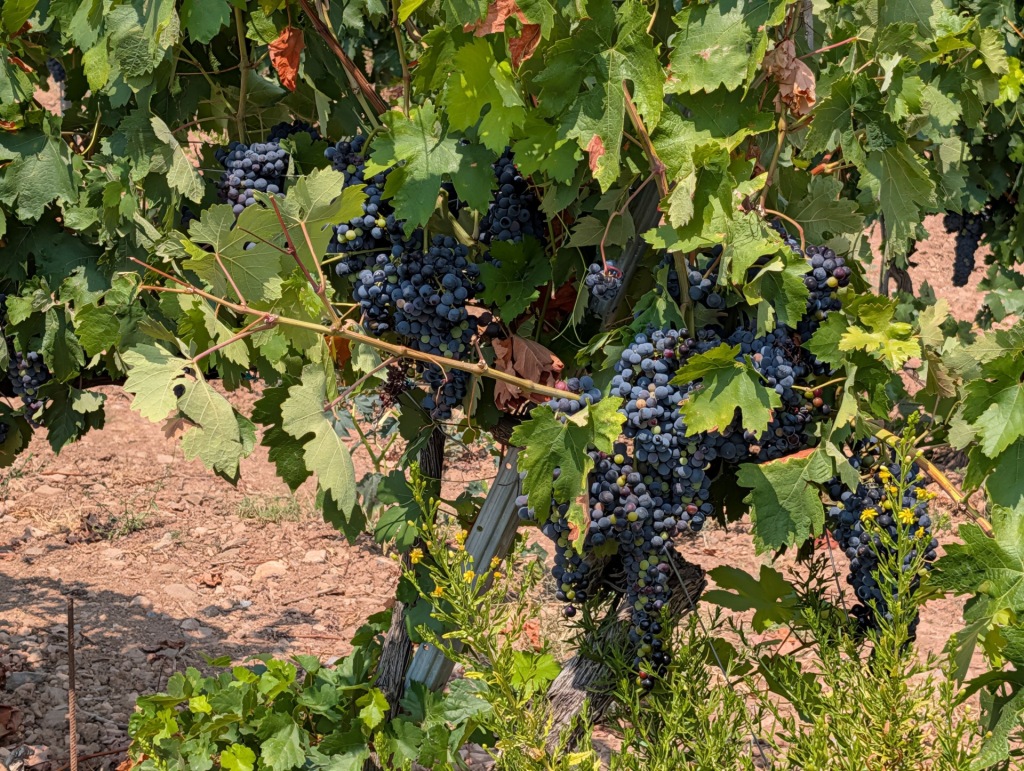
And that was doing business on a large scale.
I went to Logroño and noticed that they had tours of a winery, with a wine tasting included. Sounded fun.
I had expected some large wine cellar, maybe a wall or two with stacked barrels.
I hadn't realized that the place I went to is, essentially, the center of Rioja wine. I knew that the winery was in the Rioja region and that it, presumably, produced some Rioja wines. But what I hadn't known was that it handled nearly all of it. Except for some areas at the outer edges of the region (and some independent 'boutique' wineries), everyone sends their grapes there for processing.
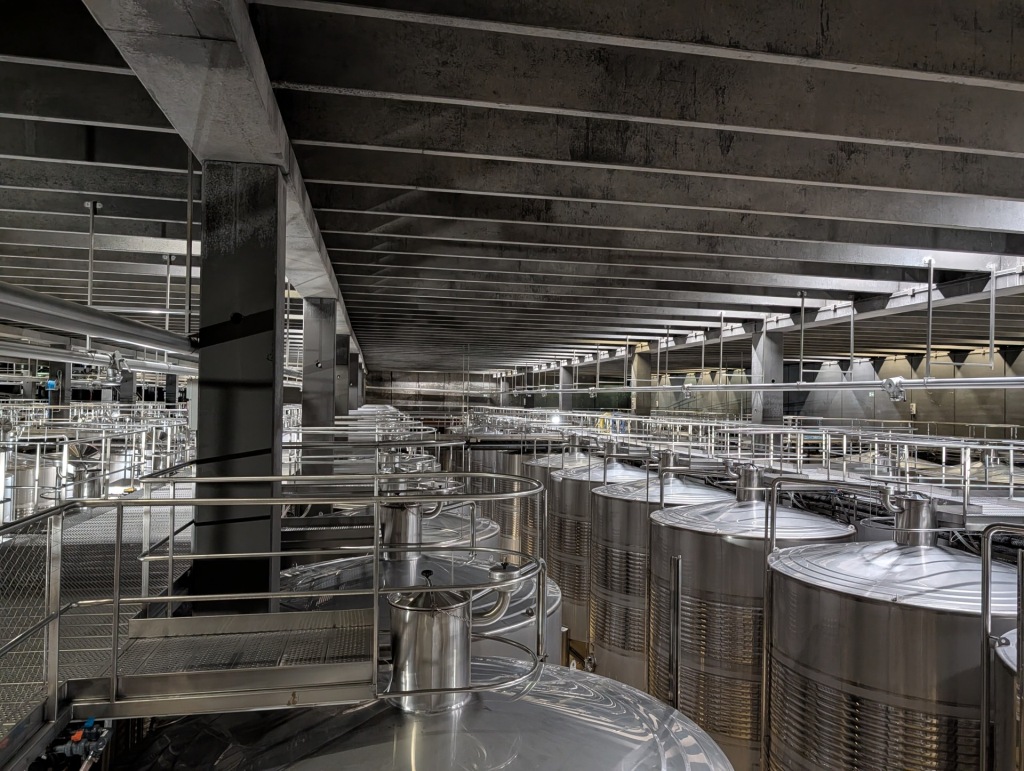
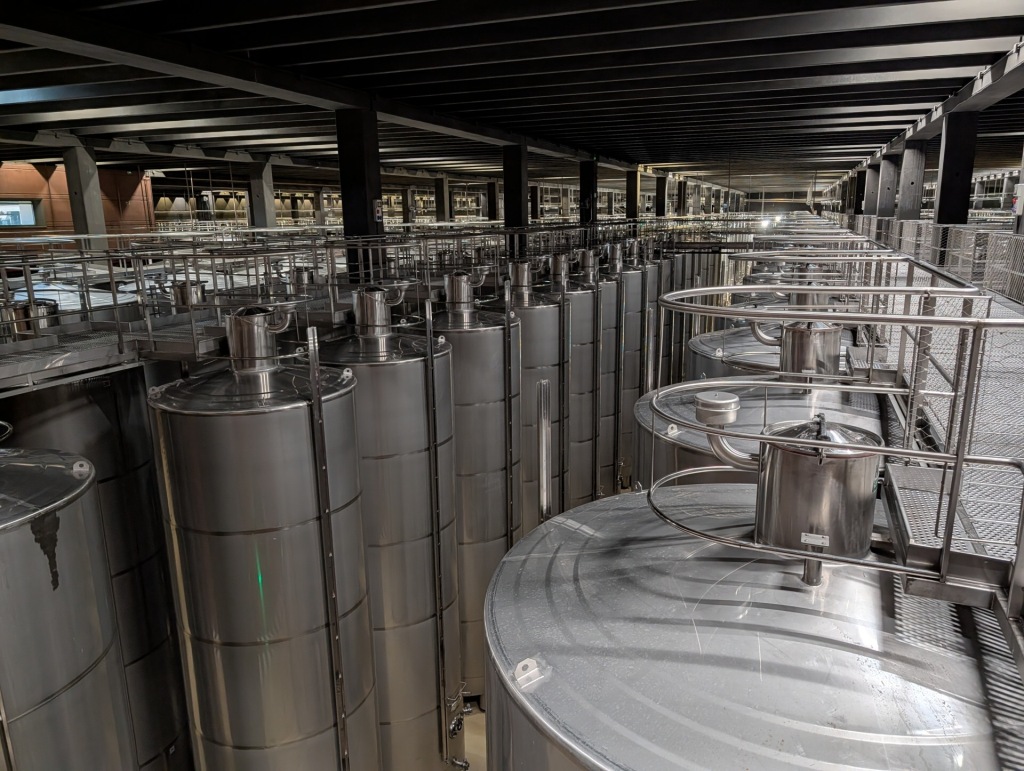
As a result, there aren't only a dozen fermentation silos - it's more like an entire oil refinery's worth of wine silos.
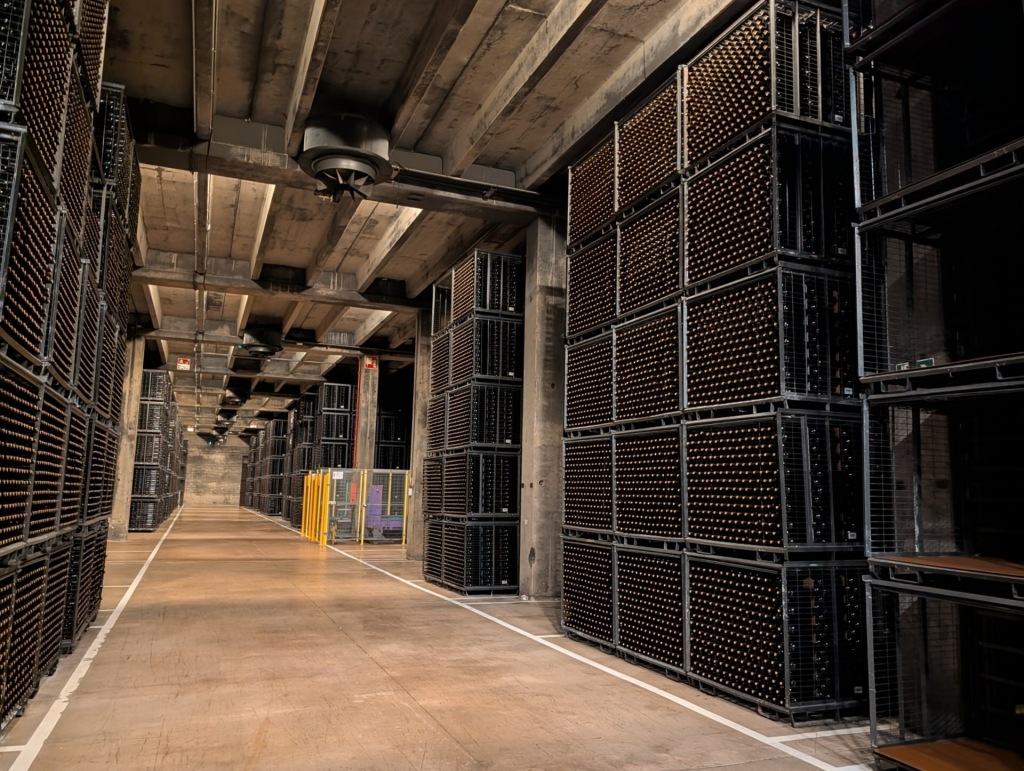
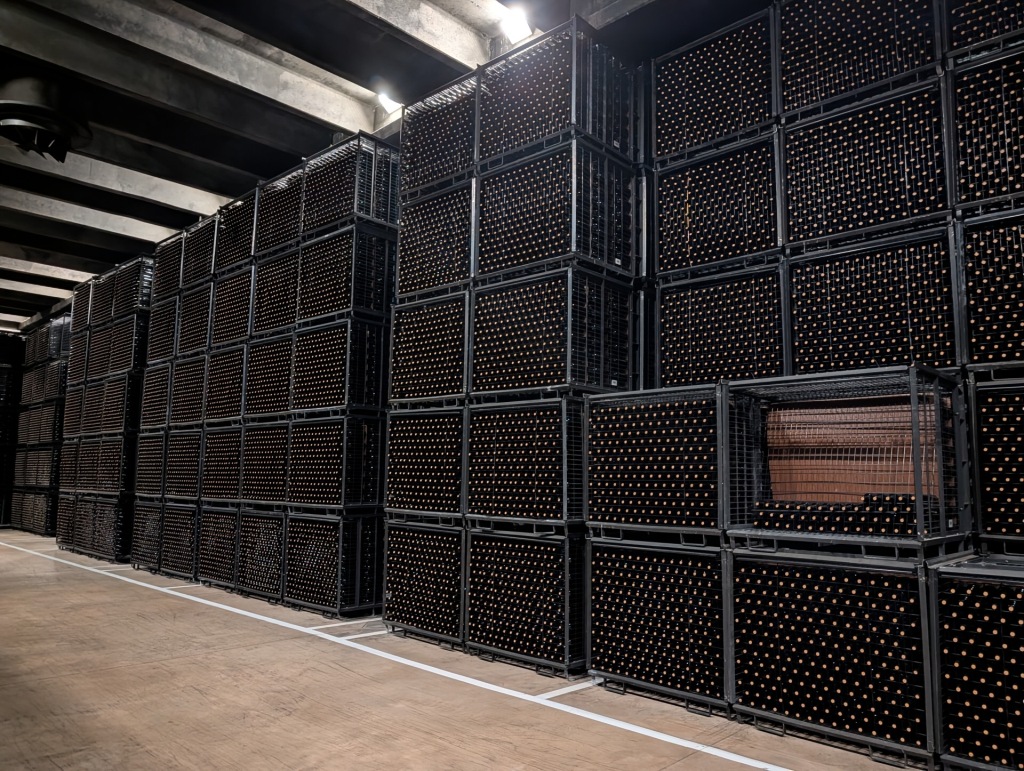
And the bottle cellar looks more like an Amazon distribution center with high rack shelves vanishing into the distance. (And that's not simply one corridor of shelves - the place is almost square, so the corridors branch off for about the same distance to the sides. All in all there are about six million bottles in there.)
Of course, between fermentation and bottling, the wine has to 'ripen' in barrels for some time (between weeks and years, depending on the type). The wine barrel cellar is also enormous. (With something like 70000 barrels with 225 litres of wine each.)
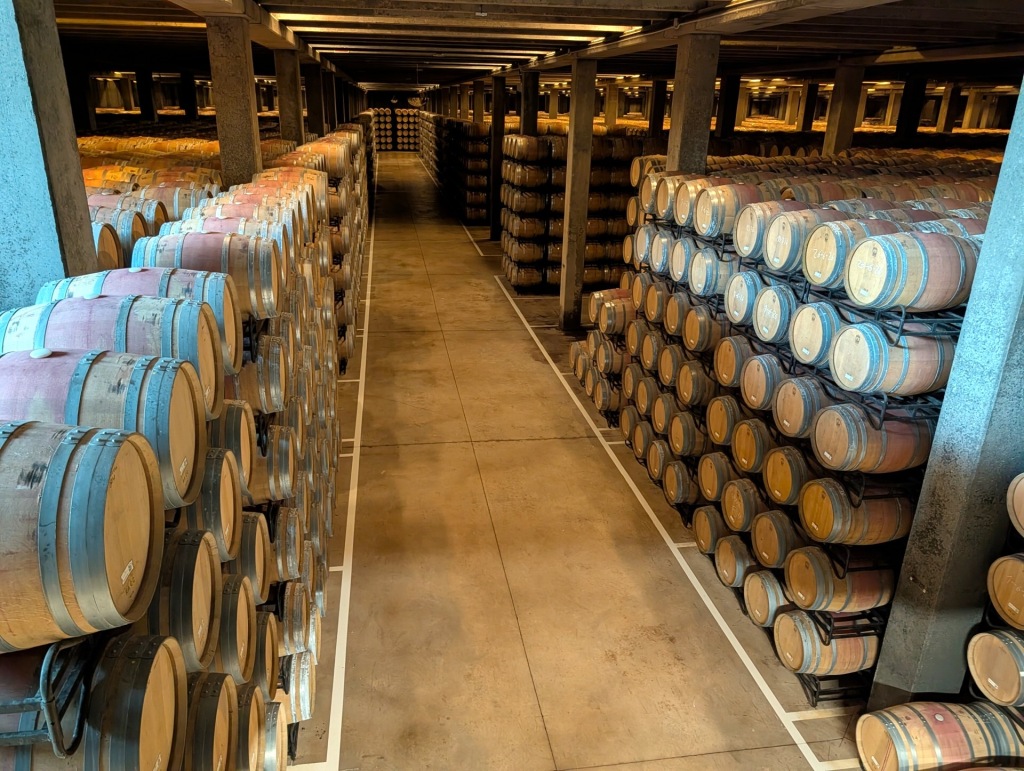
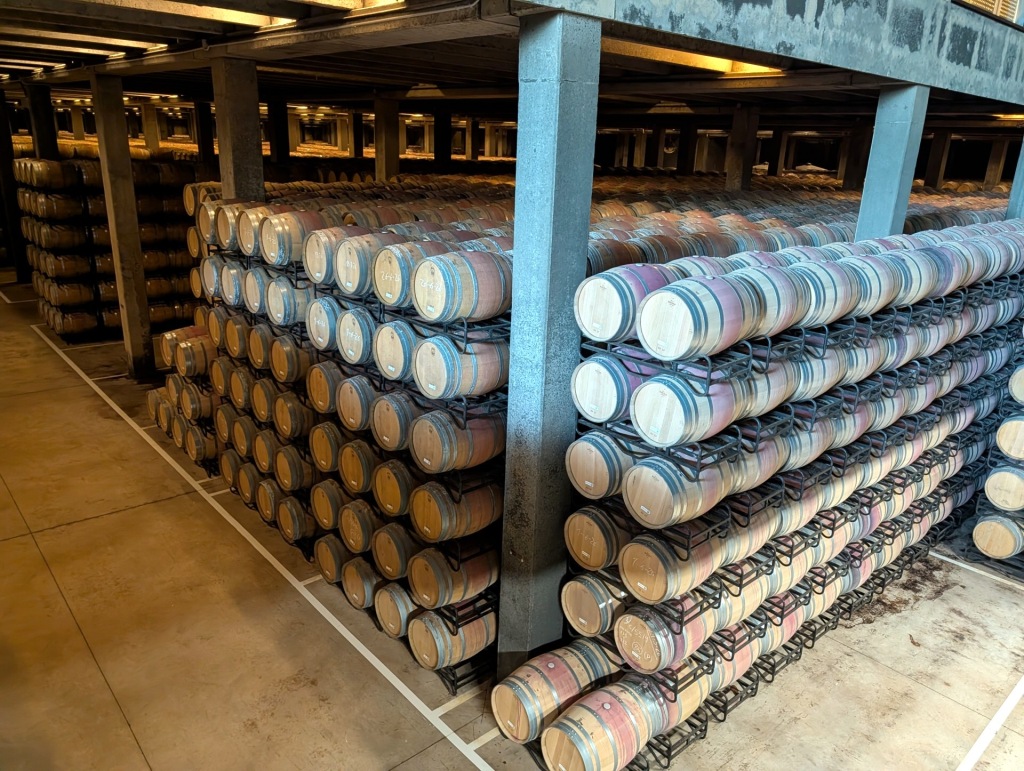
(A nice side effect of all of this being below ground (although it feels more like being in some secret underground industrial facility than a mere 'wine cellar') is that the temperature is pleasantly cool, which is great after you have been walking around in the 40° midday sun.)
The one thing I, unfortunately, hadn't been paying sufficient attention to was the legal alcohol limit for driving.
My hotel was another 30 km away from the vineyard, so I needed to be able to drive there safely and, preferably, legally.
I knew that there was a wine tasting at the end, but I had assumed that that would mean small tasting amounts. Maybe the equivalent of a shot glass of each type of wine. Possibly 20 ml of each wine, which would be 100 ml for the five wines included in the wine tasting. Amounting to a regular small glass of wine in total.
Seemed ok to me.
Then, while we were still in the barrel storage room, we had an 'oak barrel' comparison tasting. They had two otherwise identical wines (same blend of grapes, same vineyard, same vintage, same aging). One was in a barrel made from French oak, the other made from Californian oak. Everyone in the vistor group got two regular wine glasses filled with wine for this. I only had a small sip of each, but it was really annoying to have two glasses of wine (one of them quite good, the other a bit too intense) and not drink them.
And for the actual wine tasting, each person got five different wines in regular wine glasses (plus some chocolate to accompany each wine). Again, proper glasses with a decent amount of wine in it. But if I had finished all of them, that would have probably amounted to the equivalent of a bottle of wine. Which is a bit too much for driving. (As we're not in 1980s France anymore...) I rather regretfully only had small sips of mostly very good wines. (Though at least other people at the table seized the opportunity. ("Aren't you going to finish these?") So nothing went to waste...)
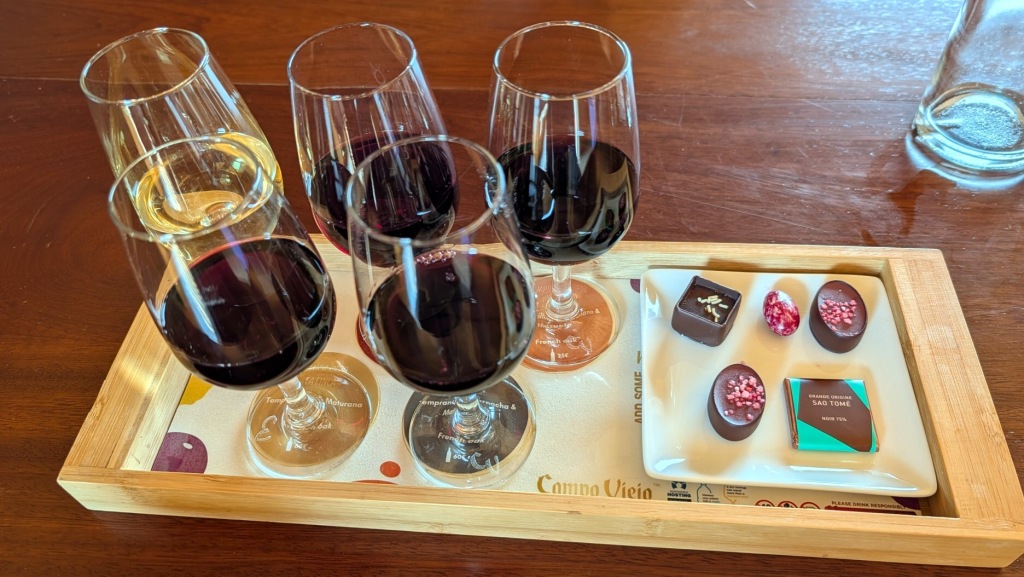
In any case - the next time I visit a winery or attend a wine tasting, I'll make sure that my hotel will be in walking range. (Or at least a place to take a taxi to.)
One thing I did learn during the wine tasting was that Rioja white wines exist. I always assumed that Rioja would automatically imply red wines (and as I drink red wines more often than white wines, I don't know much about the latter in any case), so the glass of white wine took me by surprise.
The next hotel was also a bit unusual.
It advertises itself as an 'art hotel', but a better term might be 'eccentric'.
As with many art-related things, it's hard to quantify this. But with an 'art hotel' I would expect more structured themes and a more 'planned' feel. This one had more of an "I found another odd thing. Let's stick that over there!" feel to it.
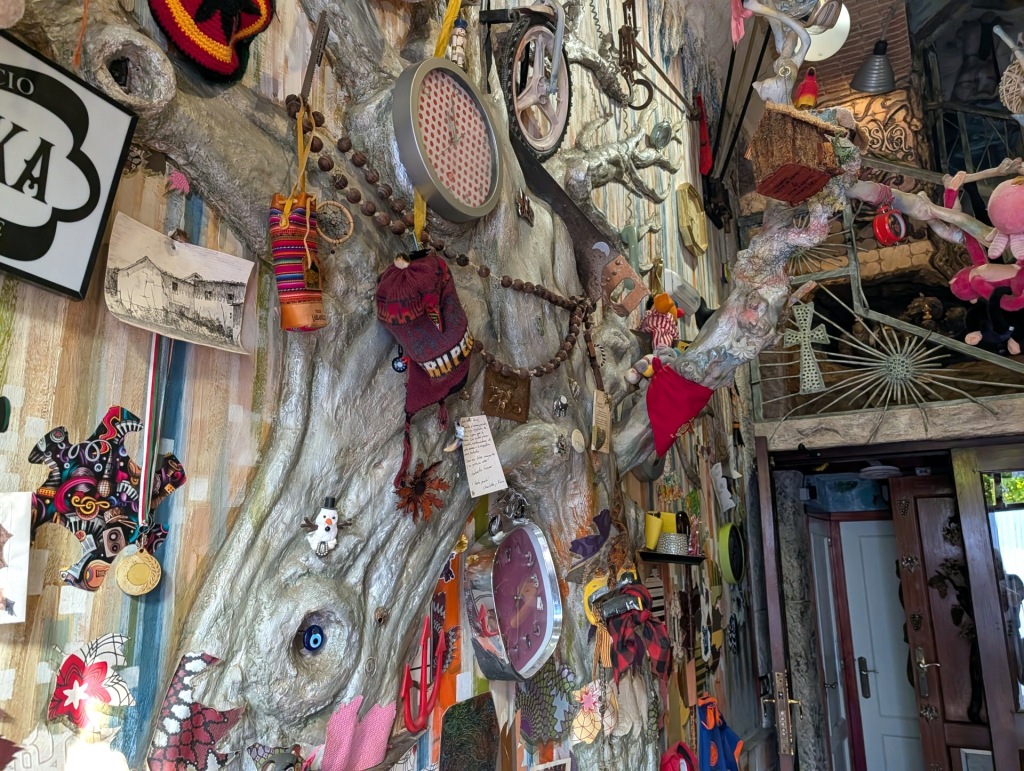
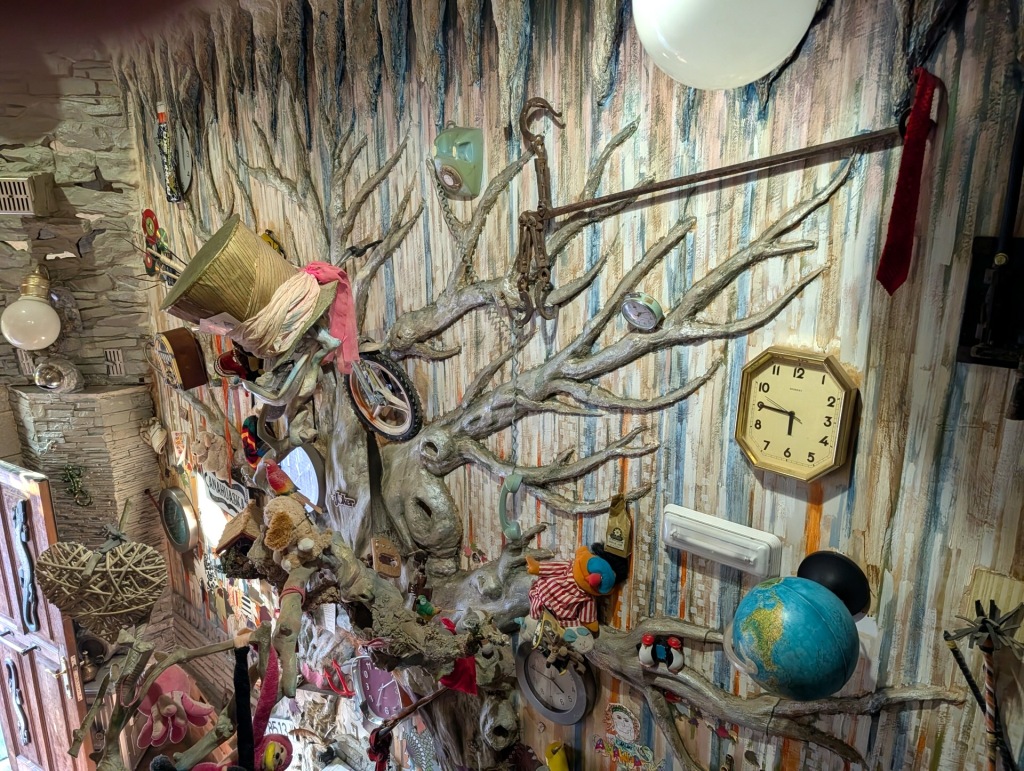
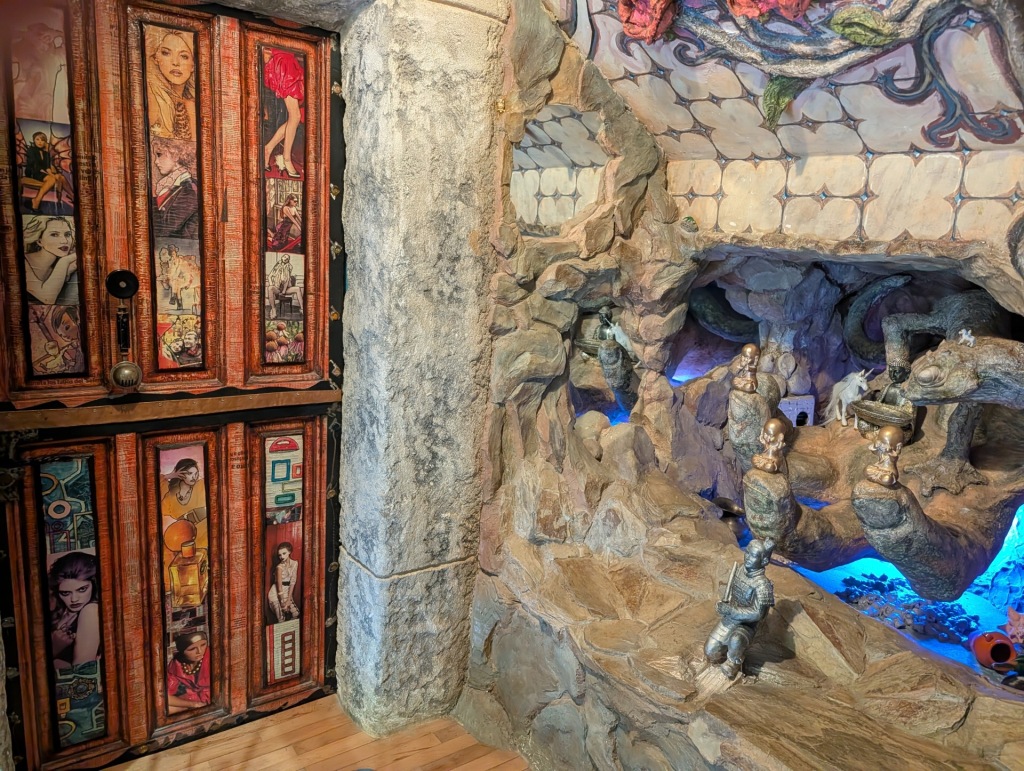
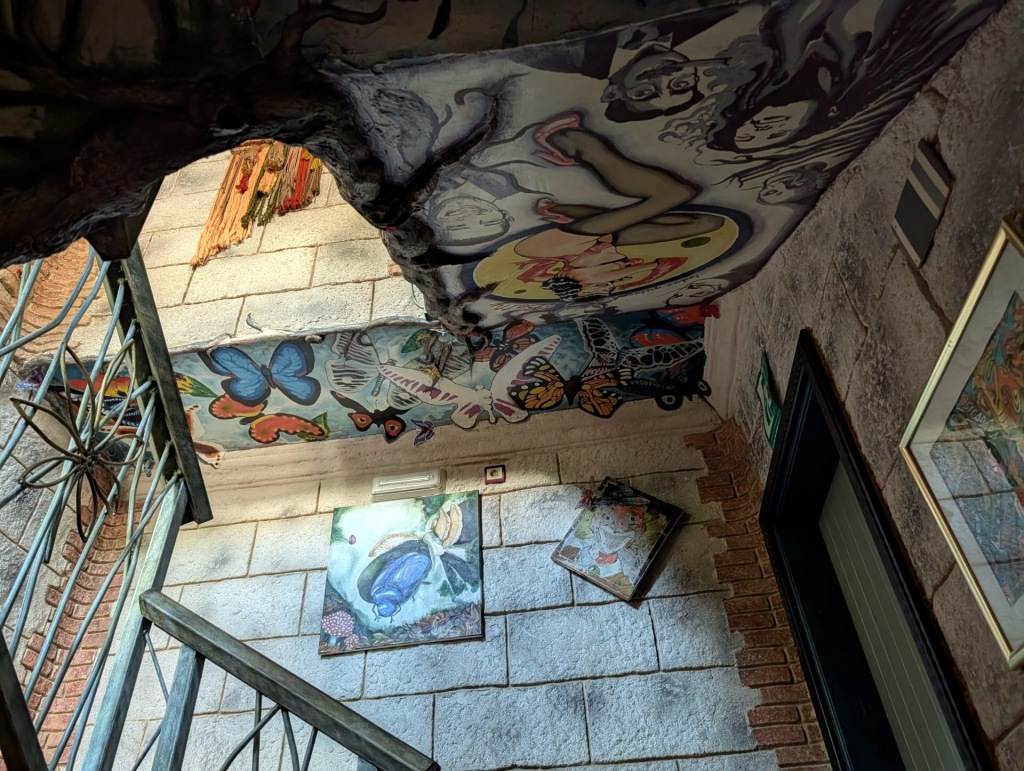
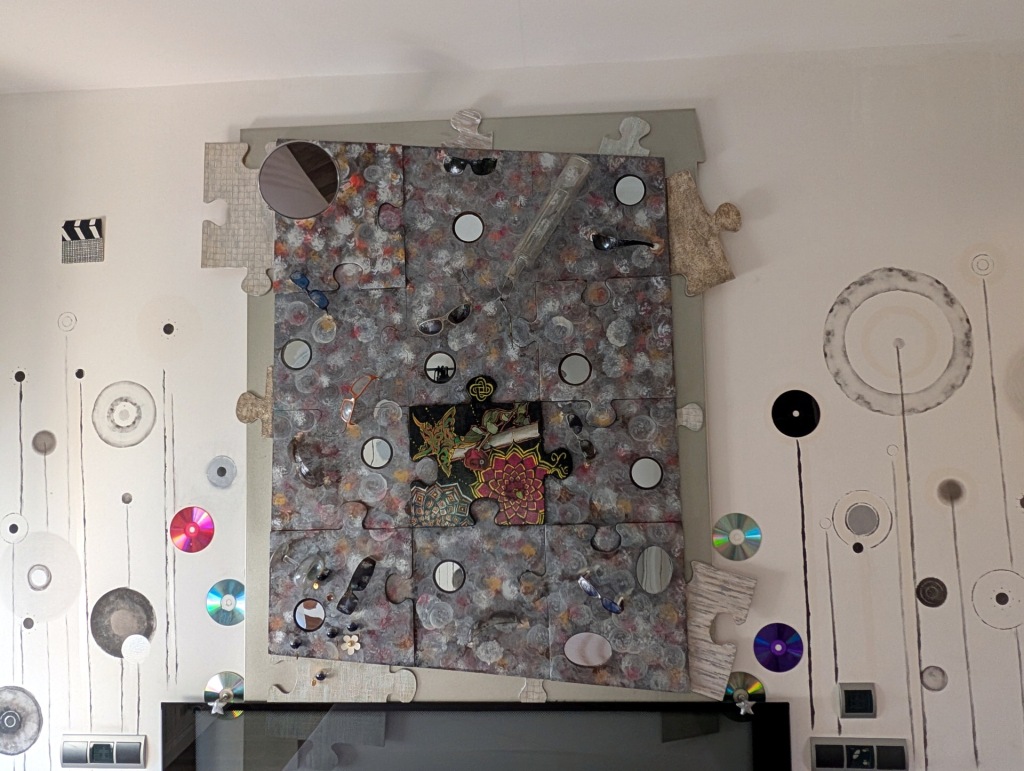
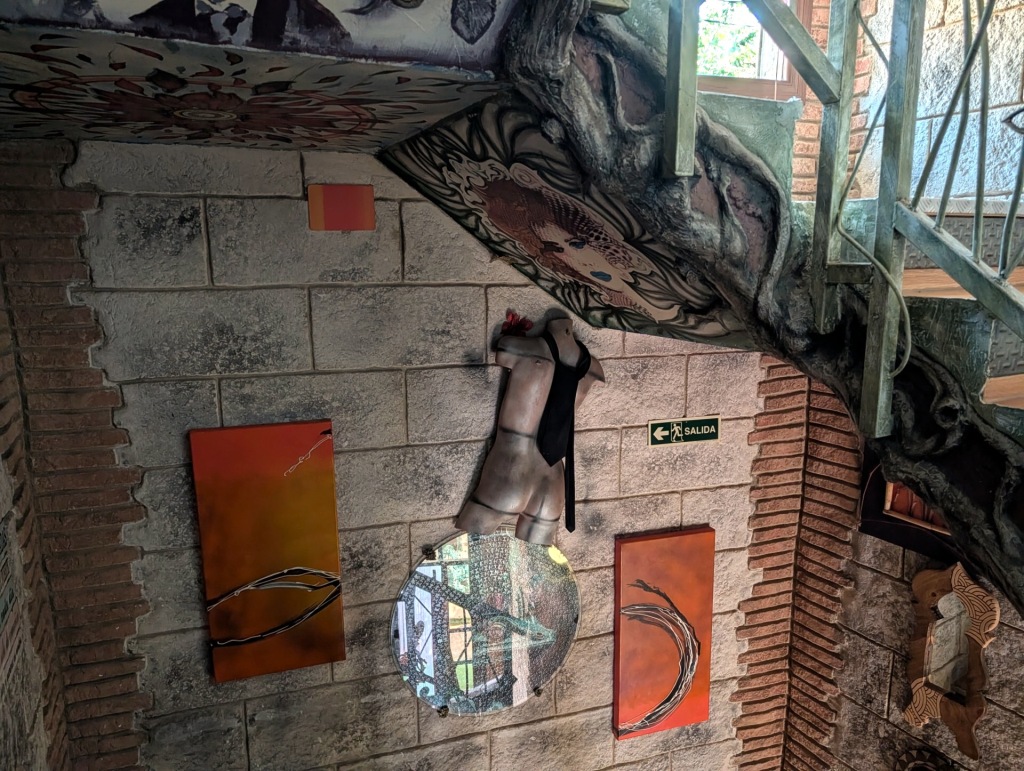
Fun, though.
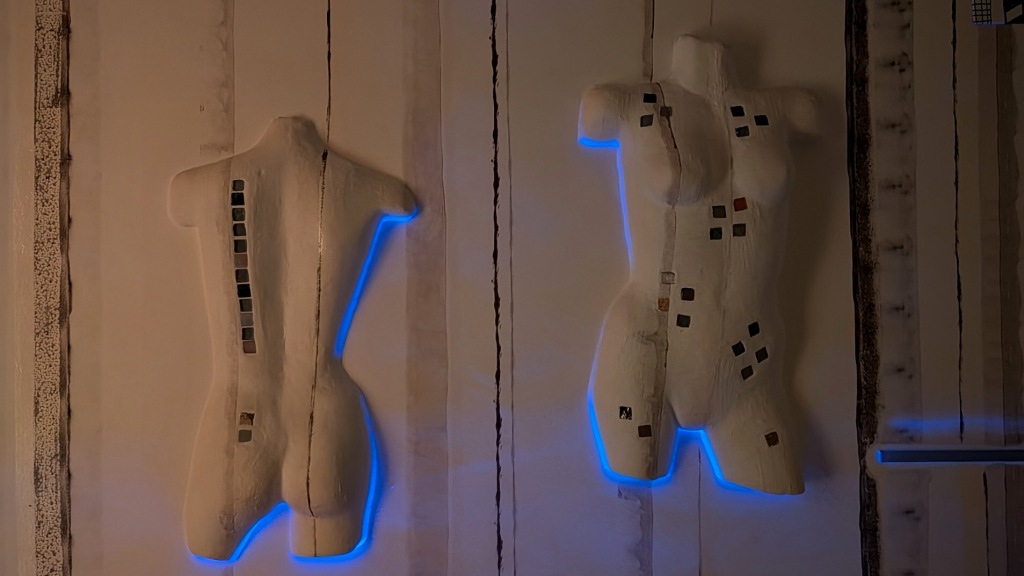
With the illuminated torsos over the bed and the whirlpool with Bluetooth speakers, a rotating disco light, and mirrors on the ceiling it looked kinkier than the 'love hotel' the night before.
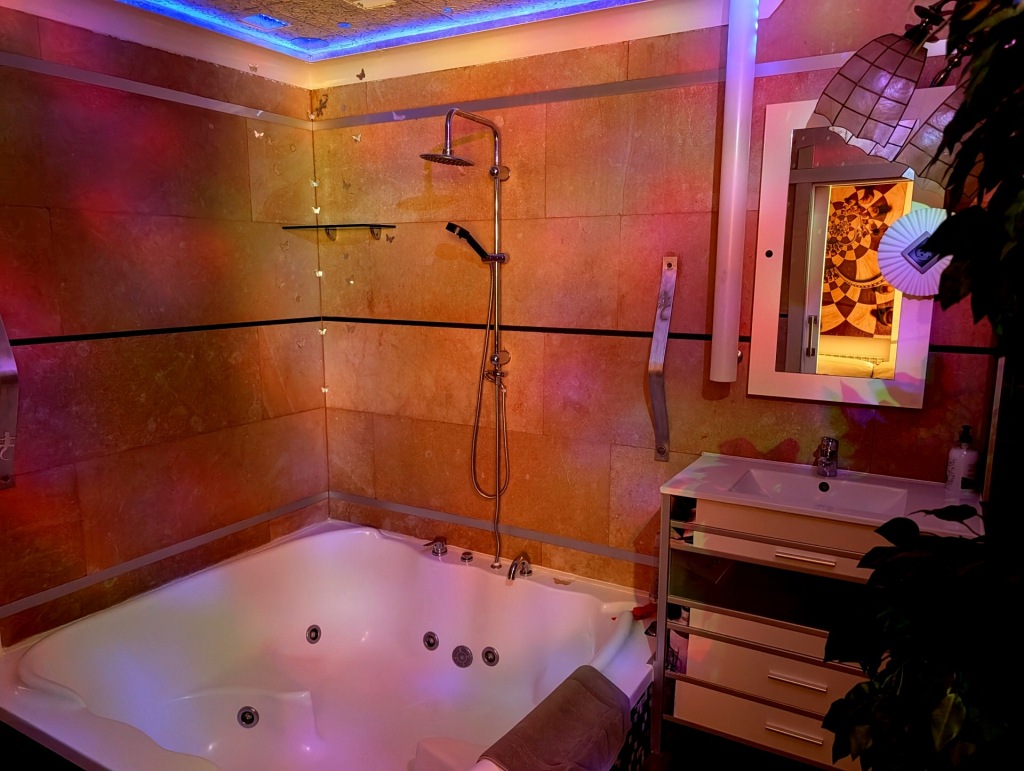
A neat feature which I haven't seen before, and more hotels should have, was a backlit image as a nightlight.
If you want to find your way to the toilet in the middle of the night, it's nice to be able to turn on a diffuse, soft light, instead of turning on the full room light or some spotlights on the side of the bed.
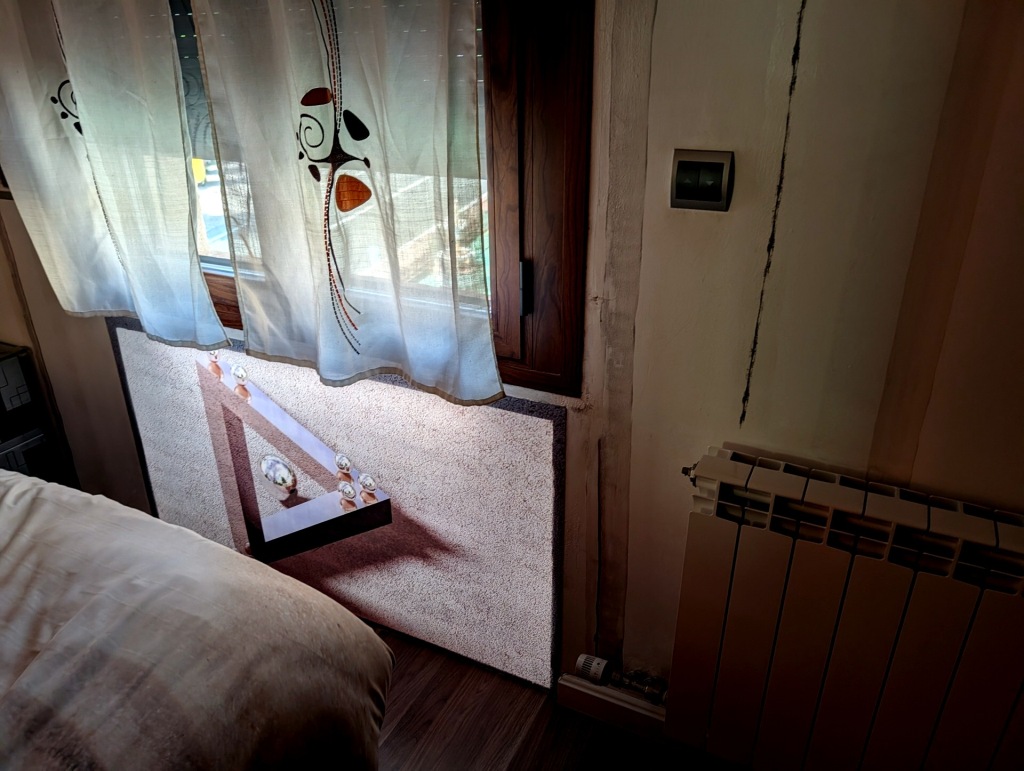
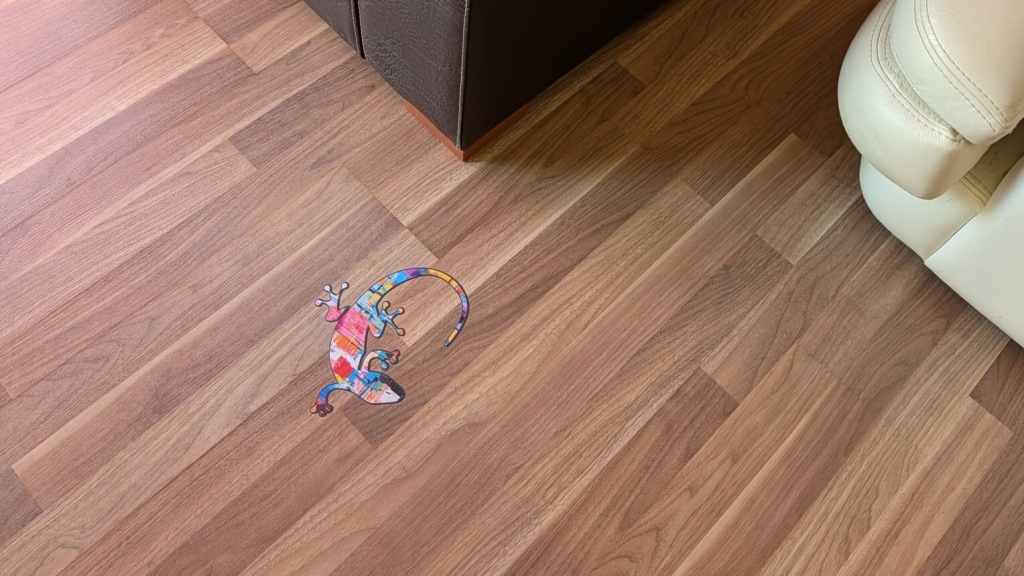
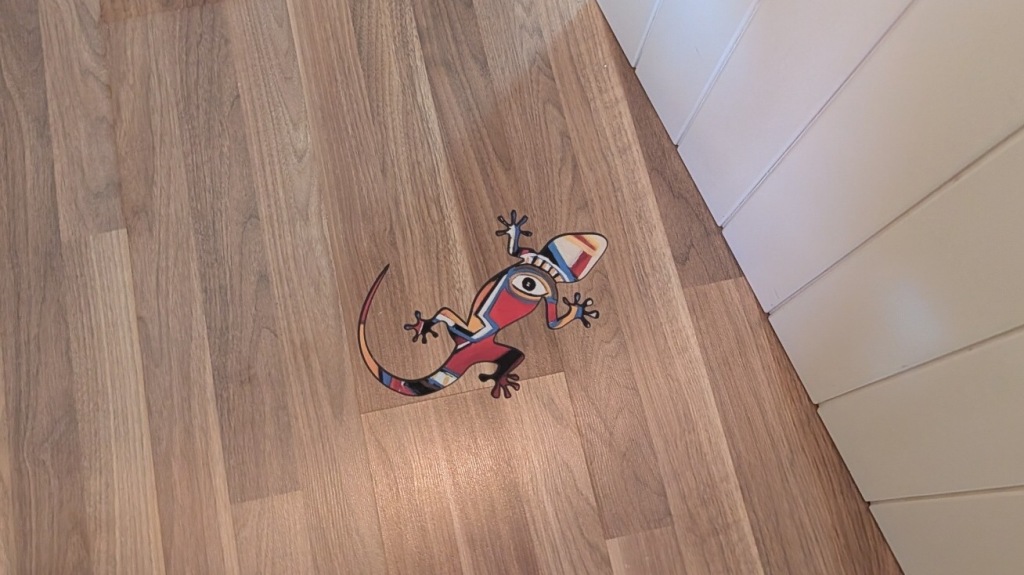
The place is a bit obsessed with salamanders, though.
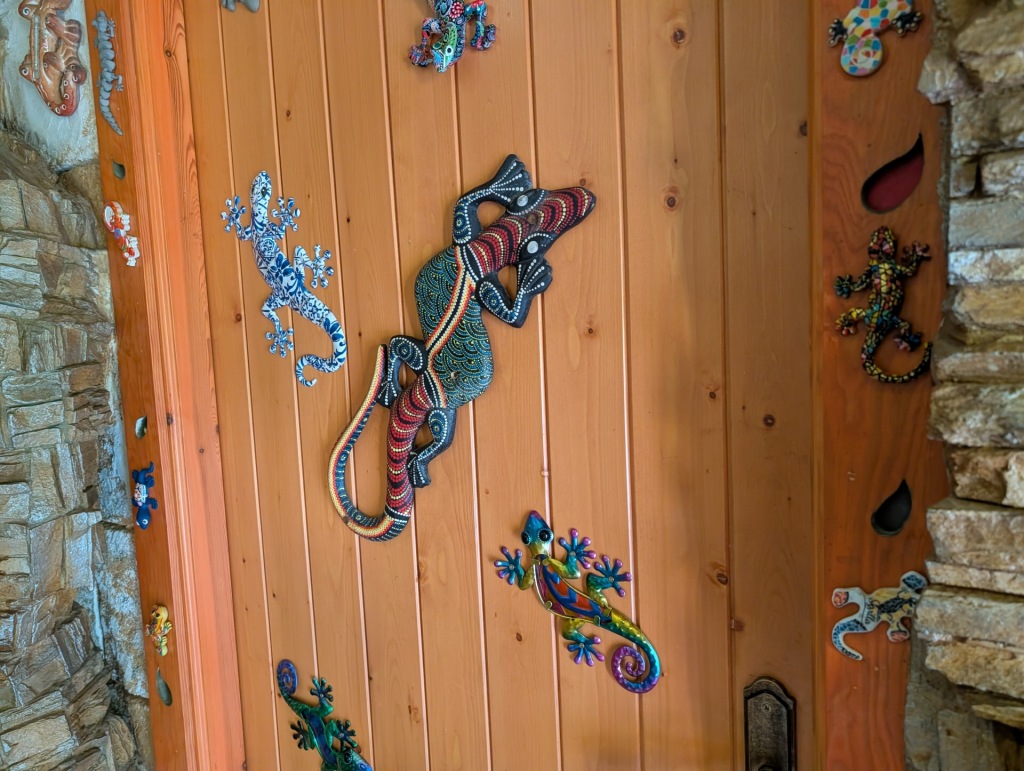
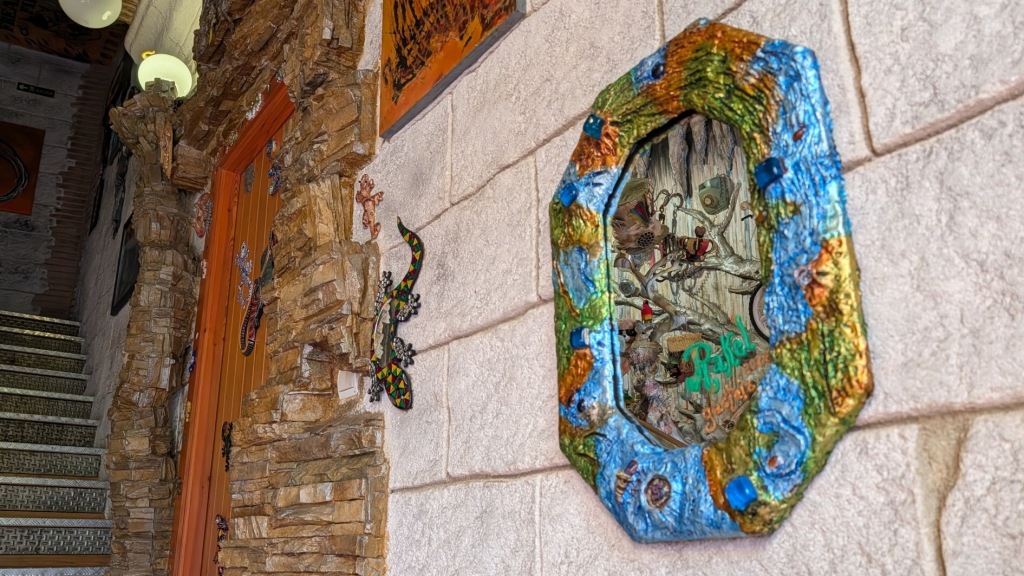
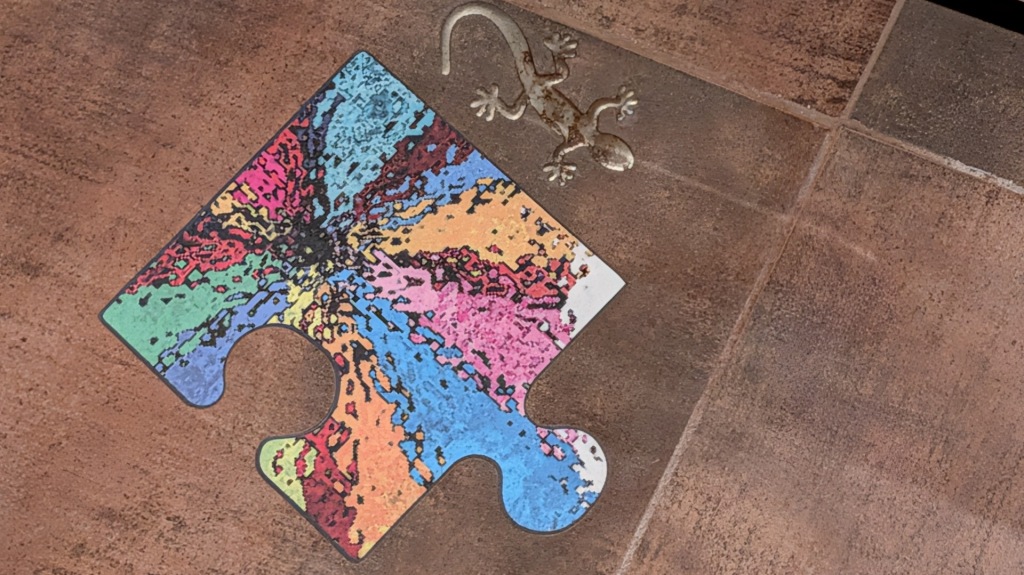
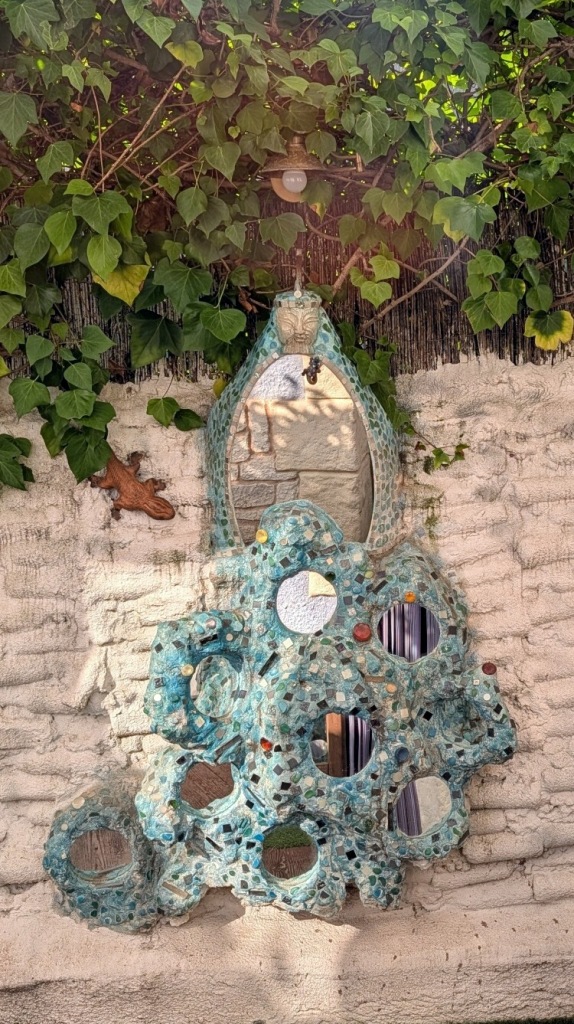
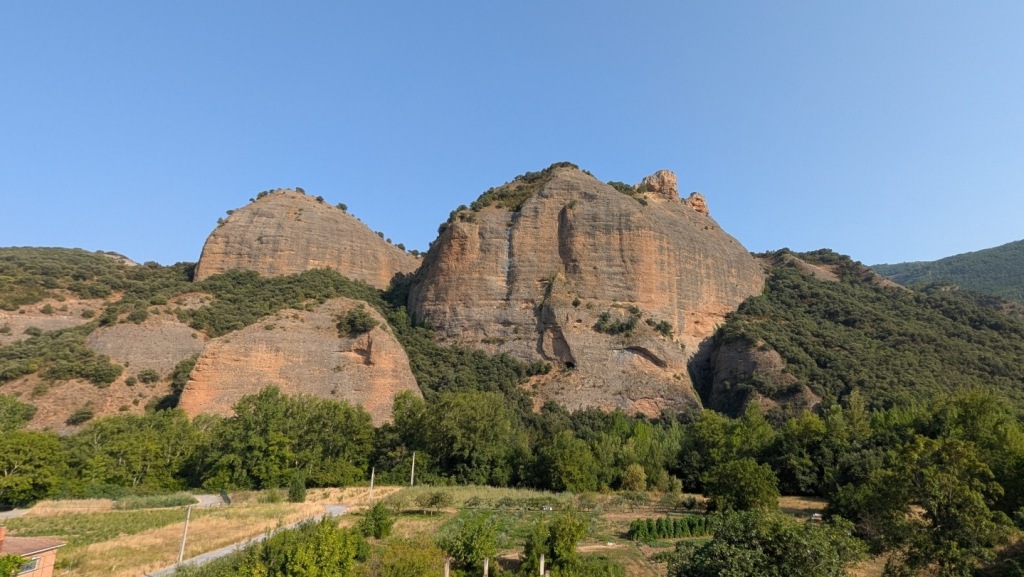
There was also an impressive rock formation across the road.
I usually enjoy staying in strange places. And I liked this one a lot.
The next day was mostly 'Eclipse Preparation Day'. I was staying in a (rather nondescript, slightly run-down and boring) hotel near a place called Calatayud.
My main reason for staying there was that it is right next to a highway in (mostly) east-west direction. If there had been local clouds, it would have been easy to get into the car and drive a few kilometers to some other place with better viewing conditions, without having to go through inner city traffic first. Competing with a thousand other people who had the same idea...
One of the issues with this eclipse was that it was late in the day, so the sun would be close to the horizon. And the area around Calatayud is somewhat hilly. I wanted to find a spot that gave me a good view of the sun, to avoid standing somewhere and finding out that some mountain peak happened to obscure the sun at the critical moment.
I had selected some possible viewing spots and drove to them to check them out.
The first location I visited seemed the best one.
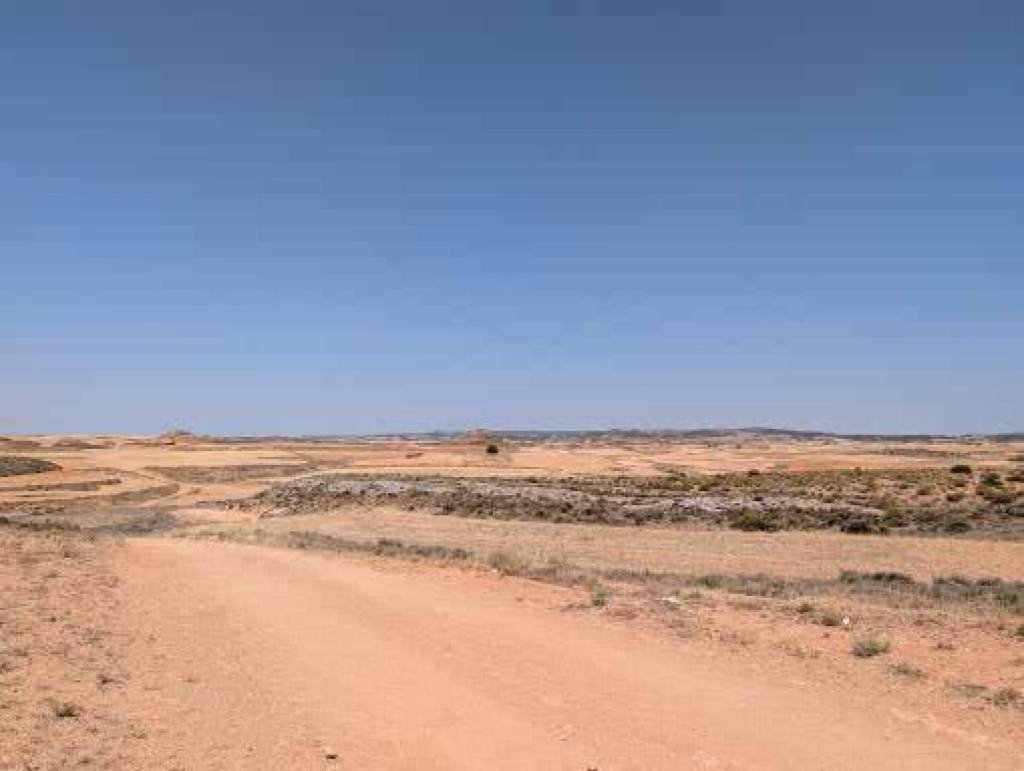
While not that close to Calatayud (it was a 40km drive from there), it was close to a highway exit with a restaurant. This meant that I could go there early (and avoid any last-minute traffic jams on the highway - which didn't happen, but I could not know that), have something to eat and then drive the last kilometer or so for the eclipse viewing. And there was a dirt road branching off the main road, so I could get a hundred meters away from the road to a big flat area. With no mountains or hills in view. With lots of free space. So even if half a million people would have had the same idea, it still wouldn't feel cramped. (In the end, there were about five other cars visible in the area, each at least half a kilometer away.)
It looked like a good place to watch an eclipse from. And it was.
I checked out some other places as well, but they were less suited. (Though, when I had checked in at the hotel, I went for a walk at the same time the eclipse would be on the following day. And noticed that there was a good view of the sun from a field right across the street. But there wasn't another good spot nearby. If there had been an inconvenient cloud, there would have been nowhere else to go. At my preferred spot, the flat plain continued for at least another 20 km to the north, so it would have been easy to go quickly to another location.)
I also walked around a bit, though not that much. The temperatures in the early afternoon were around 40°C. Warm enough that even in Spain, which is no stranger to sunny summers, there were 'extreme heat' warnings.
That was one of the reasons I walked at a specific location.
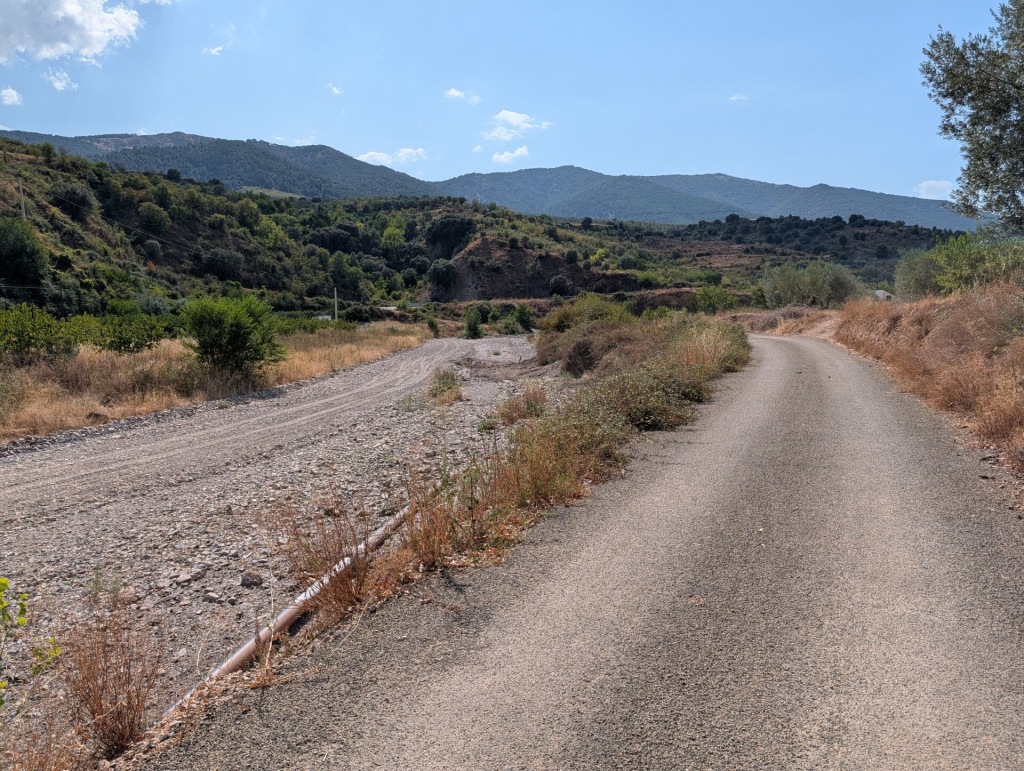
Not a good choice for eclipse viewing (mountains in the way). But it had looked like a good place for a walk as the trail was right next to a river. It should have been cool and provided the chance to splash some water on my face, if it got too hot.
It then took me a moment to figure out that the 'gravel road' by the side of the hiking track was actually the river bed.
The bridge across the Grío River was a bit of a hint, though.
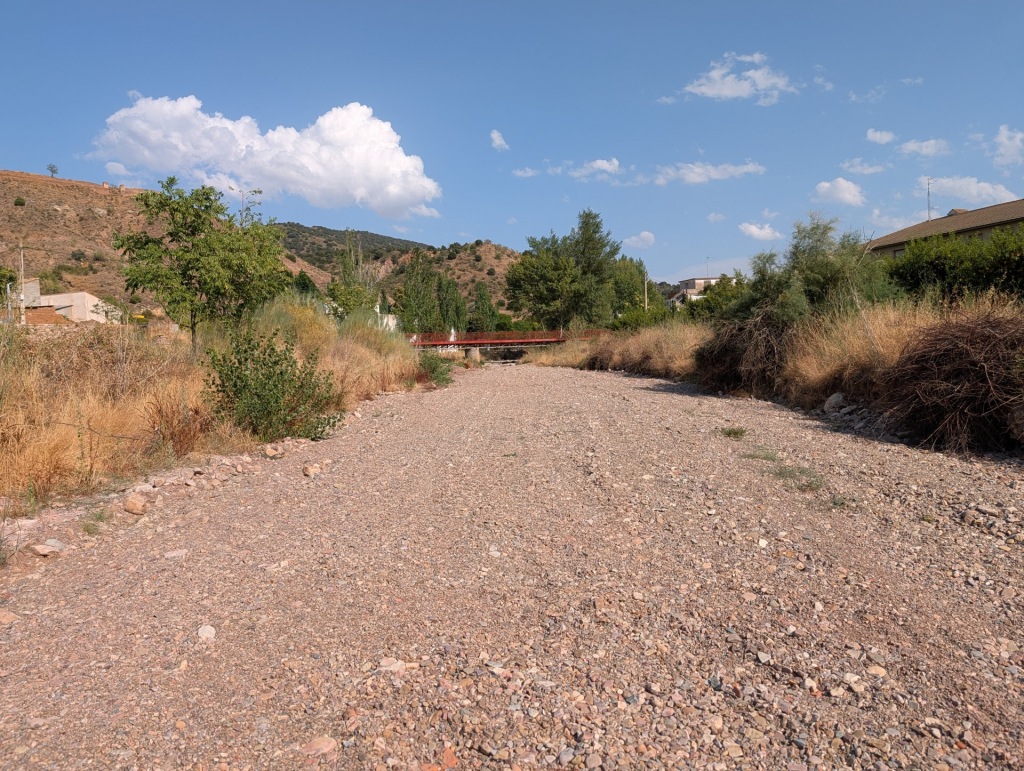
No chance for a bit of refreshment.
But at least the lemon trees seemed to thrive.

Next day was eclipse day.
That was a relaxed day, where things were working out nicely and as planned.
I didn't do much during the day. Except for a short walk through Calatayud, I spent most of it in the hotel, relaxing, reading, charging batteries and getting the gear ready.
About three hours before the eclipse started, I drove to the highway exit next to my viewing spot. (Just in case that there might be a big rush of people heading somewhere.)
I had something to eat there, enjoying the opportunity to sit in an air-conditioned place and not out there in the car. While it was already around 6 pm, it was still hot outside.
About an hour later, I drove to my planned observation spot and started to set up my stuff.
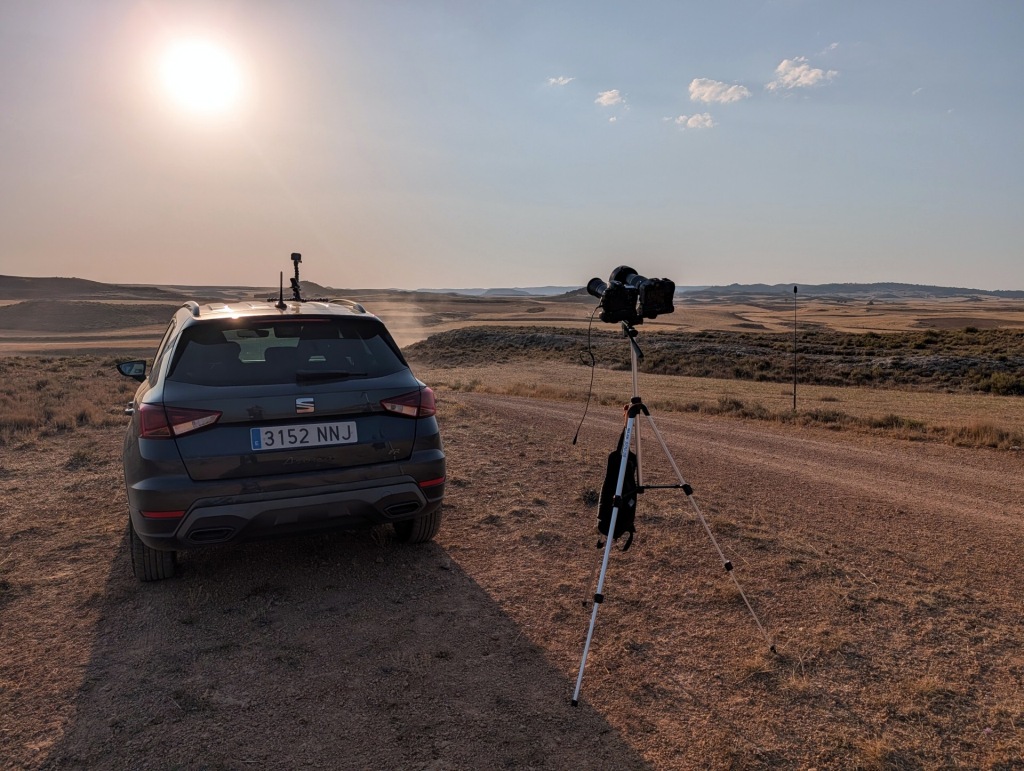
There were only a few minor clouds in the sky, but none of them in a likely position to block the sun.
Around 7:40 pm the first phase of the eclipse started.
The thing that is difficult to explain to people who haven't seen a total solar eclipse is how dramatic the change is. As someone (well, Randall Munroe) stated "A partial eclipse is like a cool sunset. A total eclipse is like someone broke the sky."
If you see a partial solar eclipse, the Moon covers part of the Sun. And with proper filters, it can look impressive.
And it's easy to imagine that a total eclipse is the same, only that it gets a bit darker at the end (well, technically around the middle).
Which is kind of true, but sort of misses the point.
As the sun is bright and illuminates about everything, even on a cloudy day, human vision is really good at compensating for changes in daylight intensity.
If you are outside during a partial eclipse, you wouldn't normally notice it.
Maybe once you reach more than 95% coverage. But otherwise, unless you know about it and look through a filter at the sun, there's nothing obviously unusual about the sky or the light.
That changes about a minute before totality.
Only then are you standing there and noticing that the light has suddenly grown a bit dim.
Then, a minute later, the Sun disappears. In a matter of seconds.
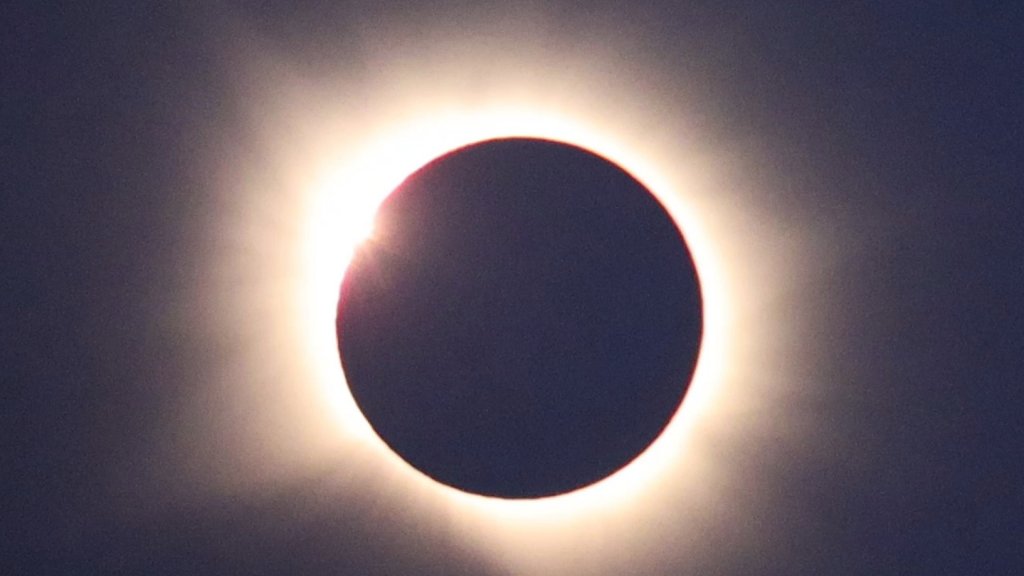
And there suddenly is that black hole in the sky. (Not in the astronomical sense, of course, but like someone punched a hole in the sky.)
The sky usually isn't black either (most of that is because even the corona is fairly bright and cameras focussed on that make everything else look black), but a deep blue.
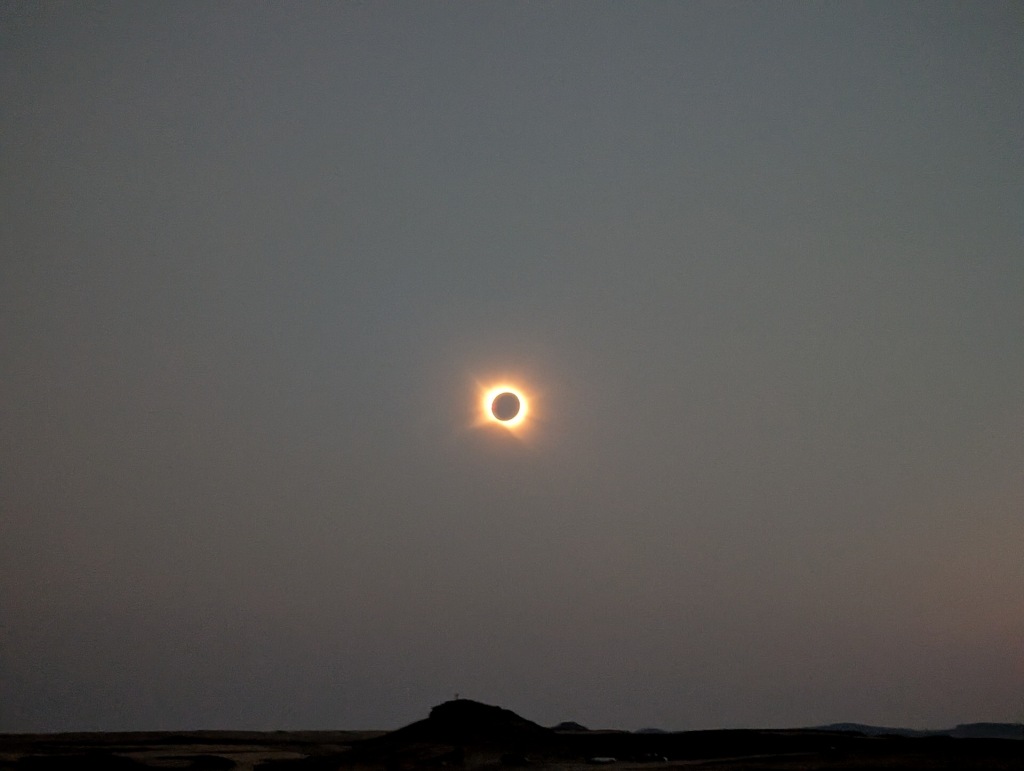
(And the 'hole in the sky' tends to look more dramatic in real life than in photographs, as often the light from the Sun's corona 'bleeds' into the black region, while to the eye, it really looks like a small round area of the sky is missing.)
I think some of the attraction comes from how fast and massive the change is.
And that's something you don't get from observing partial eclipses.
It's also not something you usually get from celestial events, which mostly happen slowly.
Which might be the reason that the most spectacular astronomical sights are often considered to be a total solar eclipse, an aurora and a meteor storm. All events that happen quickly by astronomical standards. (Which is, admittedly, an odd phrase, since almost everything happens quickly by astronomical standards. Planet accretion is quick by astronomical timescales. But I think it is clear what is meant.)
Anyway.
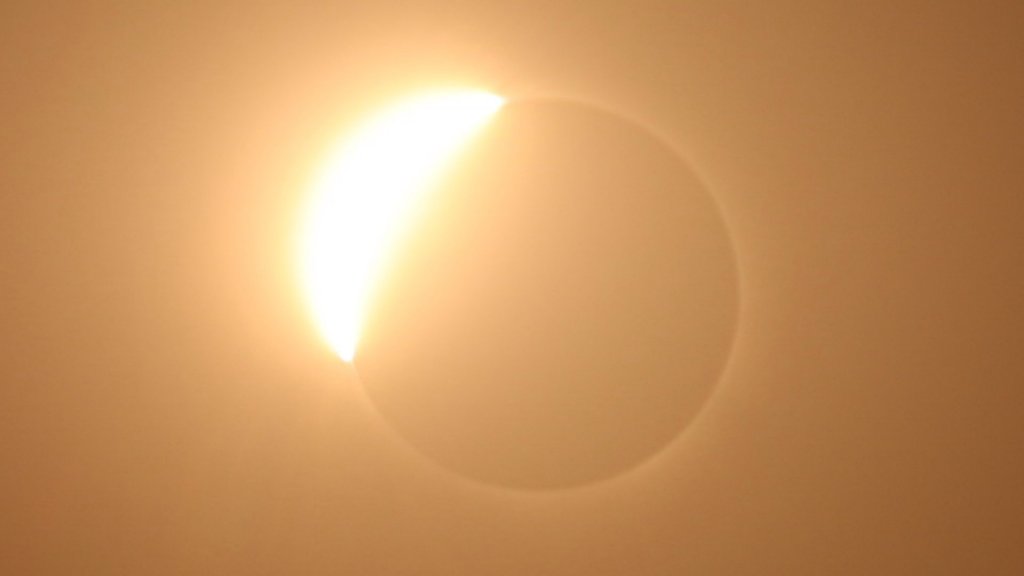
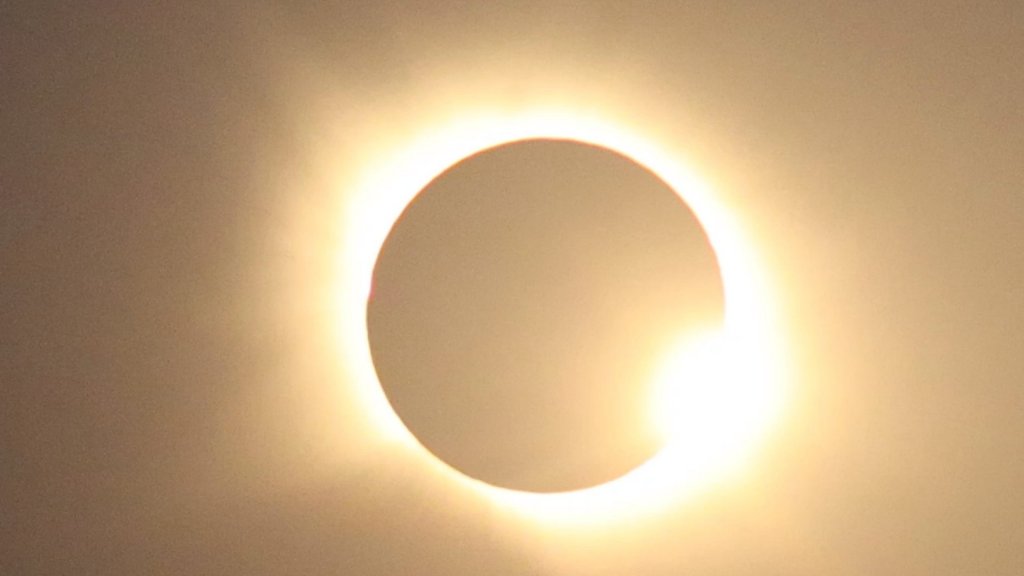
Here are two (kind of) timelapse pictures of the eclipse, with the images taken about five minutes apart.


(The images get slightly more reddish after the eclipse, as it was already getting late and the sun was low on the horizon. Being on a dusty plain probably had an effect as well.)
I stood there, enjoyed the total eclipse (my fifth!) and waited until the sun was out of sight.
I didn't wait until the end of the eclipse, as the Sun was below the horizon before it was completely visible again.
Although that did mean that I got to see an unusual sight: A shark fin sun.
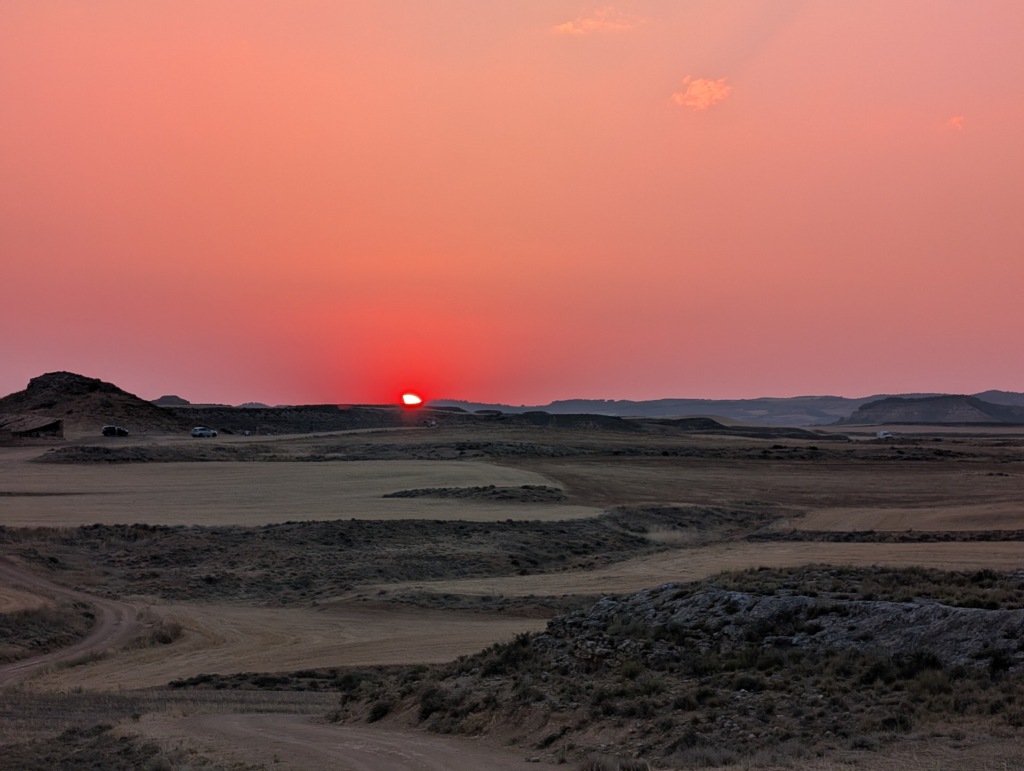
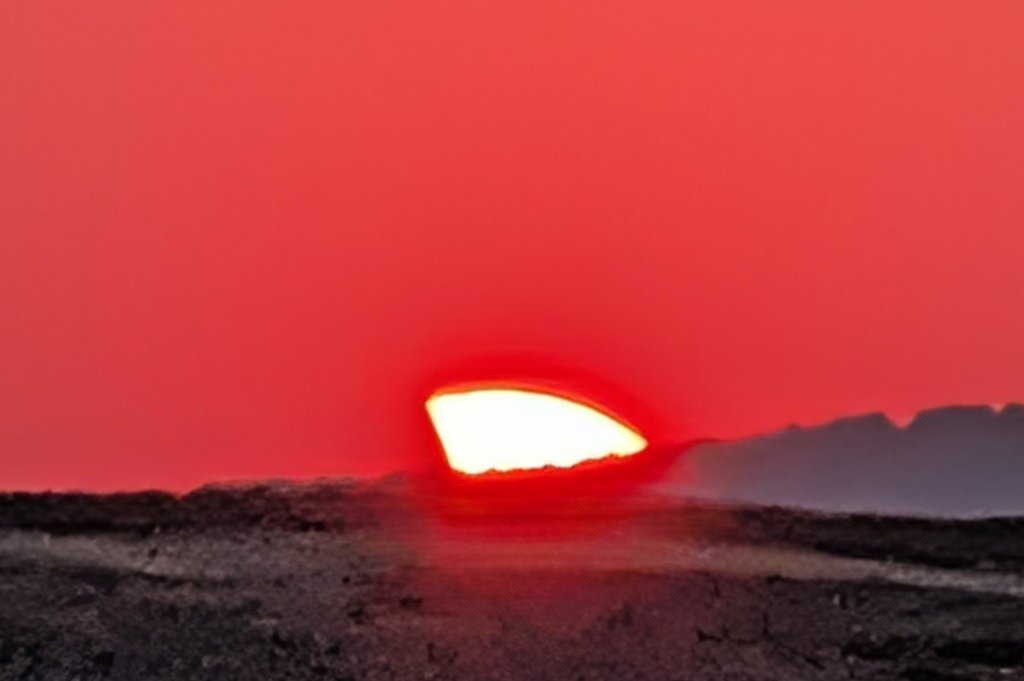
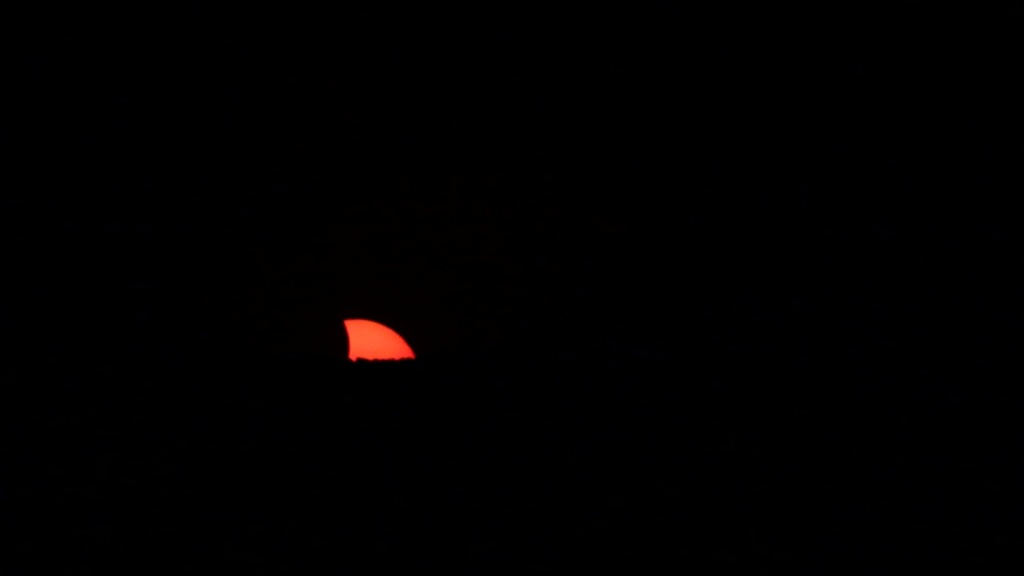
During sunset about half of the sun was still covered, so when the lower part of the sun was already hidden by the horizon, the upper part looked a bit like a shark fin. (Or, if you prefer, like a dolphin fin.)
Back to the hotel for some dinner (it's a nice thing that dinner in Spain is often taken late, so if you show up at the restaurant at 10pm, it's not an issue).
Next day I went to another unusual hotel.
This time it wasn't as much about how the room looked (nice, but not spectacular), but more about where it was located.
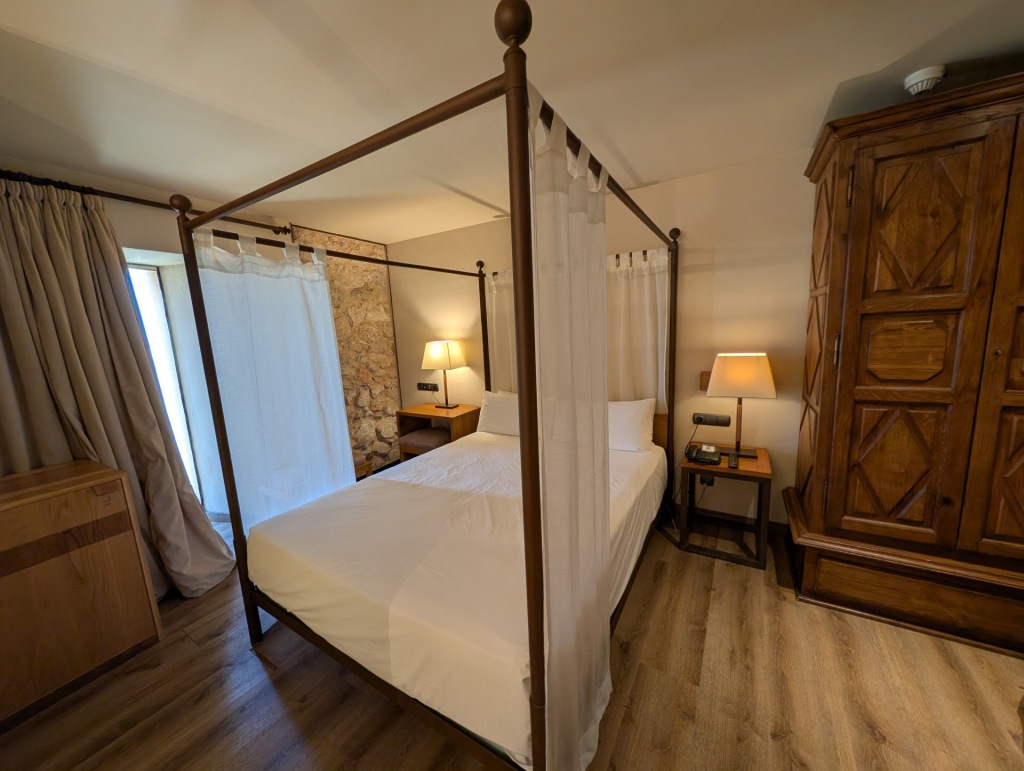
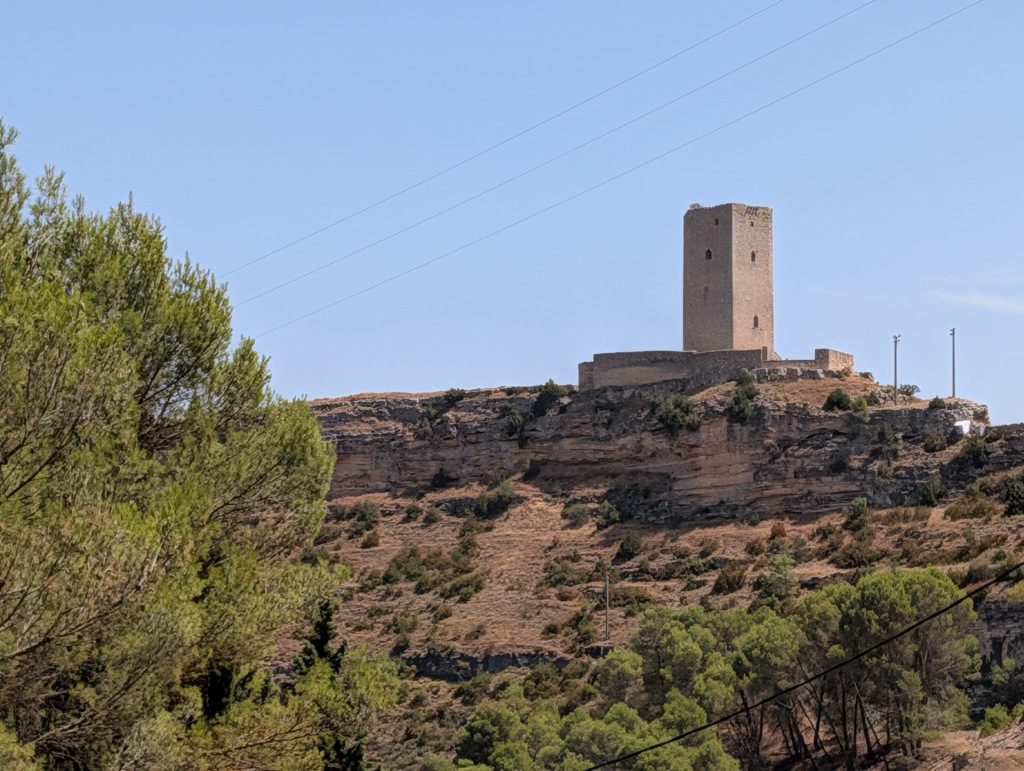
Which was right in an old keep.
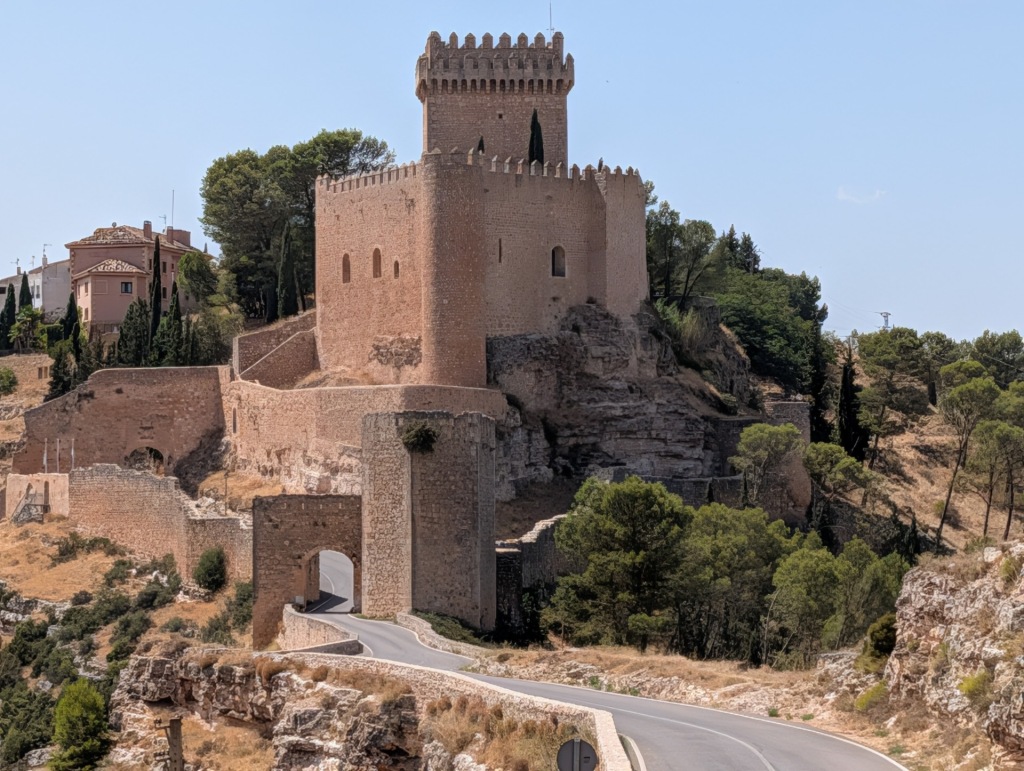
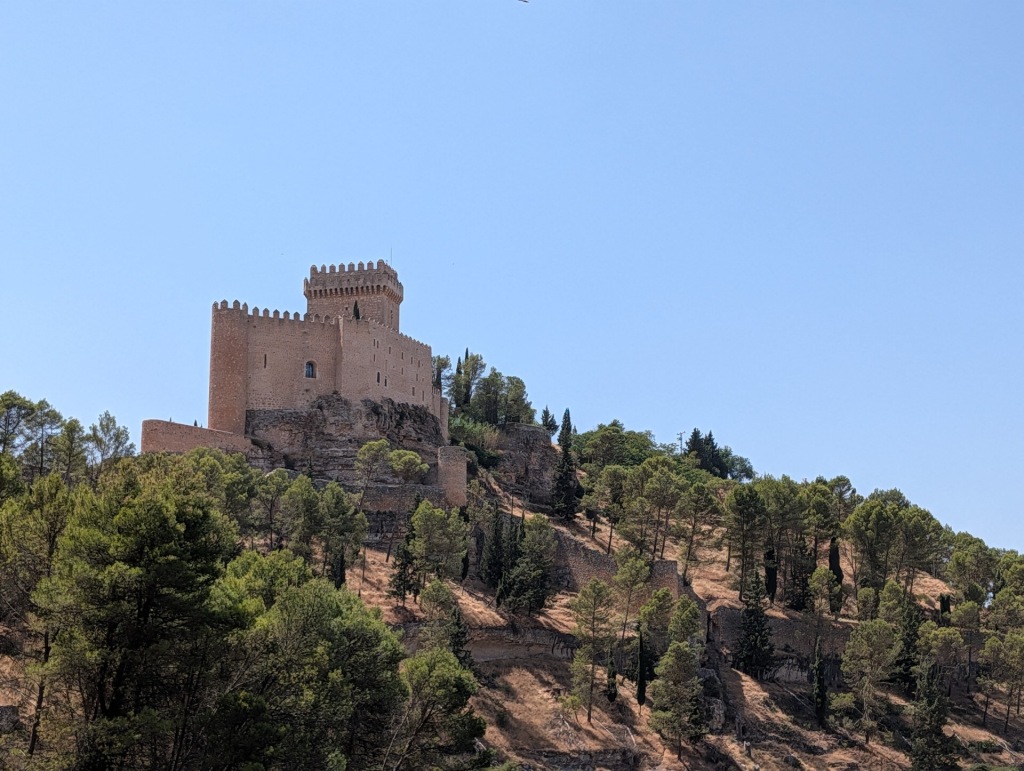
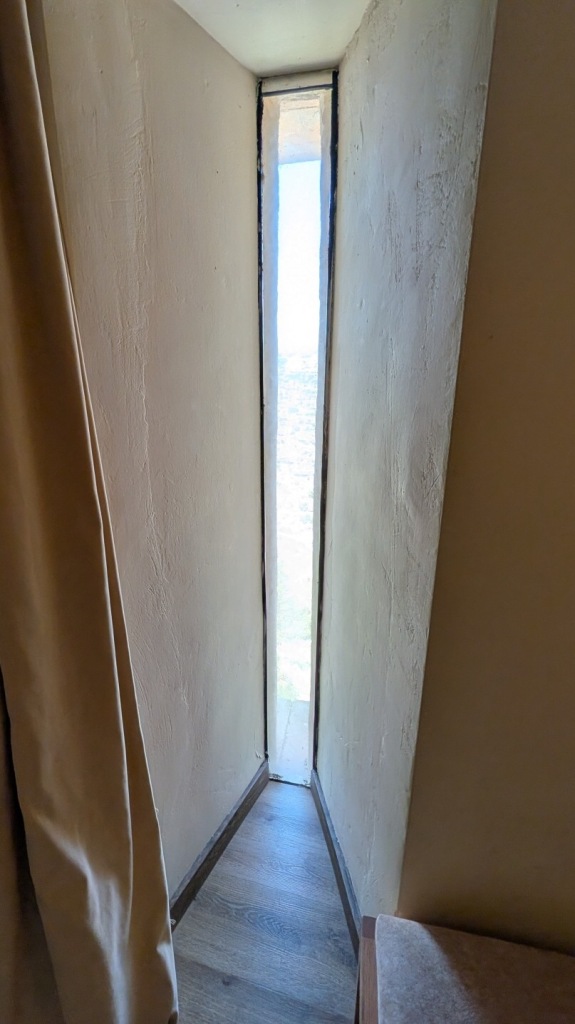
(A side effect of this was that the walls of my room were fairly thick and the (only) window a bit on the narrow side, as it was originally an arrow slit.)
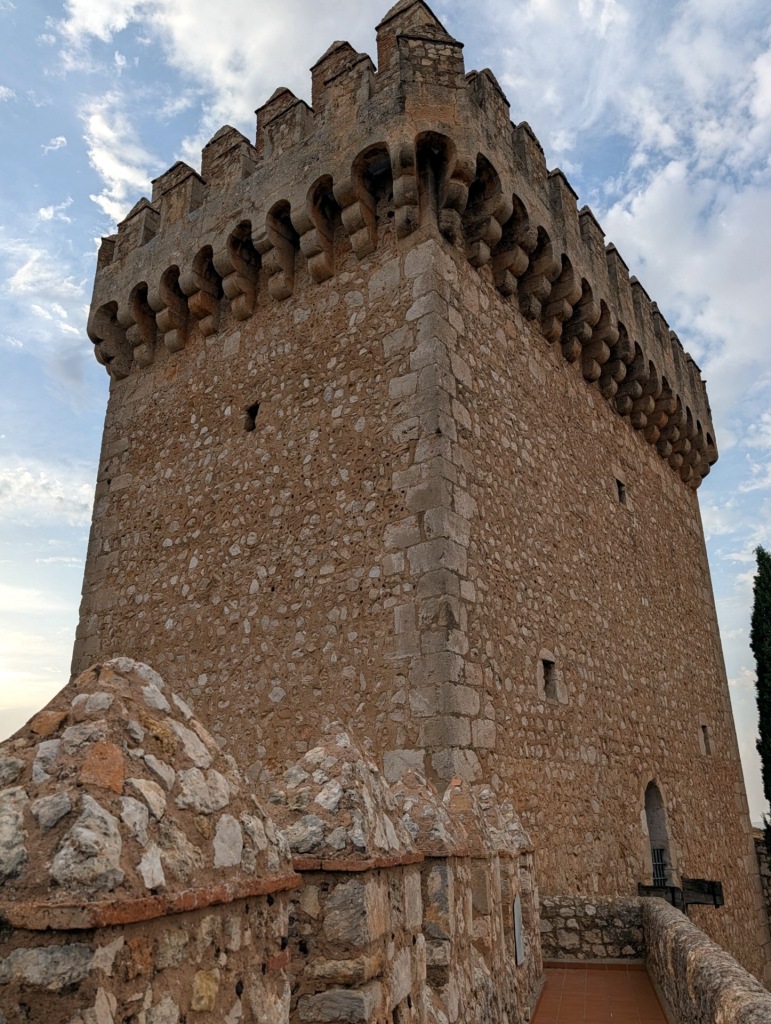
It seems that the whole place is so old that nobody seems to be sure how old it is.
While the Wikipedia entry on the village of Alarcón states confidently that the keep was built around 1460 by Castilian nobleman Juan Pacheco, the specific entry on the Castle of Alarcón only mentions that the castle was given to Juan Pacheco in 1446, but nothing about him building it (or anything else happening in 1460).
There's mention that Alarcón was besieged in 1184, but it is not clear for how many years it had been around by then or what specifically was on that site (a fortress is mentioned, but there's no indication whether any part of that fortress is still part of the keep. Or whether it was a completely new building (in the sense of 'new' in 1460).
It might originally have been built in the eighth century. And parts of that might still be part of the current keep.
Or maybe not.
It's a place so deeply rooted in history that its origins are, ironically, lost in history.
Still, it's an amazing place.
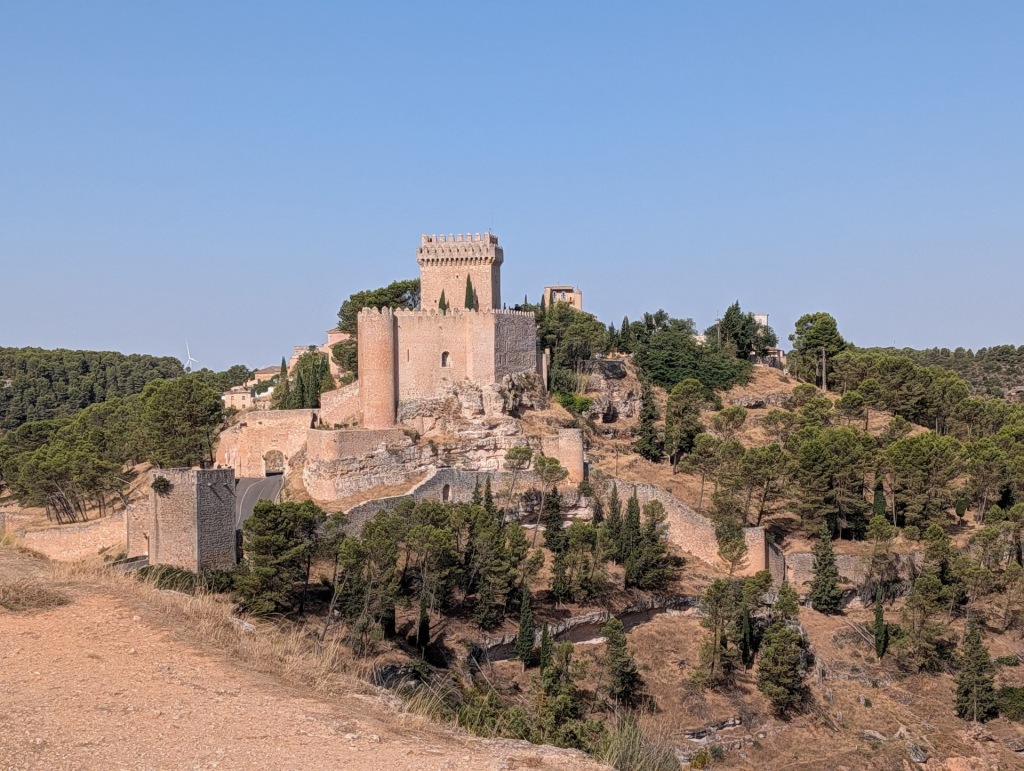
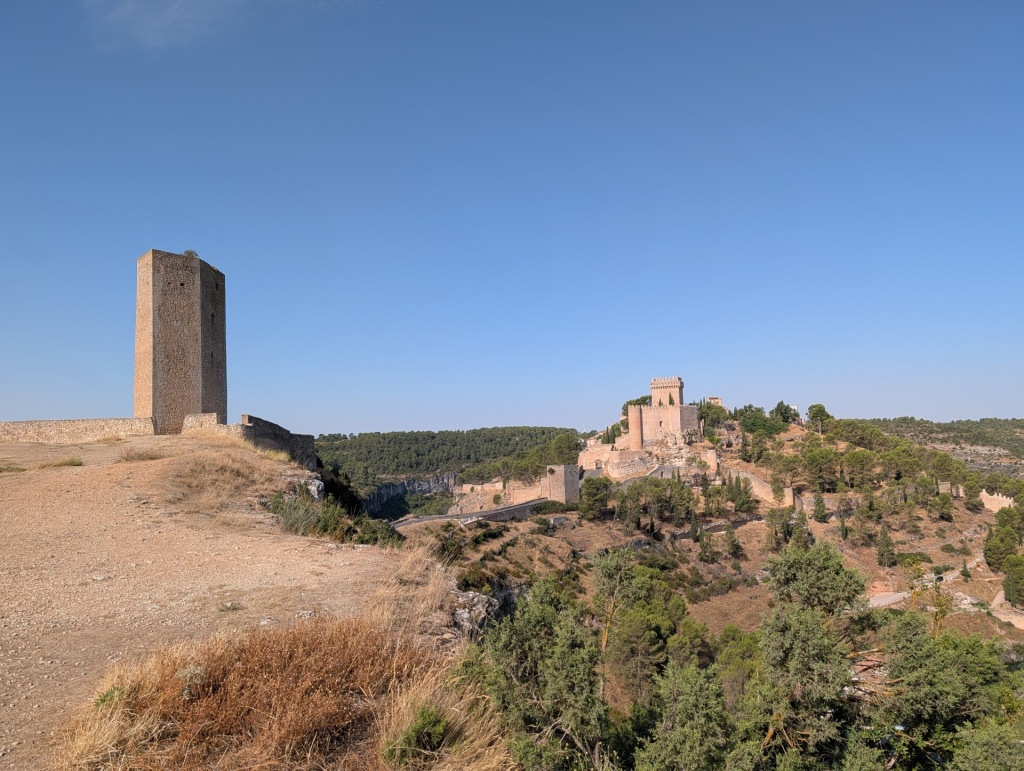
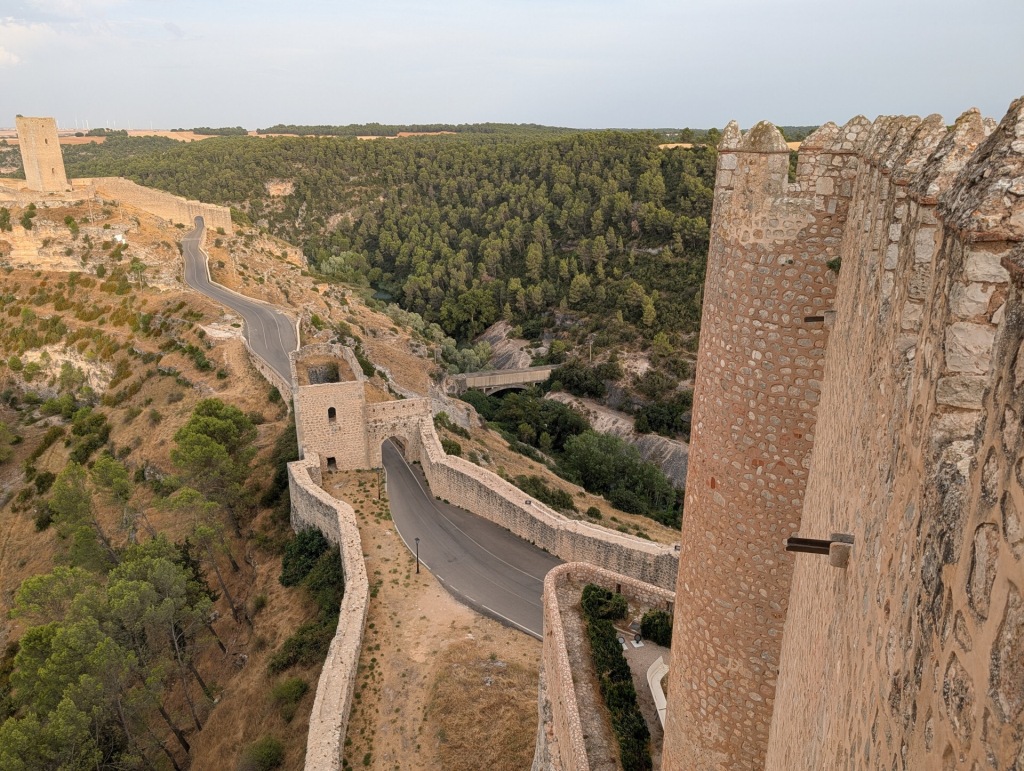
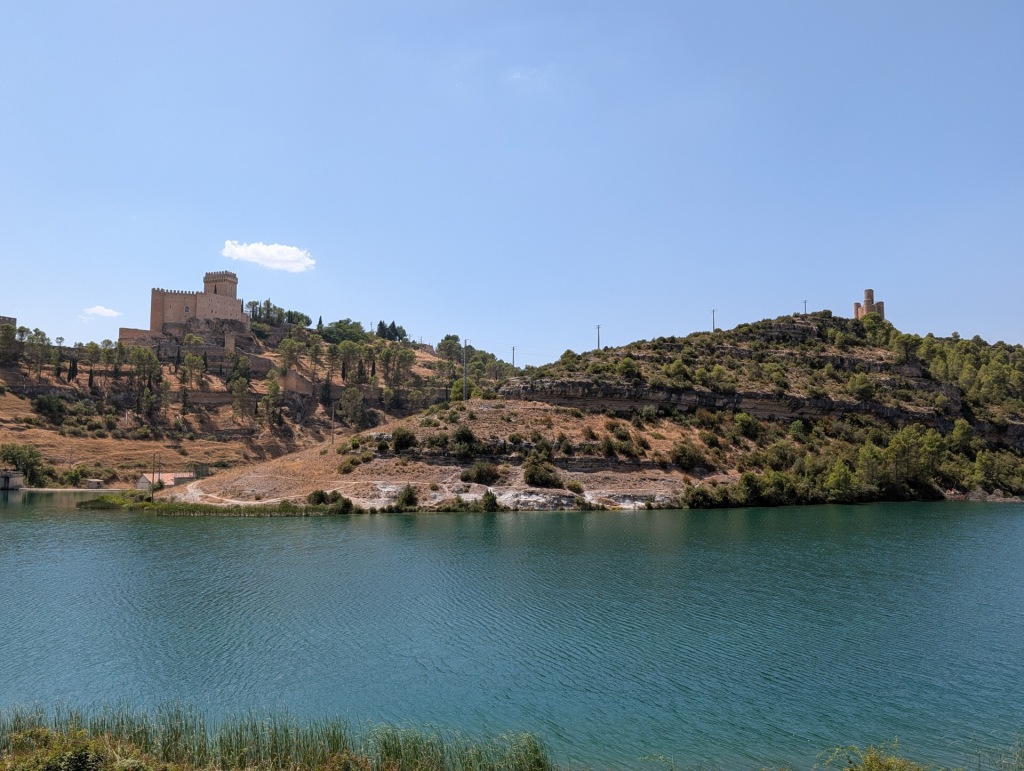
And it's easy to see why it is where it is.
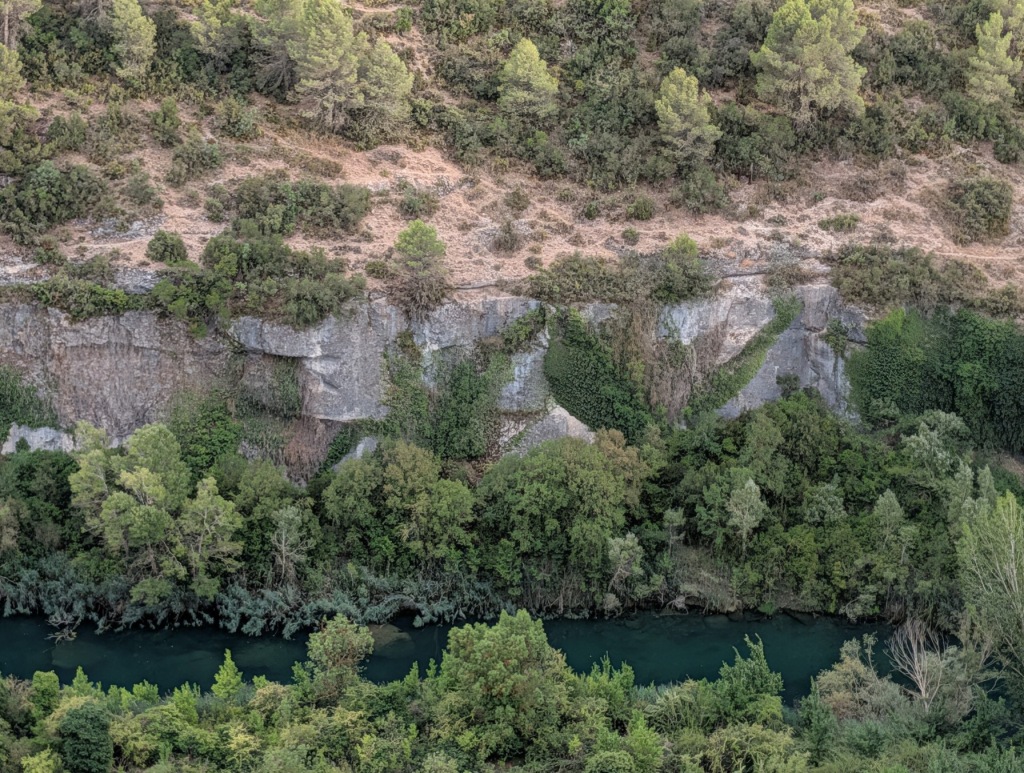
A river meanders around the site and has, over time, eroded a steep gorge in the landscape around it.
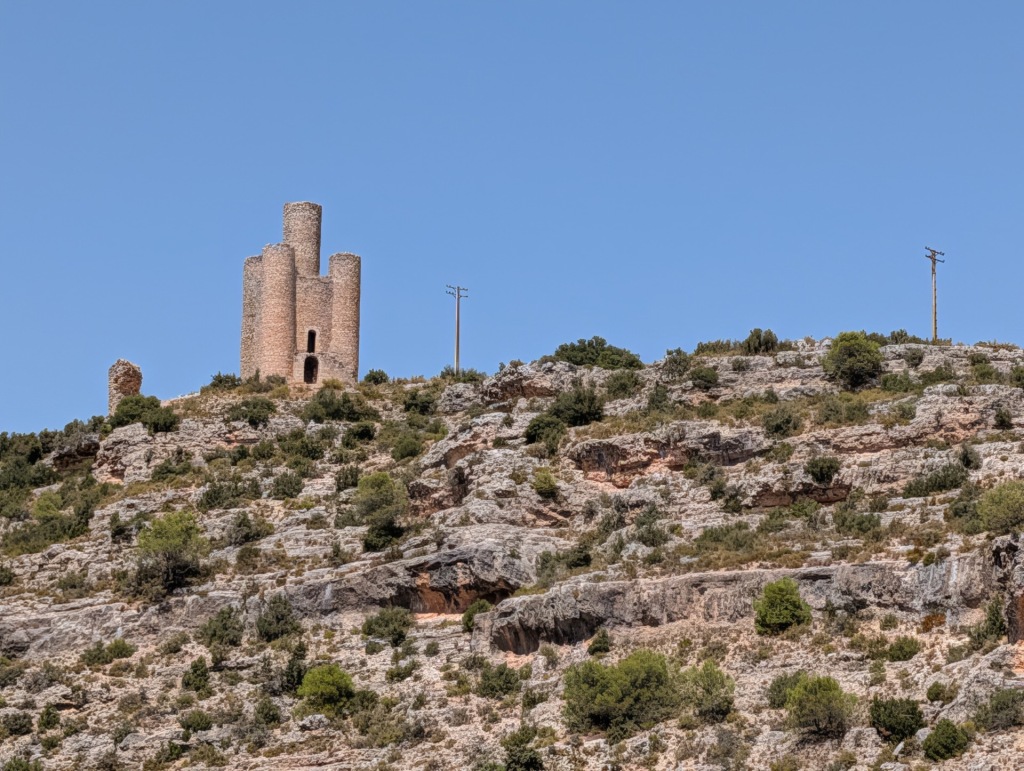
The castle is located on a kind of peninsula, surrounded by a natural moat with steep cliff walls all around it. This makes it accessible from one side only.
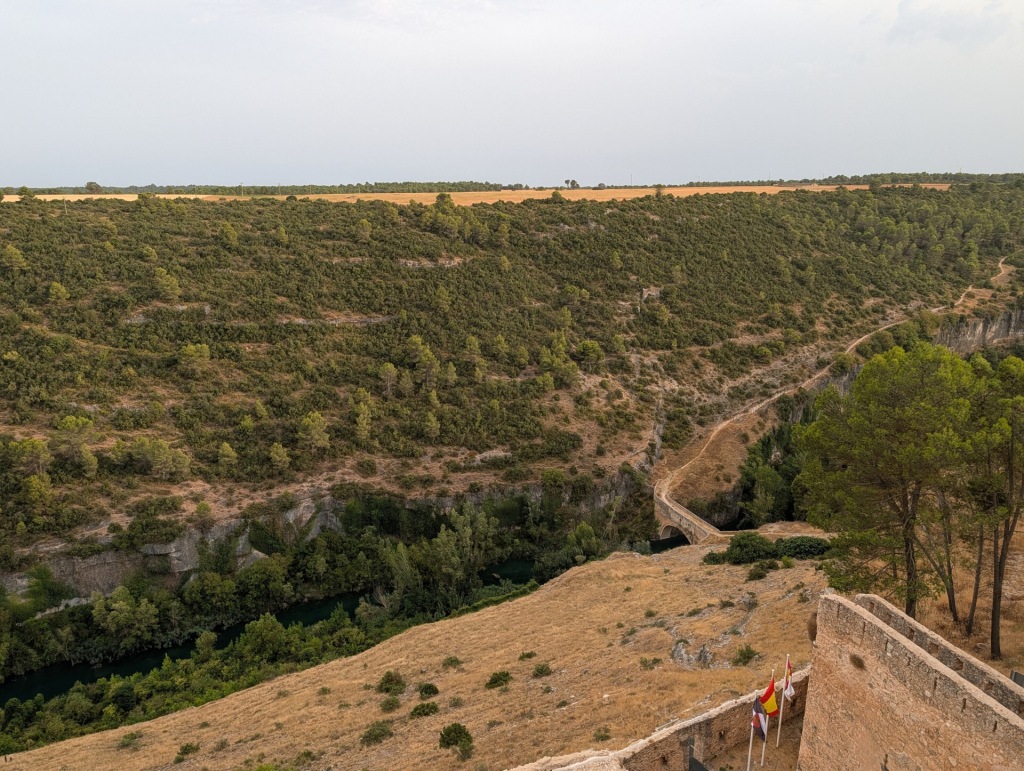
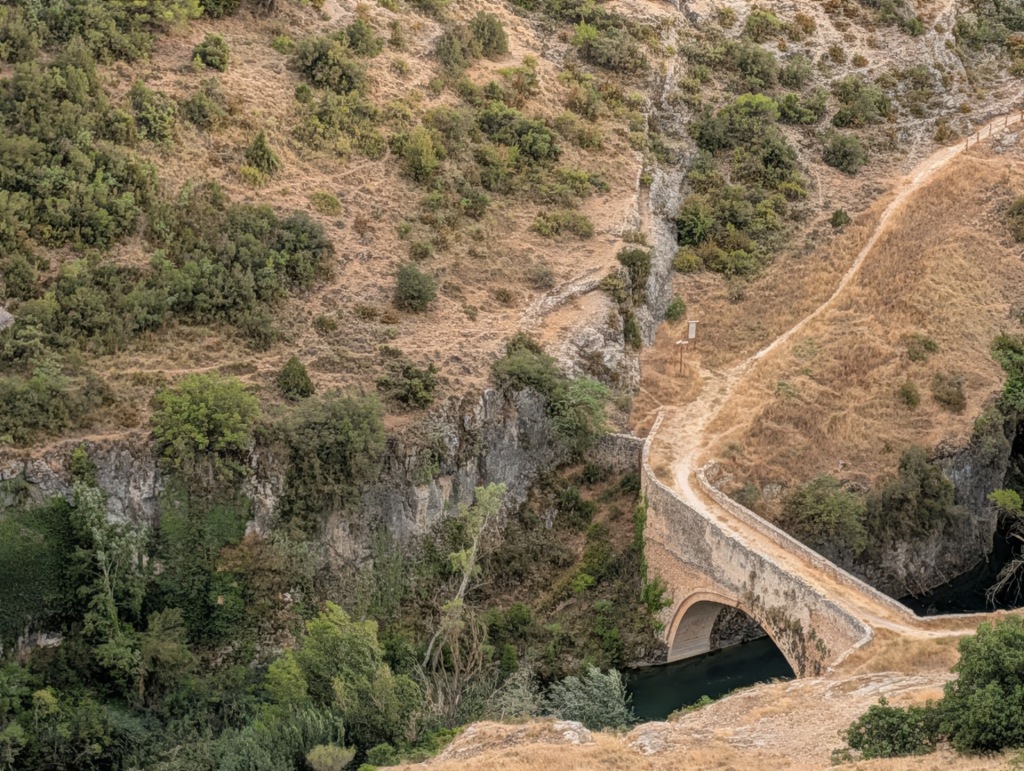
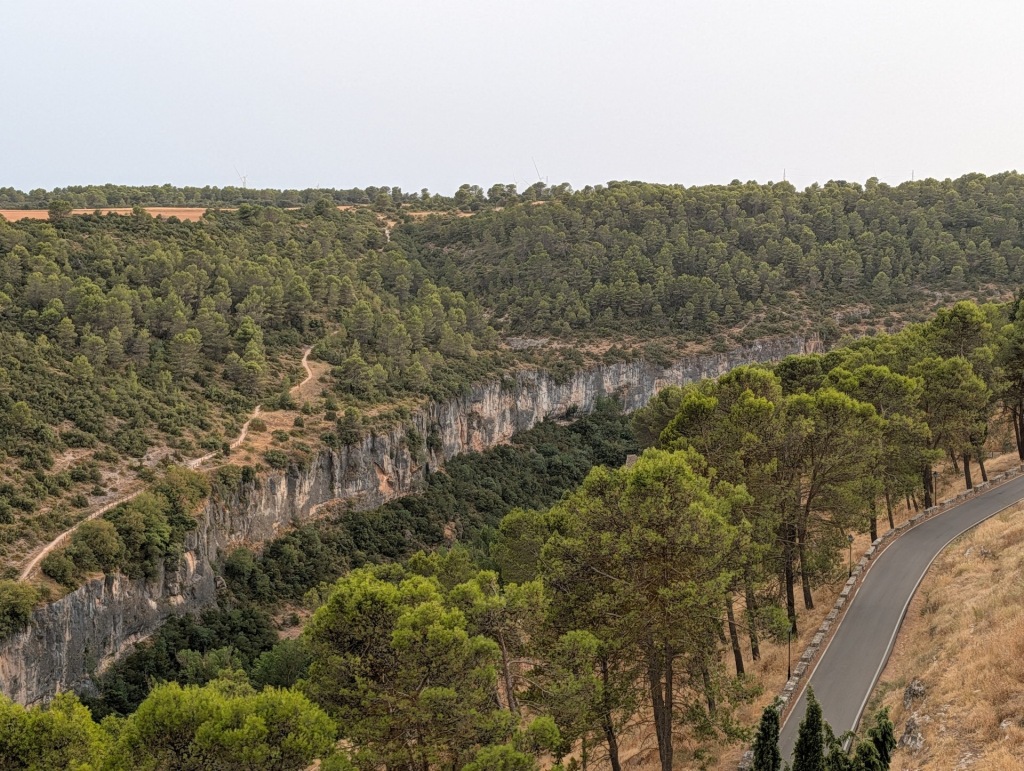
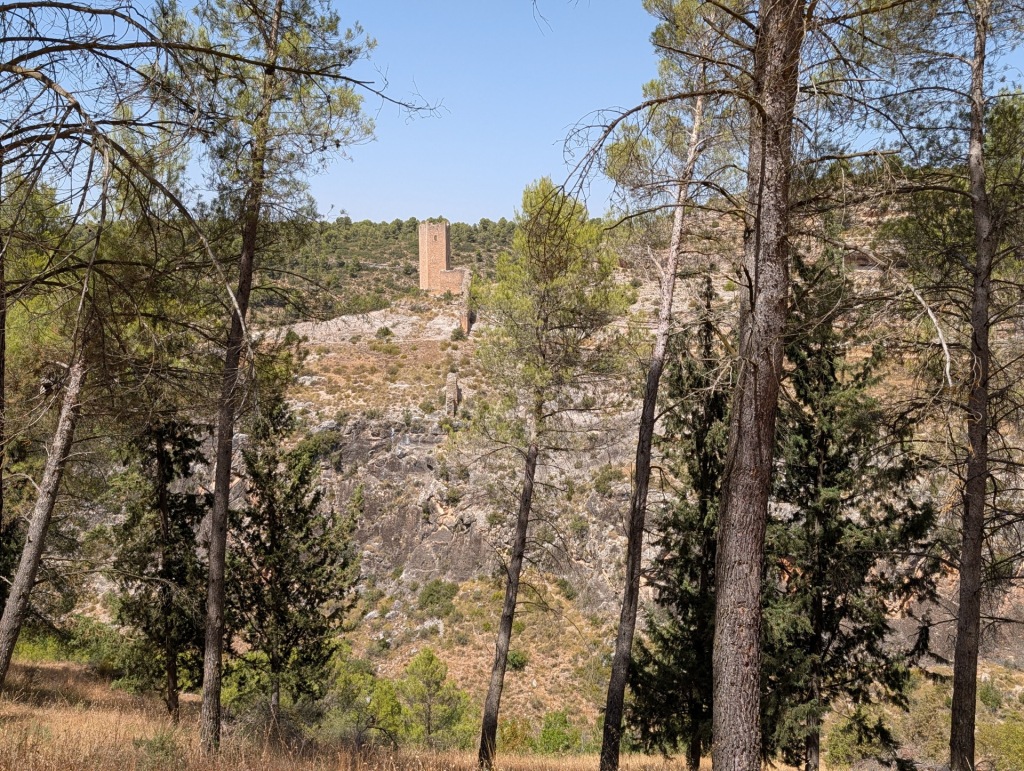
And outside that 'protective belt' are three fortified towers, serving as lookouts. (All of the towers are pretty much covering only one side of the keep. I have no idea whether these had always been the only ones or whether there have been towers on the other side as well.)
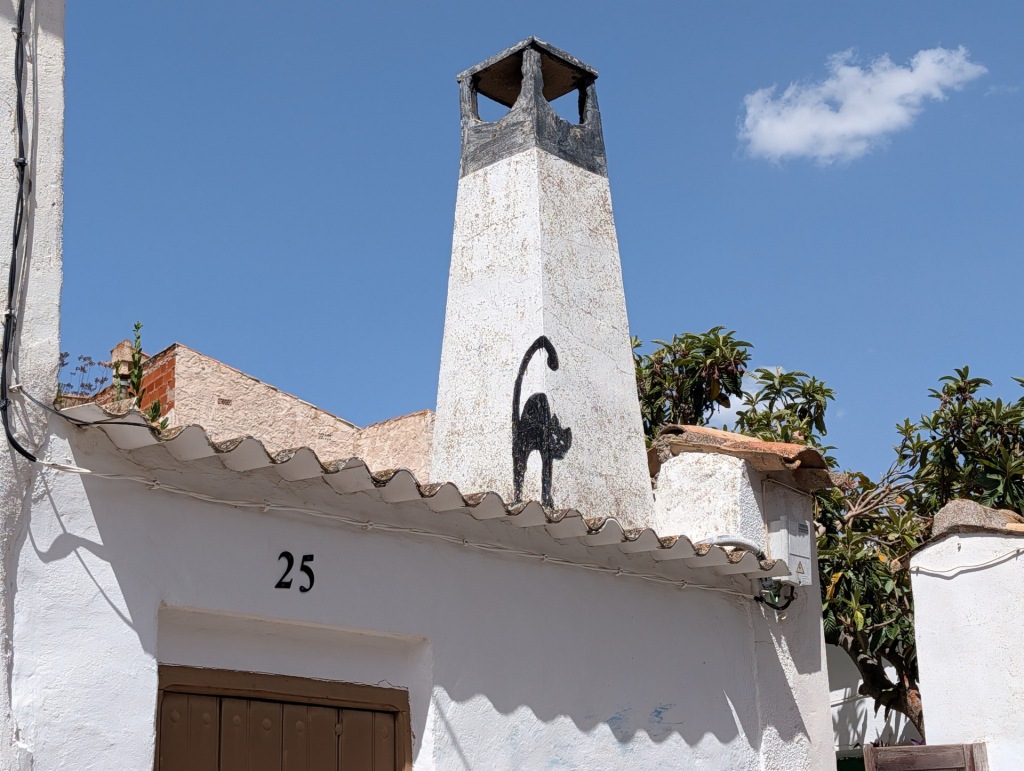
Alarcón also seems to be home to a graffiti artist with a fondness for cats.
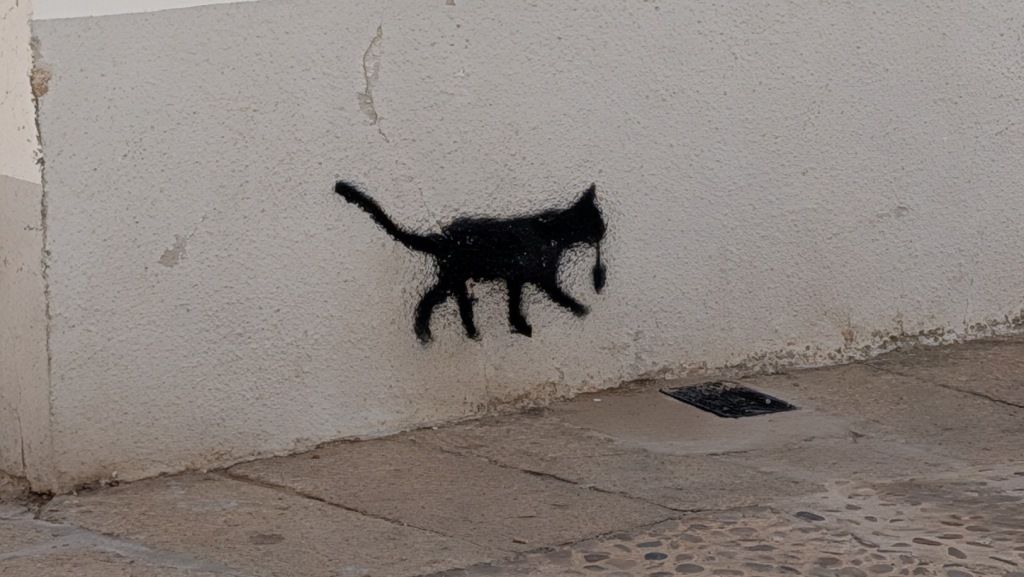
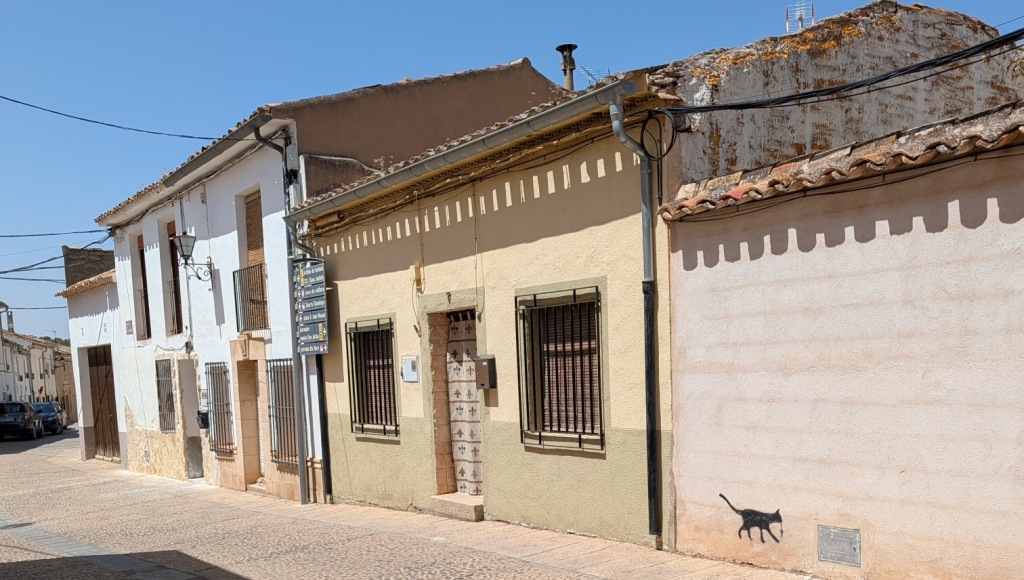
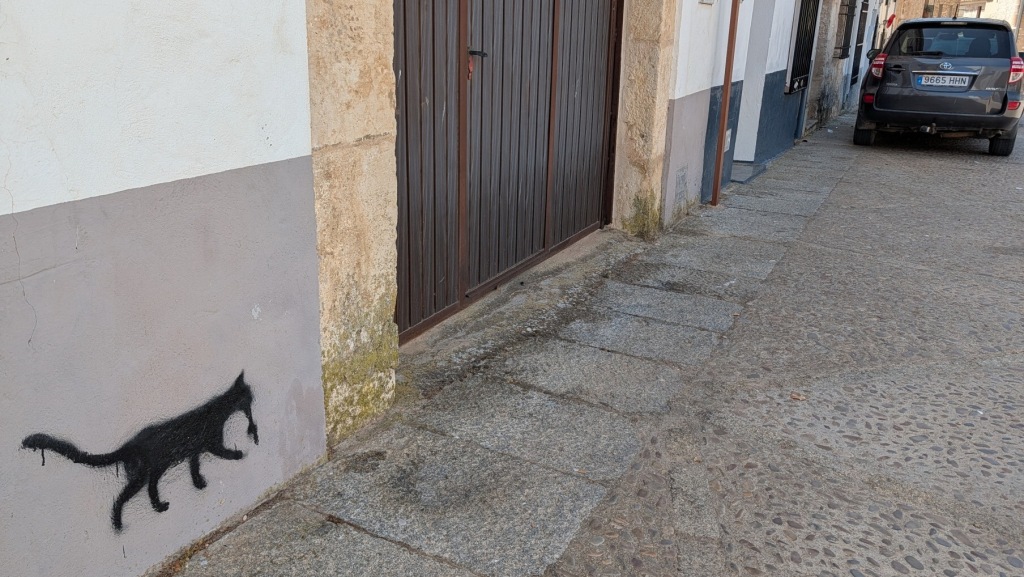
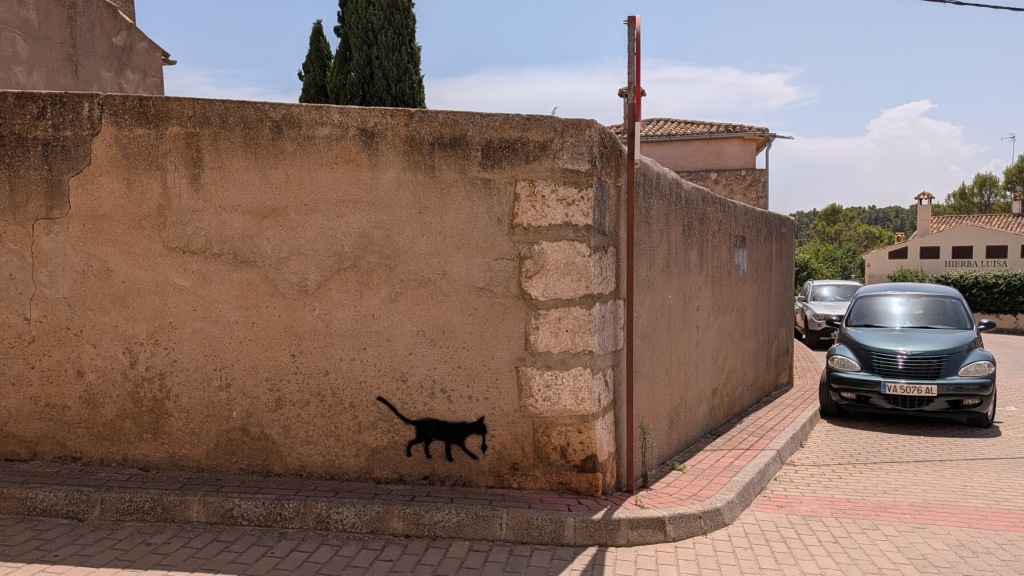
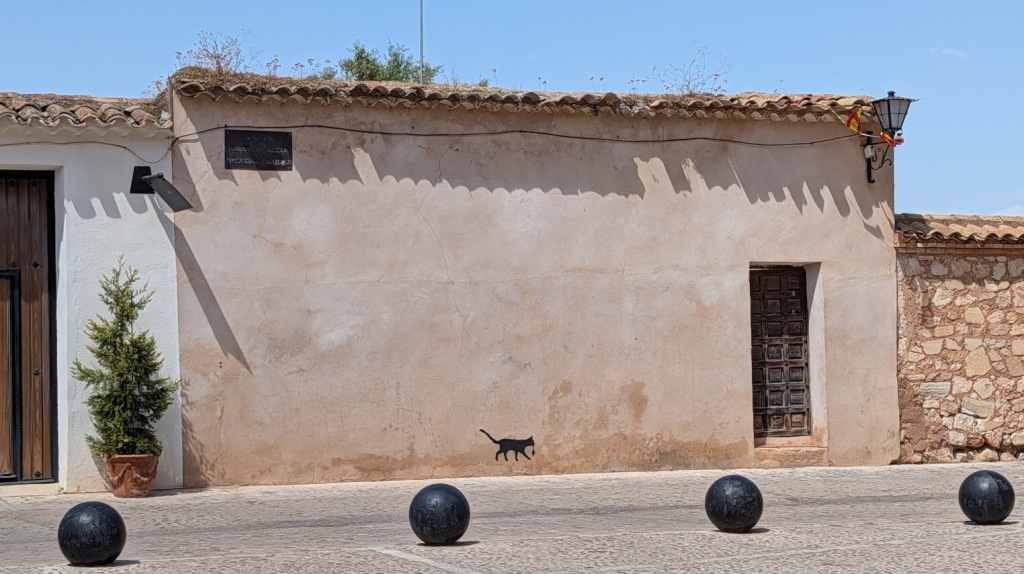
When I spotted the first few of them, I wasn't really sure whether this was the work of a sprayer that liked cats a lot (maybe in response to Banksy's use of rats in street art) or whether this was someone who was simply lazy and couldn't be bothered to make more than one stencil, using the same one over and over again.
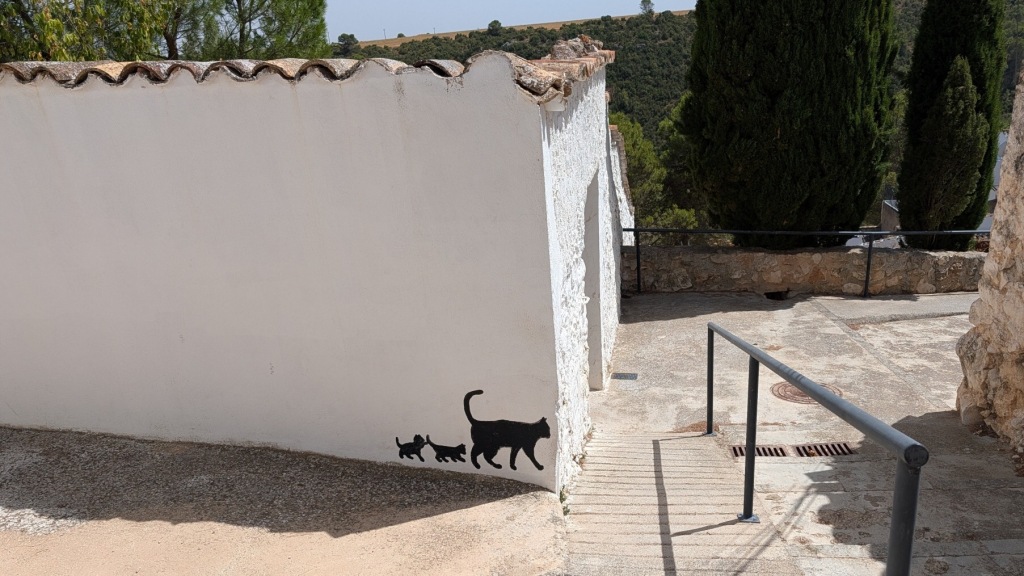
Walking around a bit more, however, I did also find cat graffiti that looked different.
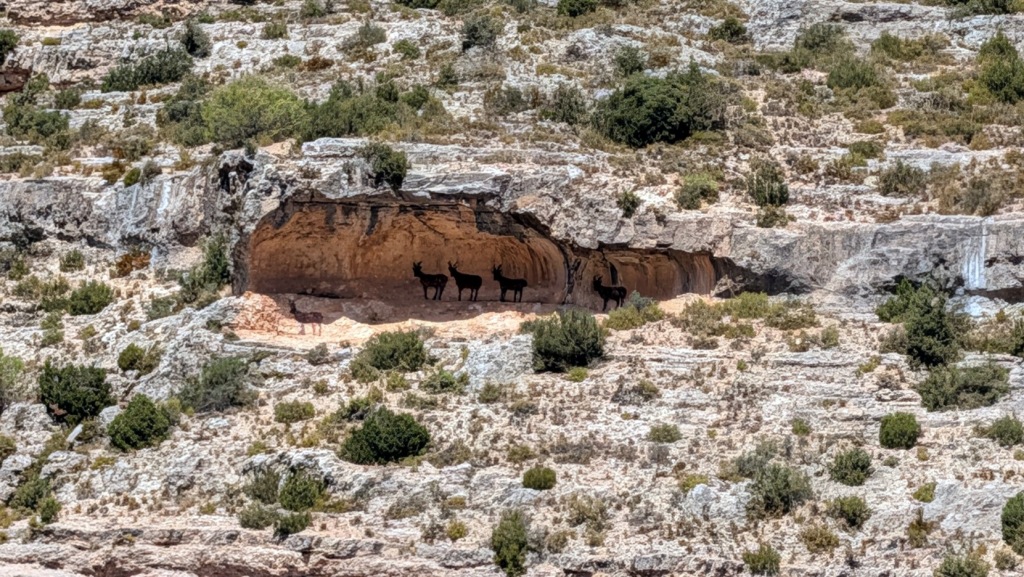
Outside the town, there is also a piece of graffiti of four goats (or possibly ibexes), but I couldn't find out whether that's by the same artist or is completely unrelated.
On the way back to Madrid, I drove via Toledo.
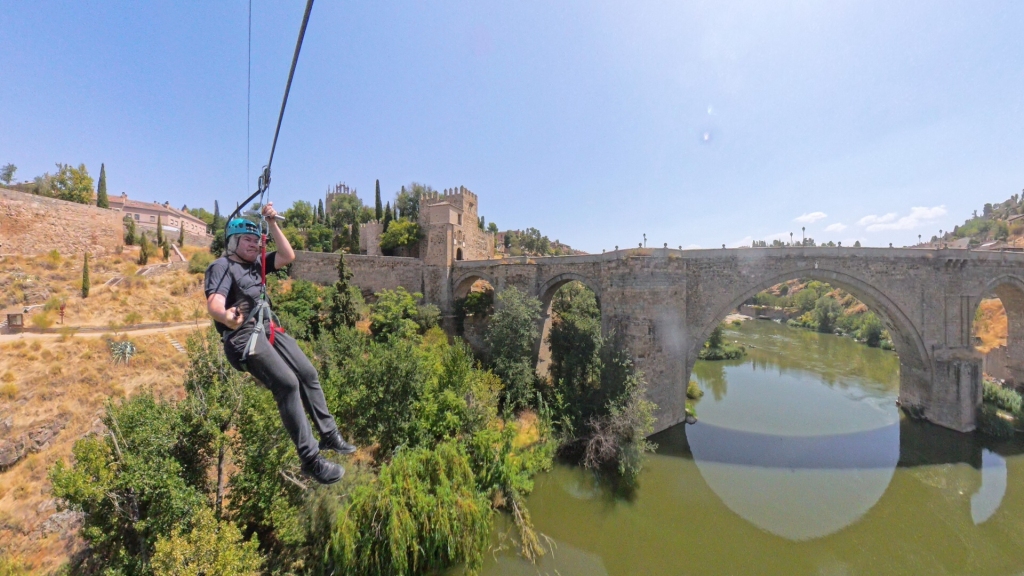
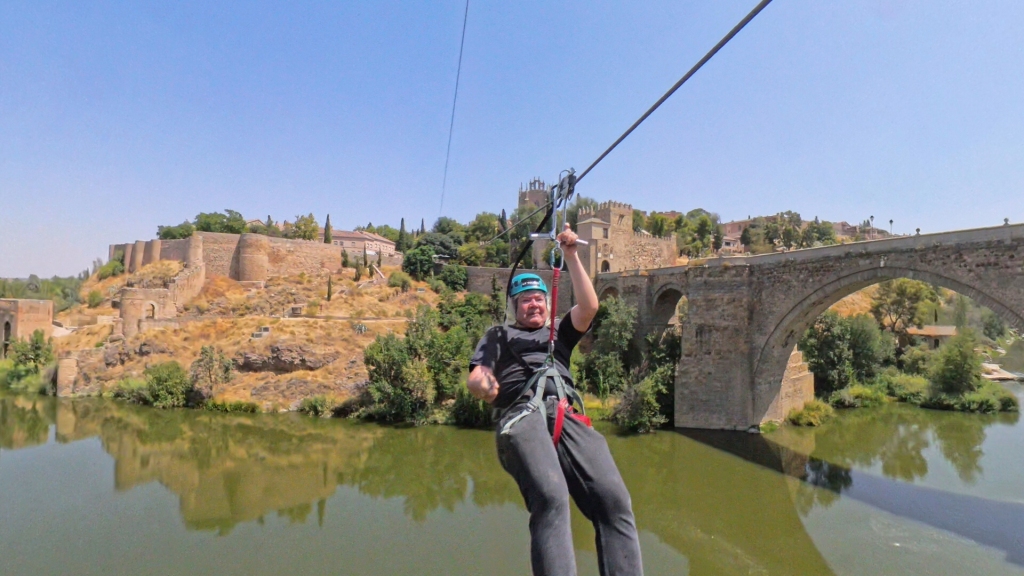
I had been there in 2017 and there was a short zipline across the Río Tajo.
The zipline itself isn't that spectacular (it's neither long nor fast), but it is at a great location, with an ancient bridge and the historical city of Toledo in the background.
I stopped there for another short zipline ride.
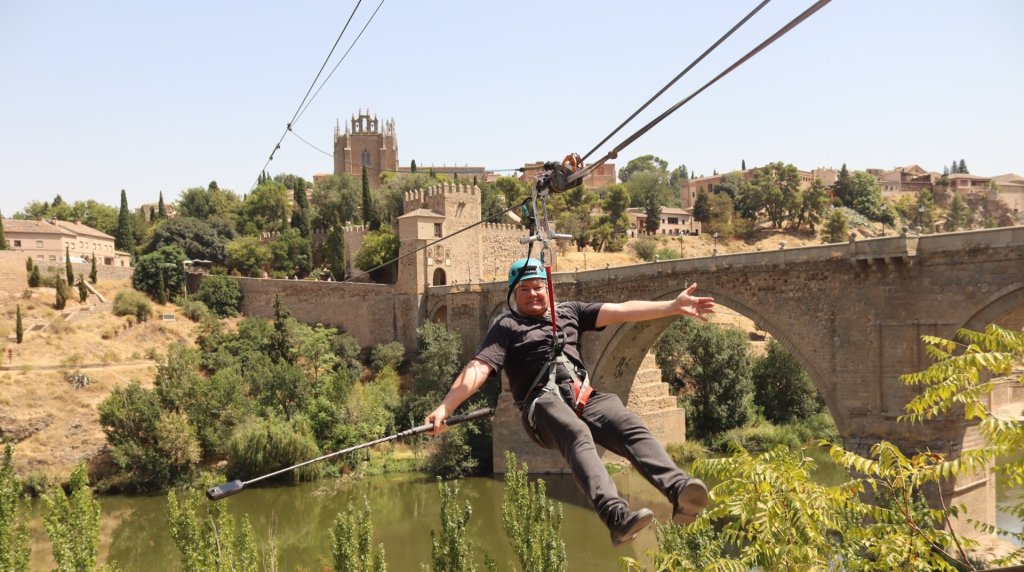
Though this time I had a bit more spare time, so I also got to walk around old Toledo for a bit.
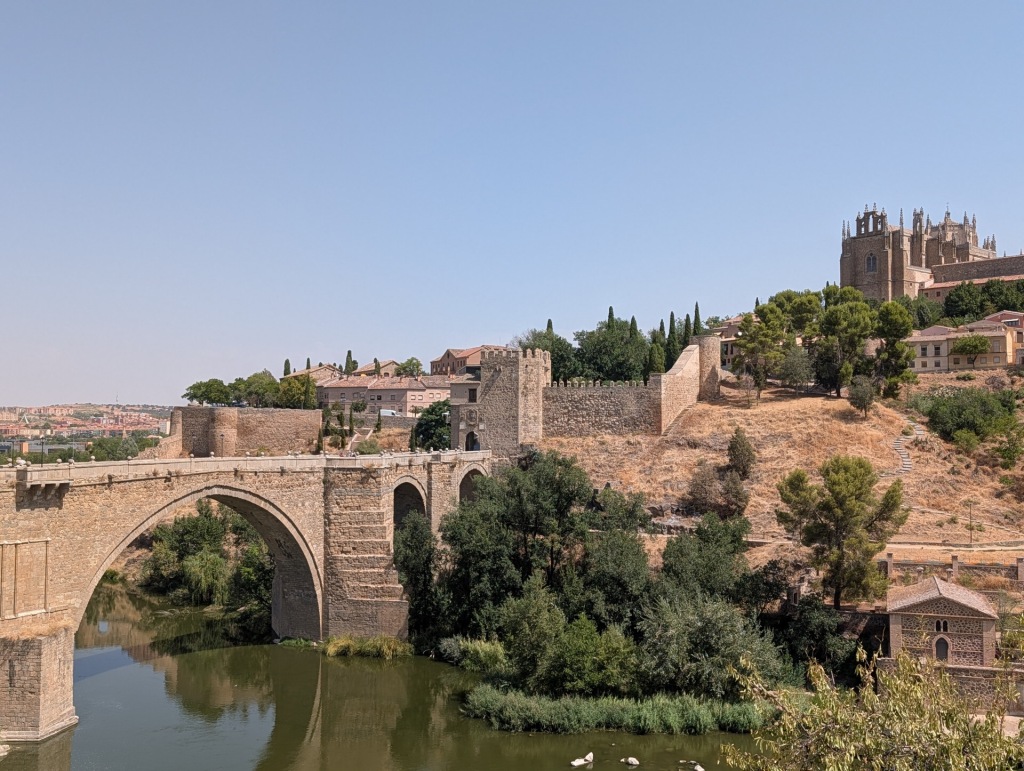
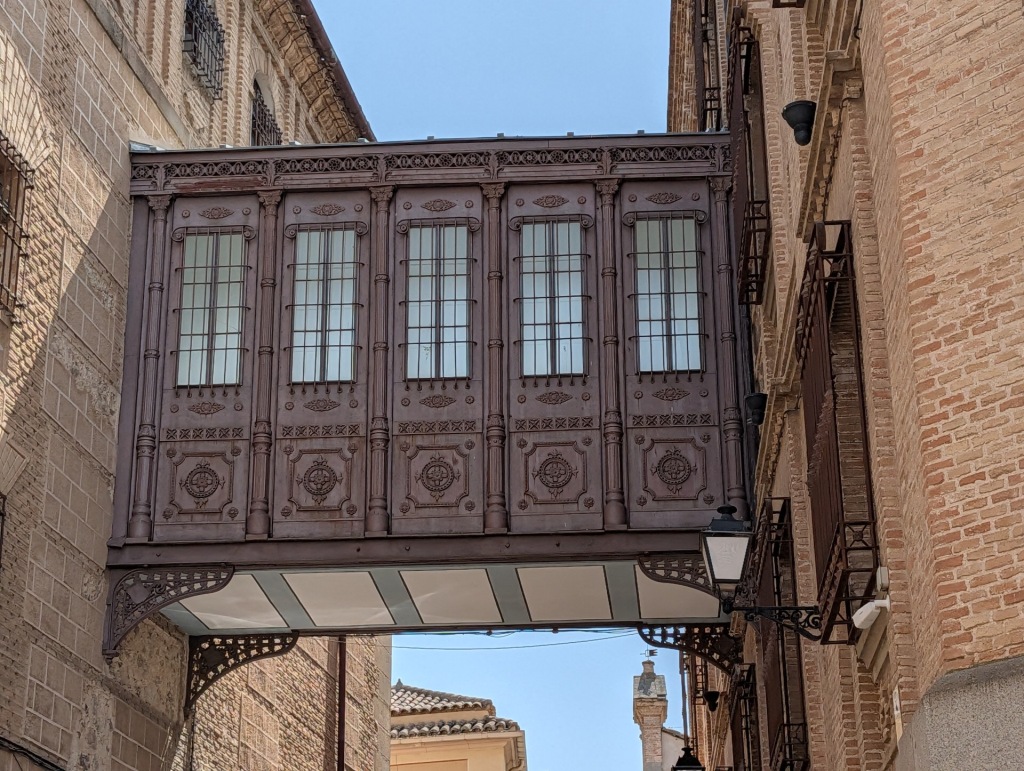
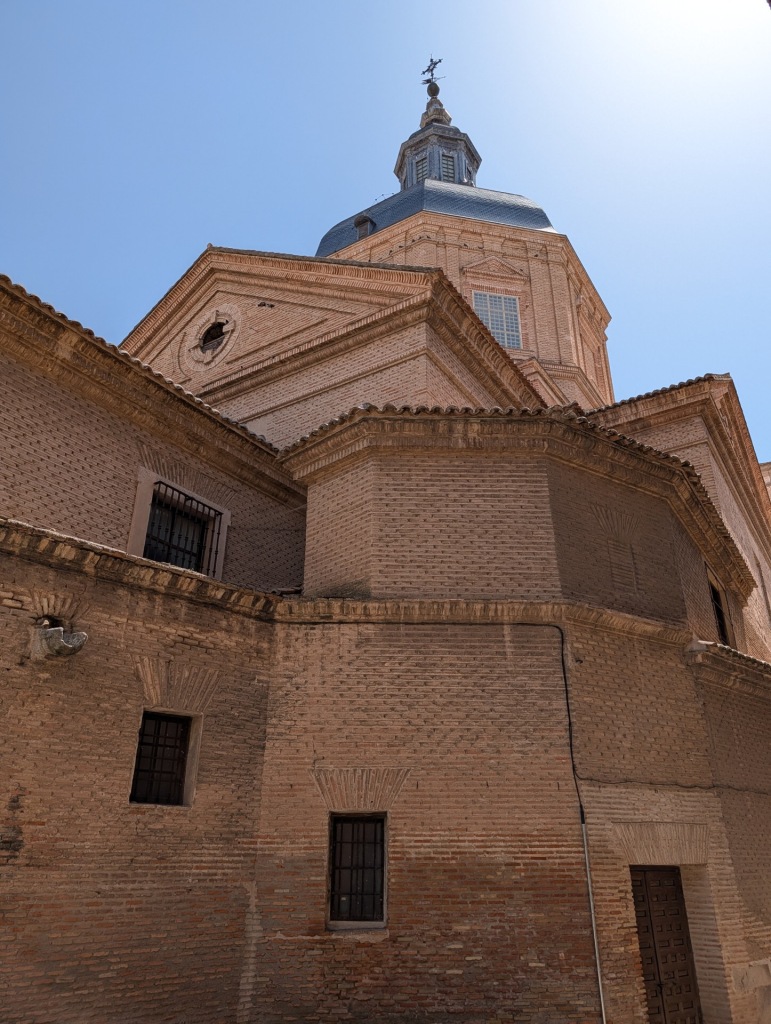
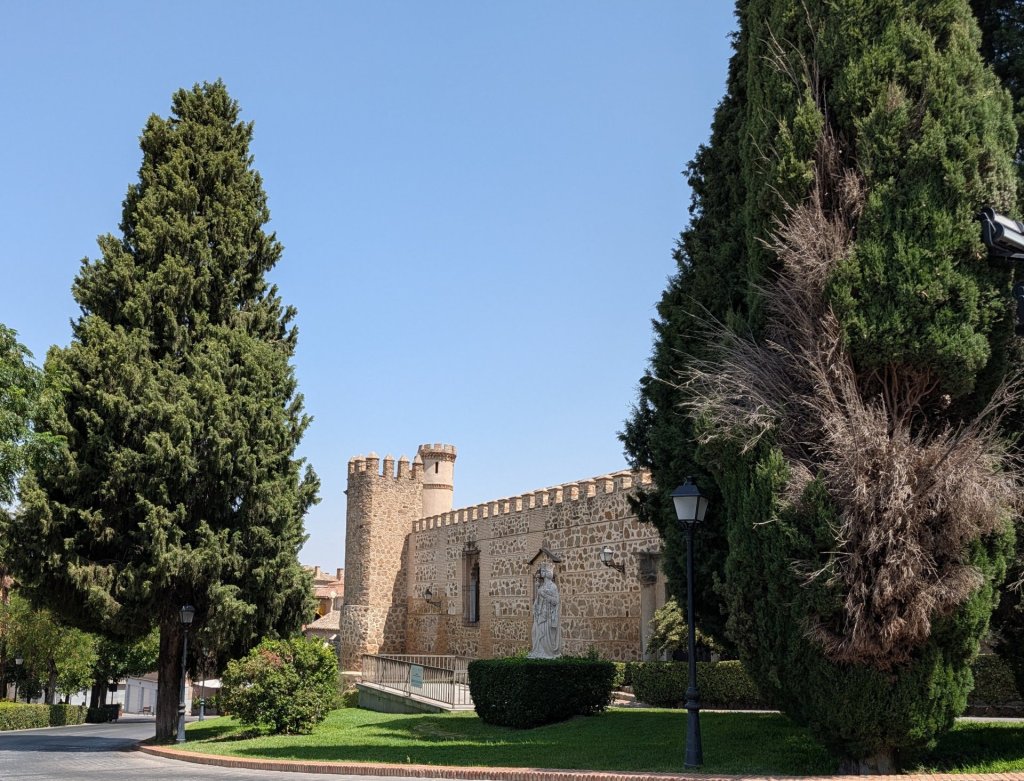
This was pleasant, as the small streets meant that I could stay in the shade and wasn't fully exposed to the midday sun.
From there, I drove back to Madrid.
I didn't stay in the city center, though. Instead I went to the suburb of Móstoles
Mostly because I wanted to visit a museum.
Nearby is a large airplane museum. Officially the "Museum of Aeronautics and Astronautics" (though that didn't seem to fit on the entrance gate). And there isn't much astronautics involved.
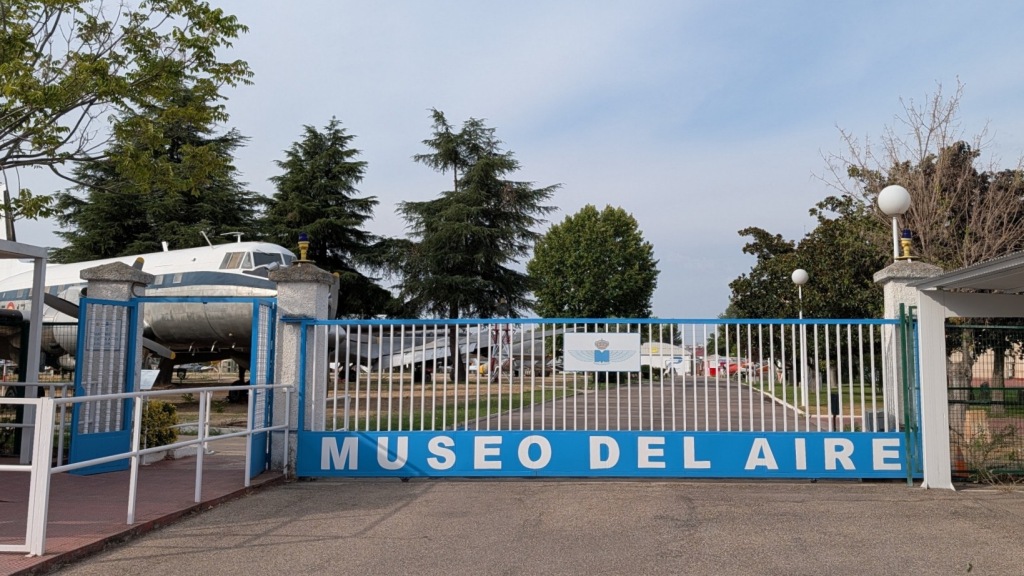
I had wanted to visit that the last time I was in Madrid, but then I only had a Monday available and, like all state and municipal museums in Spain, the museum didn't open on Mondays.
This time I made sure that I'd be there on a Saturday, avoiding that problem.
I had a moment of not being sure, as I wanted to search for the specific opening hours. The automatic AI summary of the search results told me that the museum would be closed during the whole month of August.
I went to the museum web site and there wasn't any mention of that.
Asking the AI again, it backpedalled and stated that many places in Spain shut down during August. And the museum might have been one of those. But wasn't.
But it might be closed anyway, as the next day was a public holiday in Spain (the Feast of the Assumption). And the usual opening hours might not apply.
There wasn't any mention on the museum web site of any closures on public holidays either. And, indeed, the museum opened at 10am the next day. Like on every Saturday.
Stupid AI.
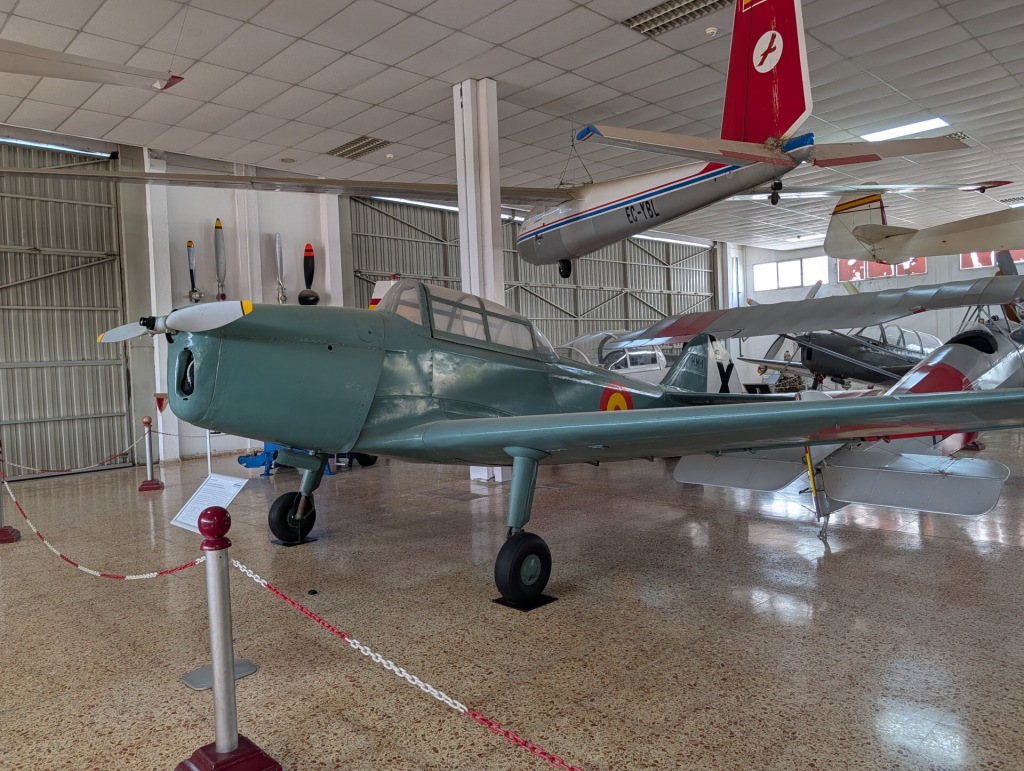
The museum had a surprising variety of planes.
Not unusual for an aeronautics museum. But this one was part of an active military air base. I had assumed that most of the planes on display would be Spanish military planes. Essentially a graveyard of decommissioned airplanes from the base, run as a museum.
And a couple of MiG fighters.
It seems like every airplane museum, wherever it is located, has a few of those. There have been thousands of them (both, the MiG-17 and the MiG-21, have been produced more than 10,000 times) and after the end of the cold war, it seems that the former USSR states have been selling them cheaply to anyone interested. (Specific numbers are hard to find, but it seems that, back then, you could buy a (non-flying) MiG-21 for less than a pickup truck. Though the cost of transporting it to the museum would be about the same again.)
But whoever runs the museum has put in a lot of effort to cover a large amount of aeronautics history. And not simply show off the leftover planes to the public.
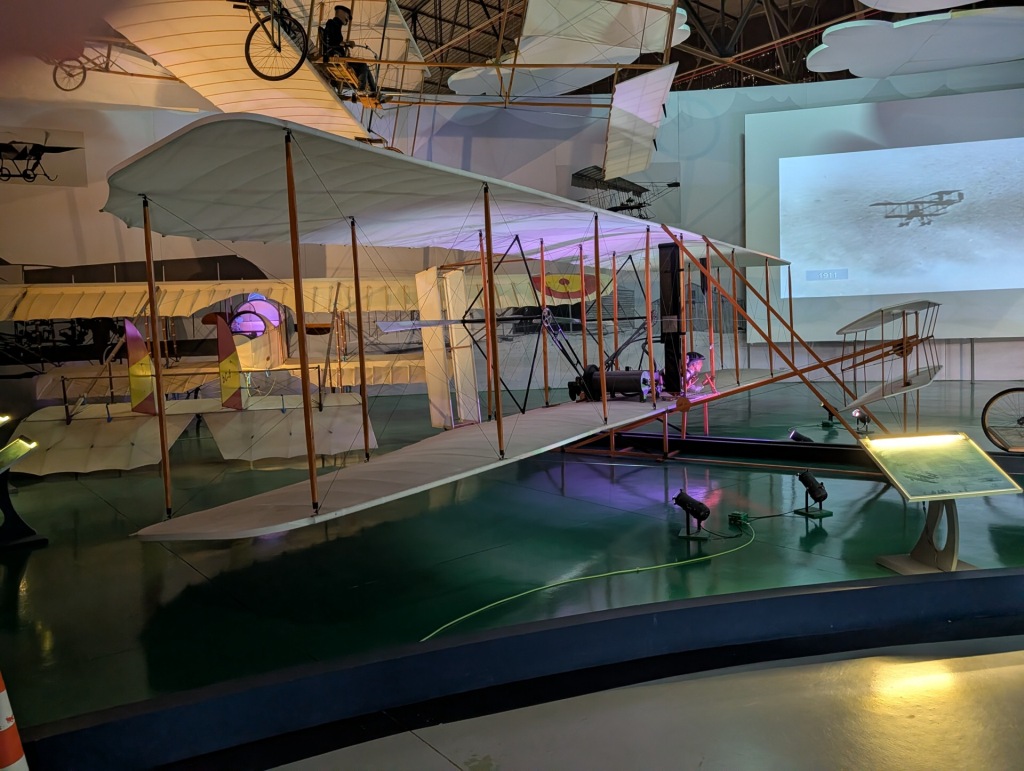
There's a substantial exhibition of replicas of early planes.
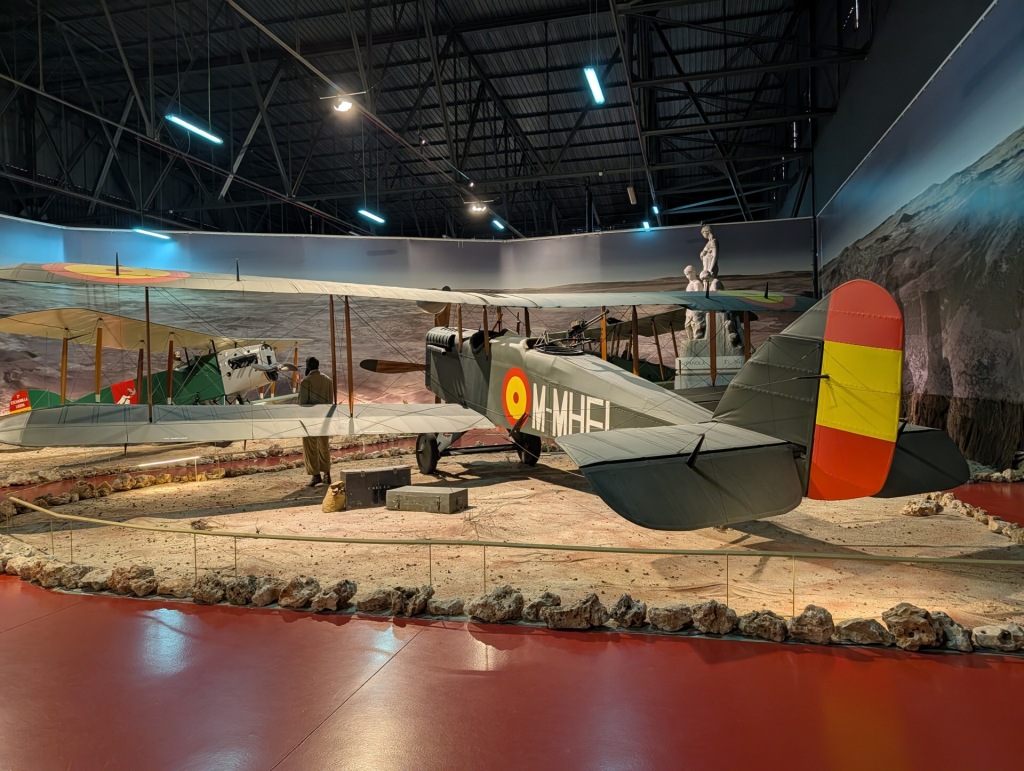
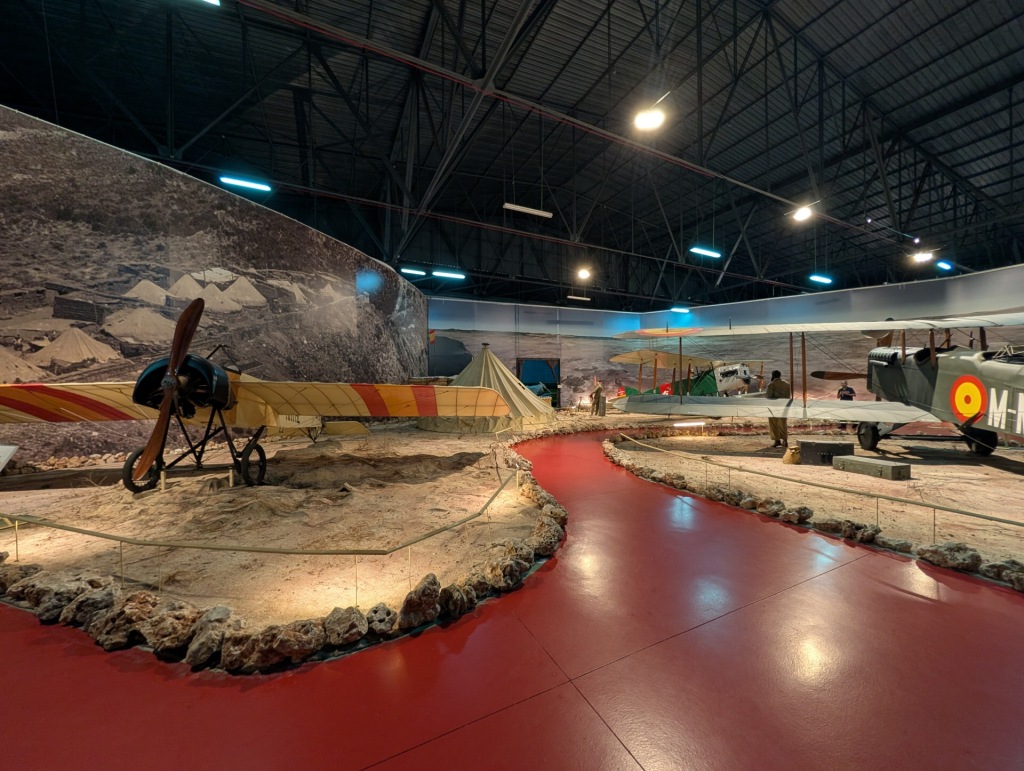
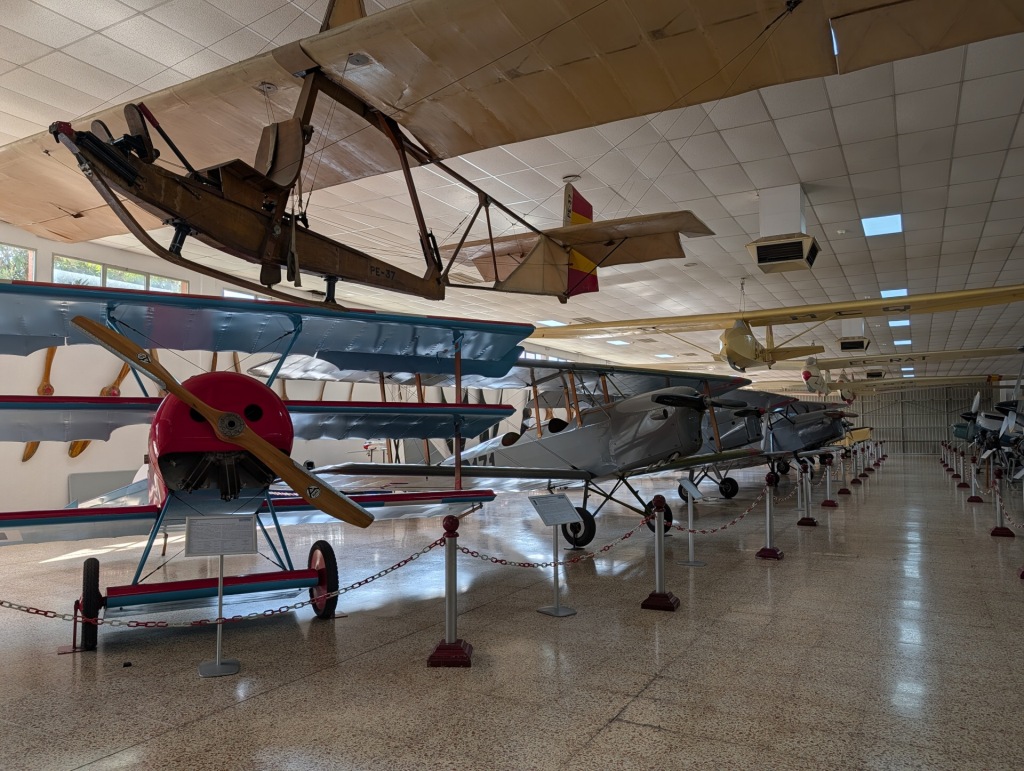
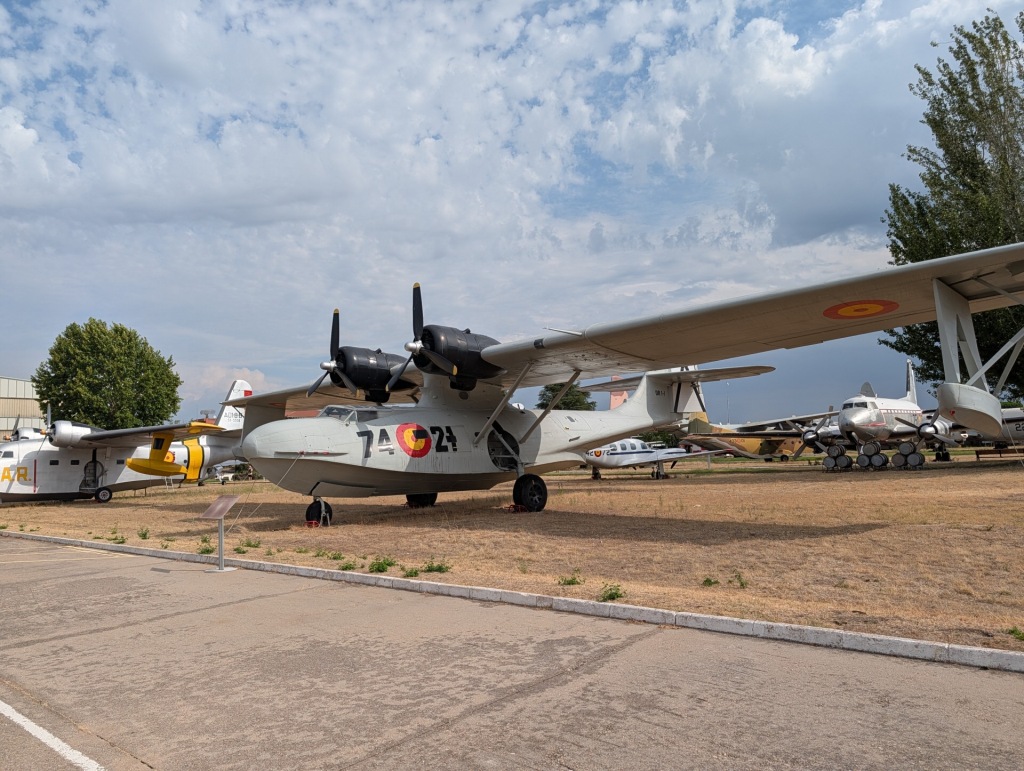
And a number of seaplanes.
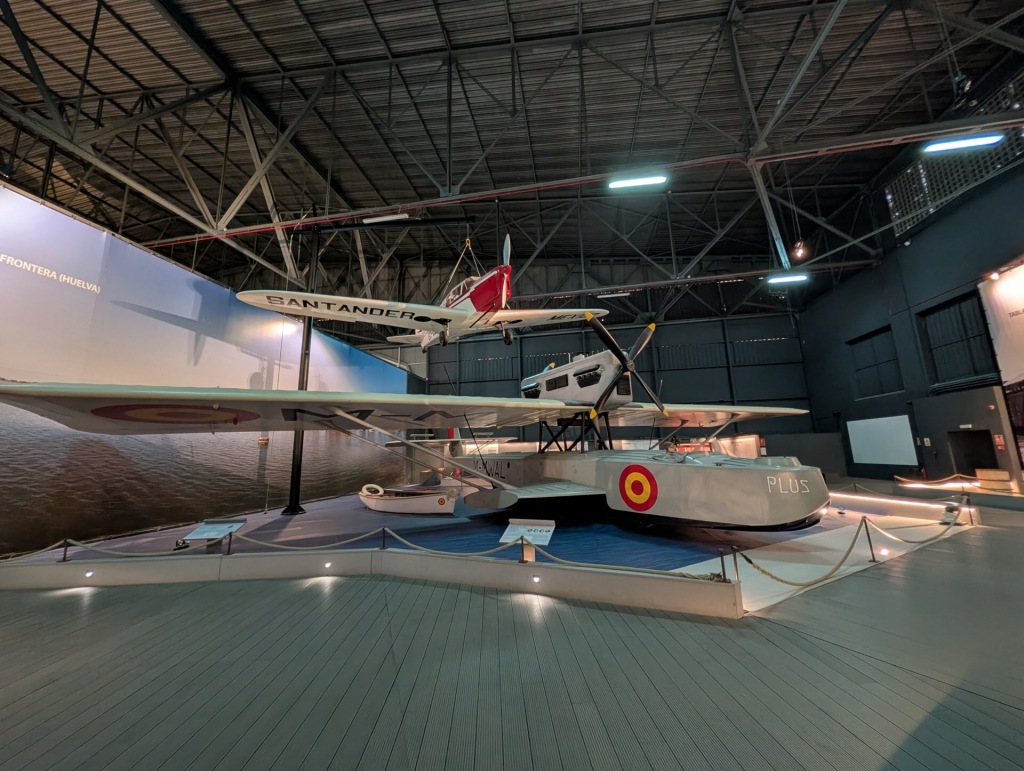
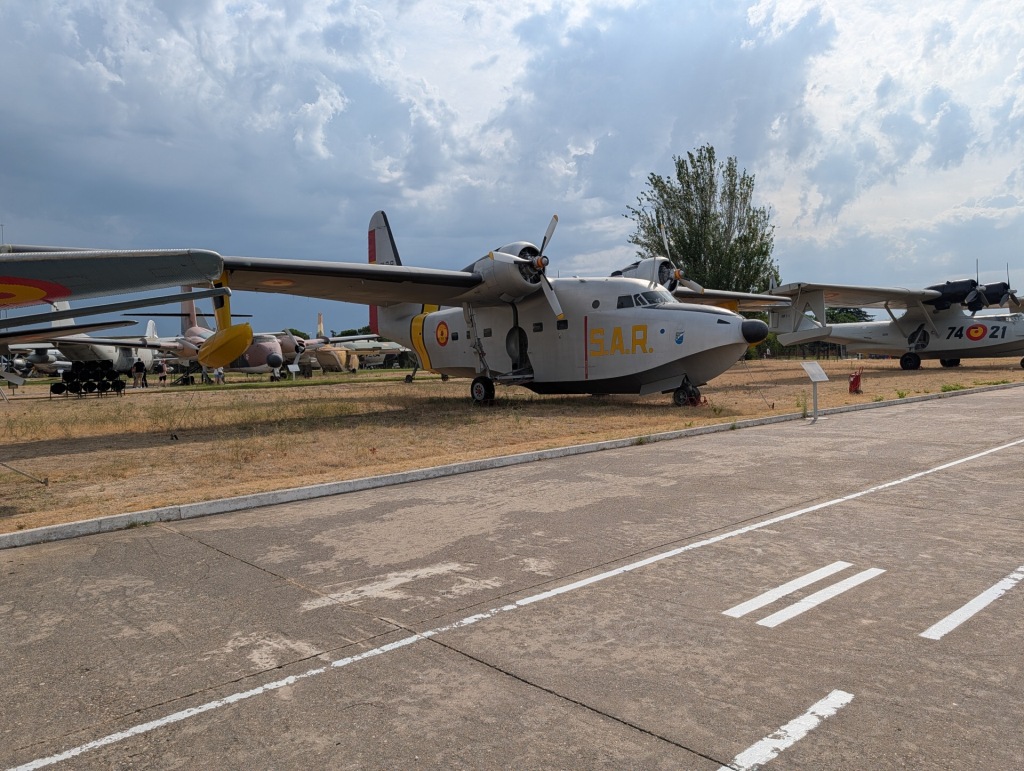
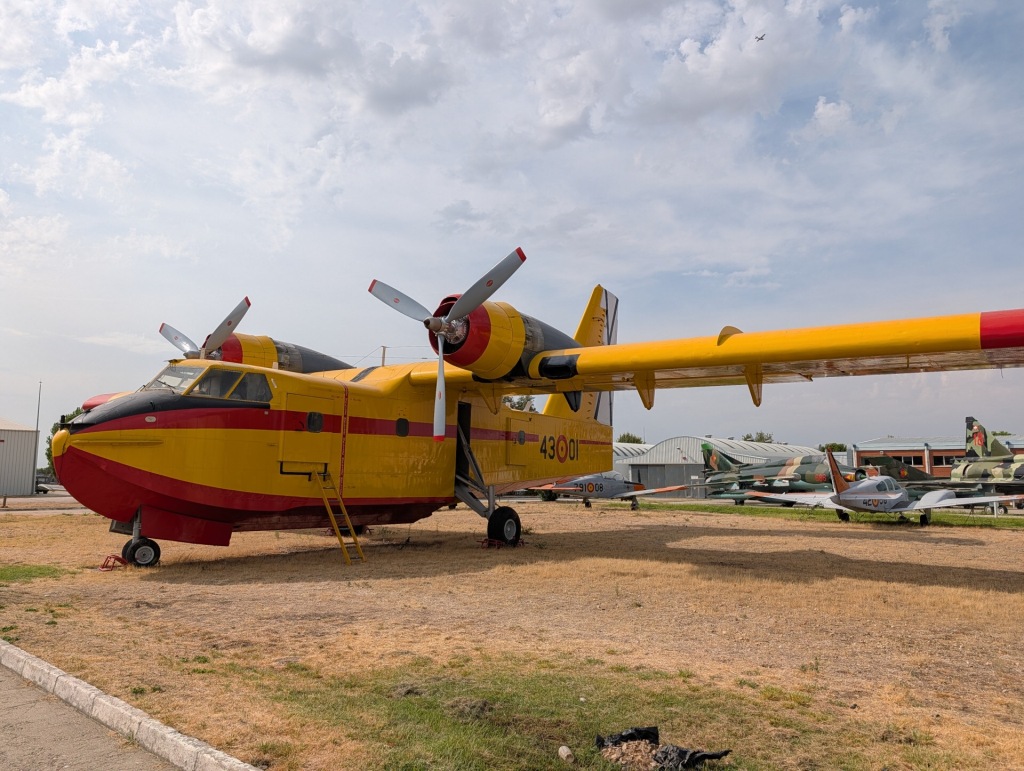
Firefighting planes.
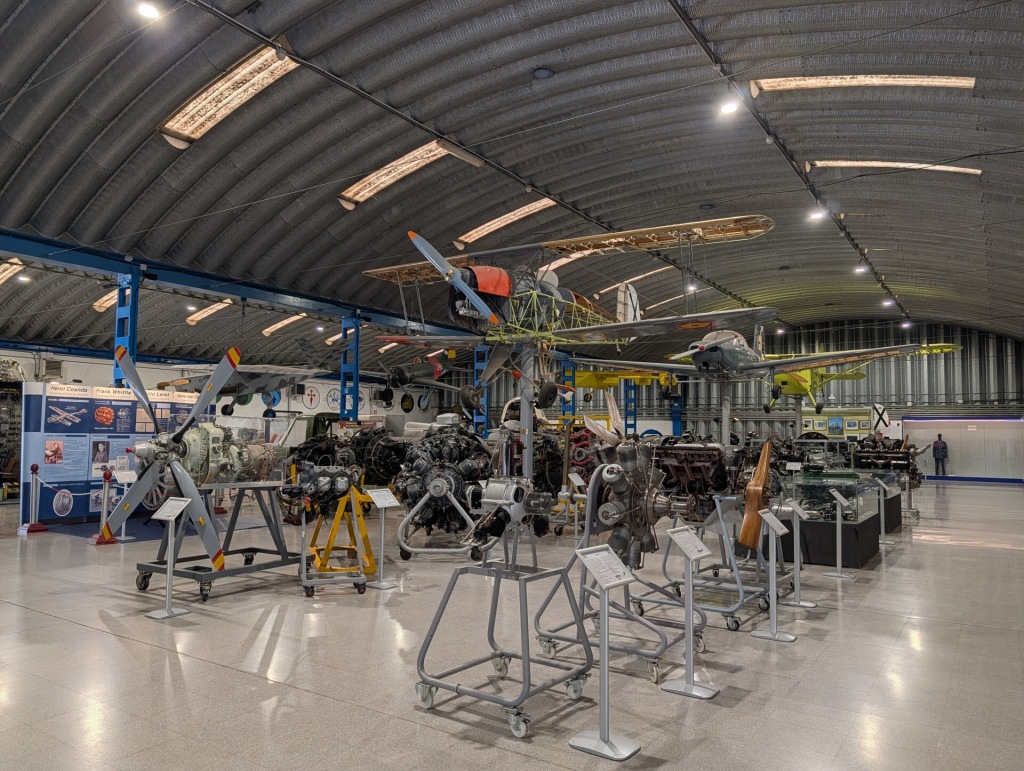
And a large exhibition of the various motor types used for planes.
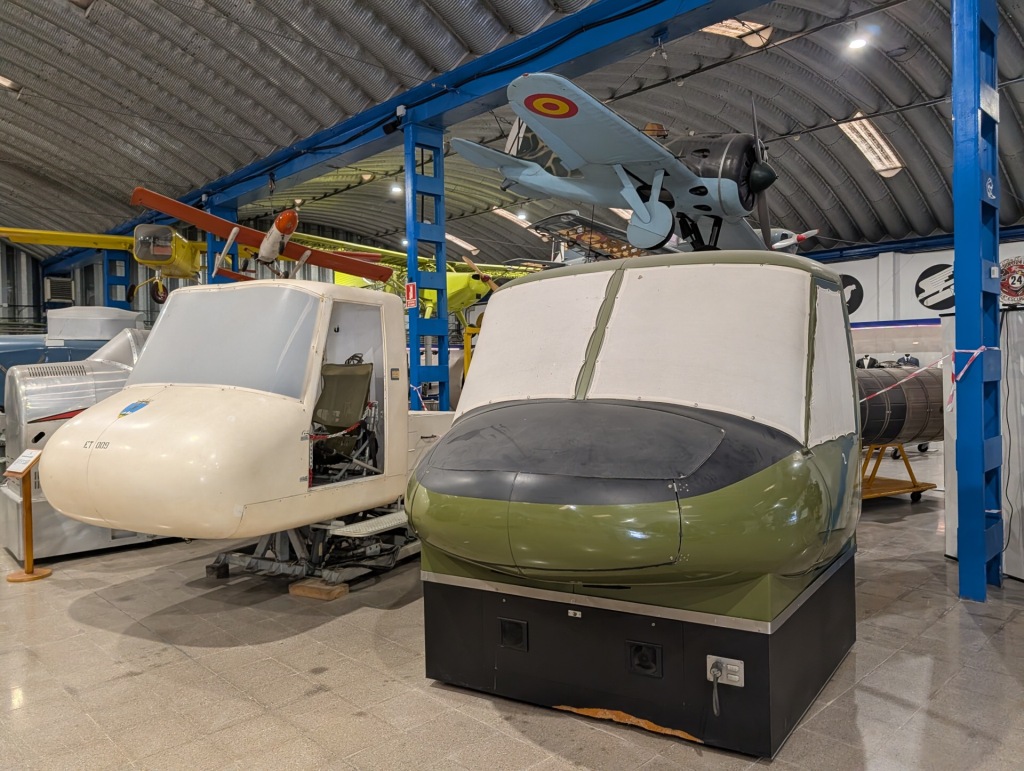
Simulator cockpits.
A few gyrocopters.
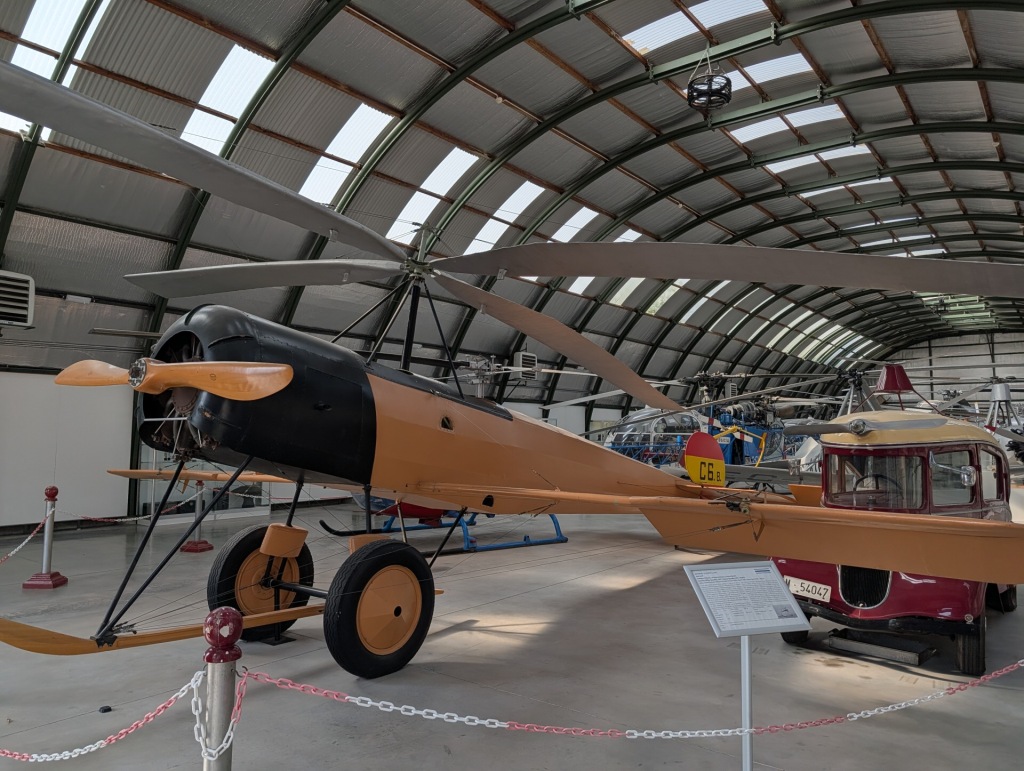
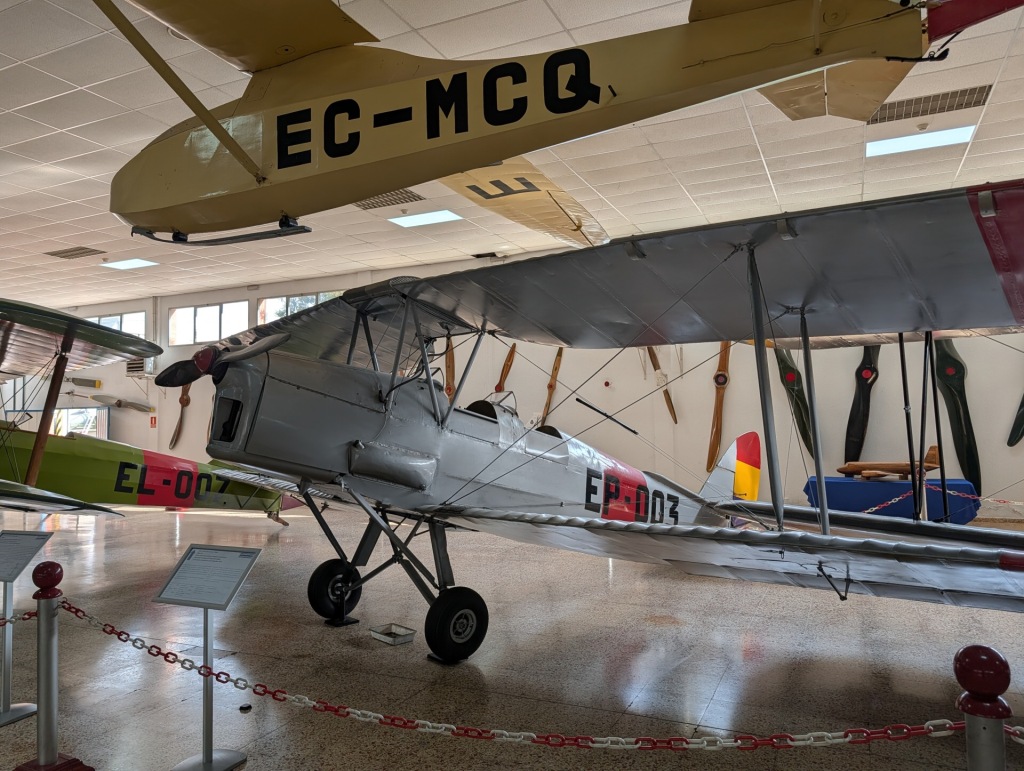
Sailplanes.
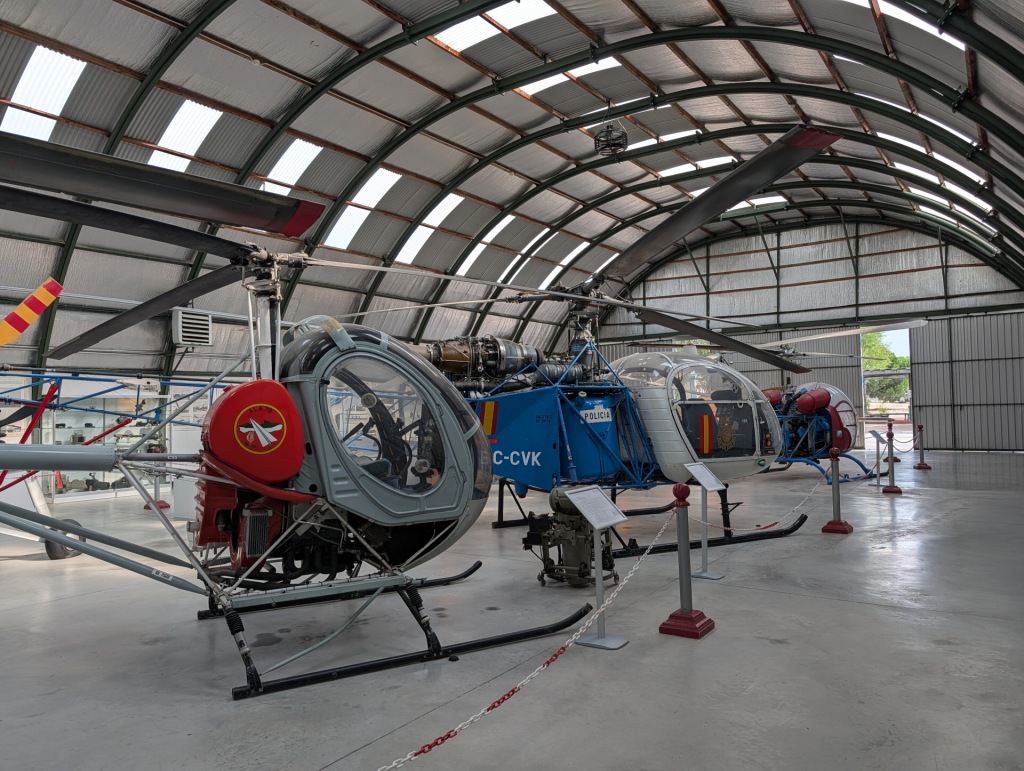
Helicopters.
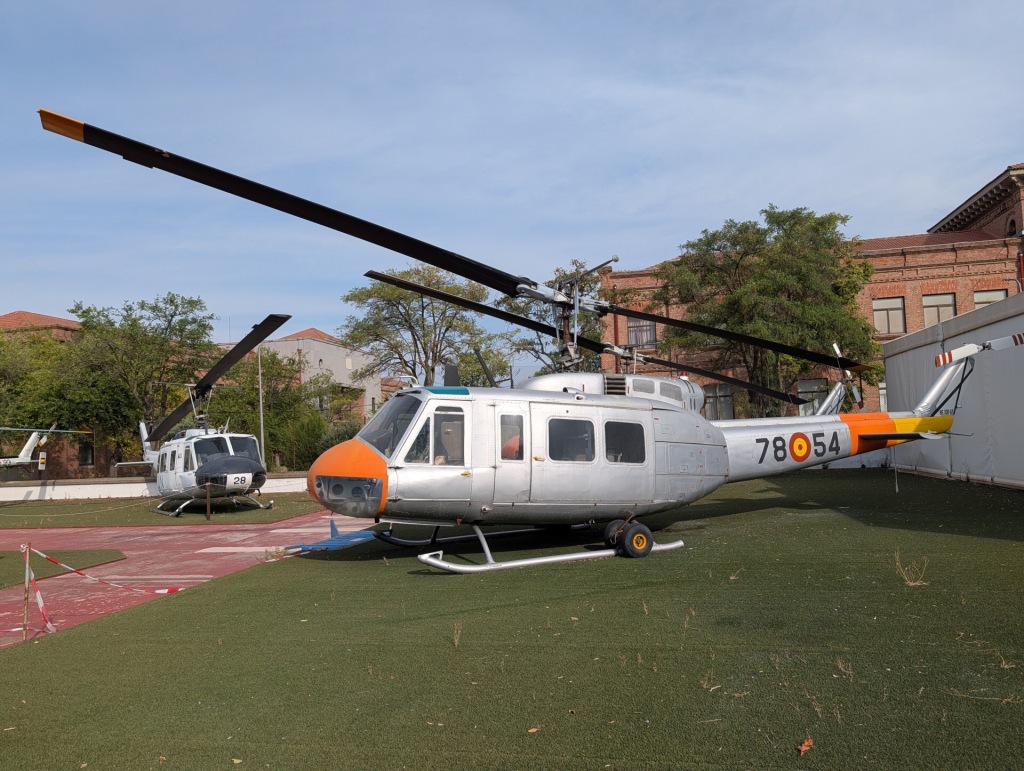
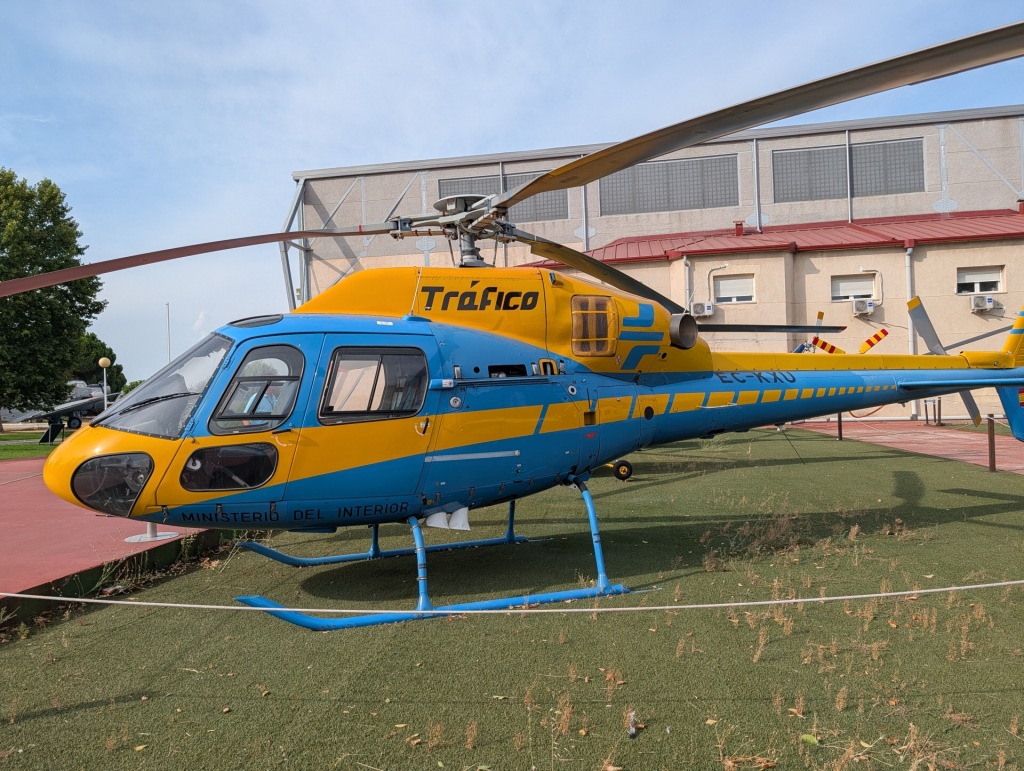
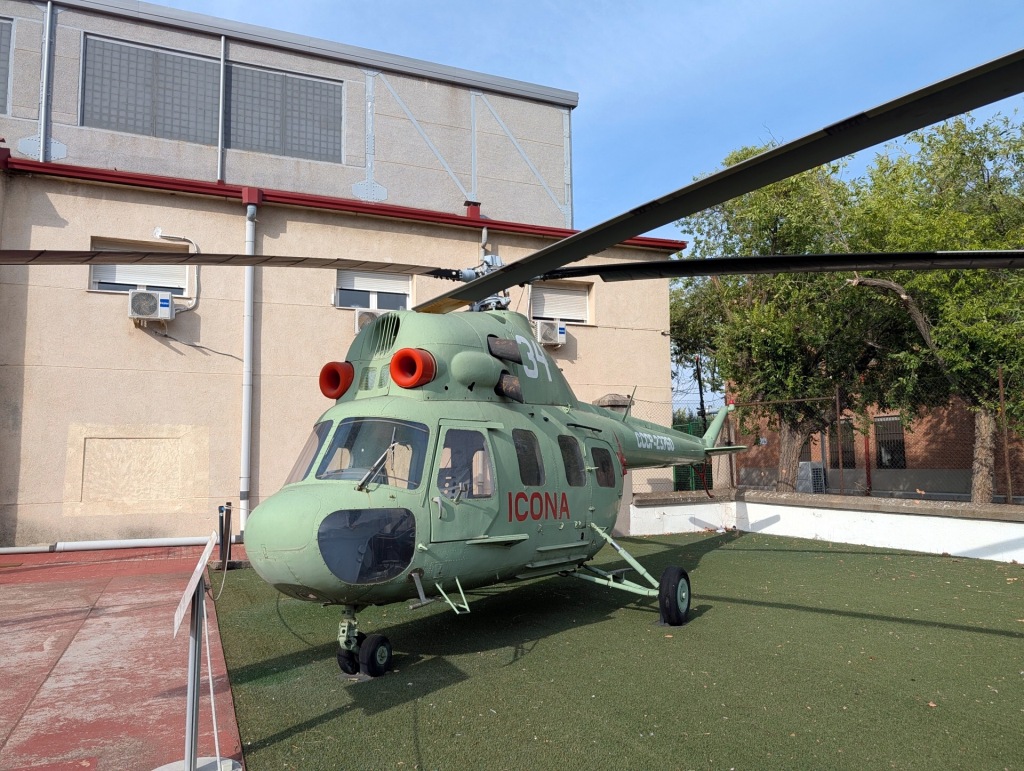
Transport planes (civilian and military).
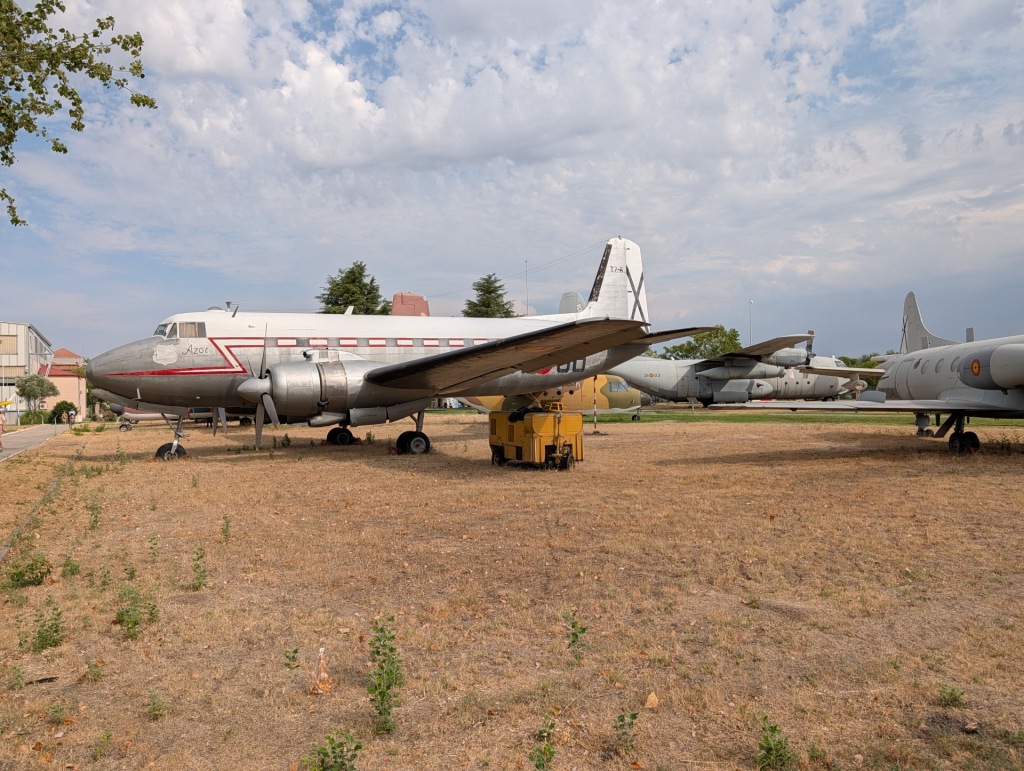
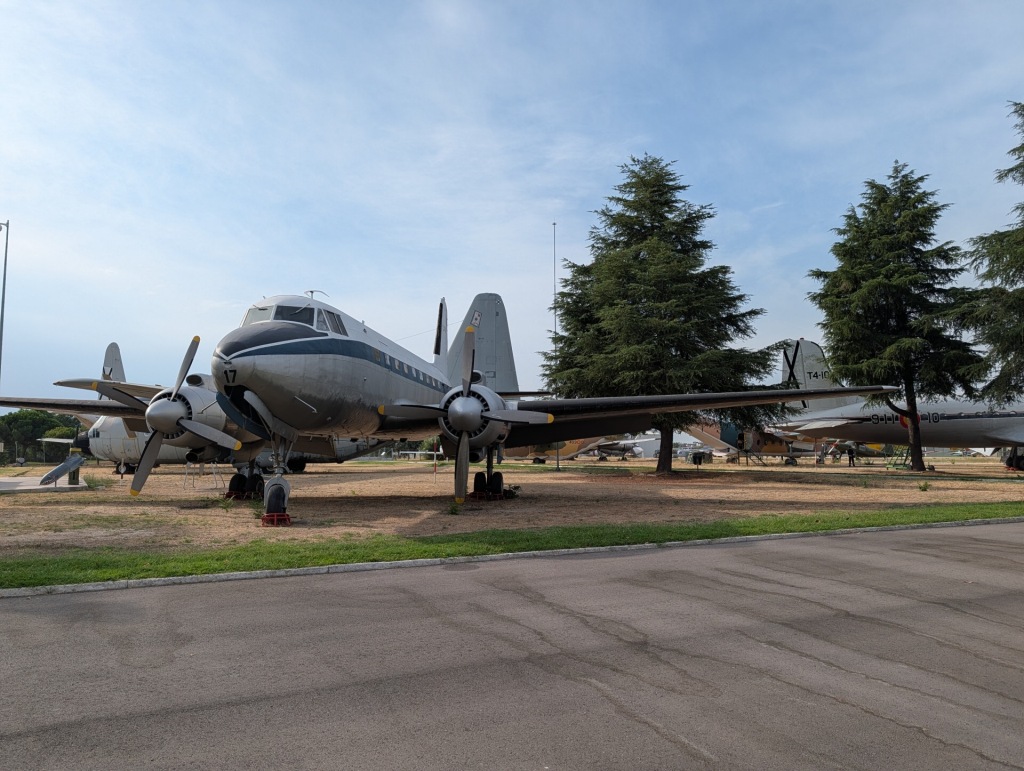
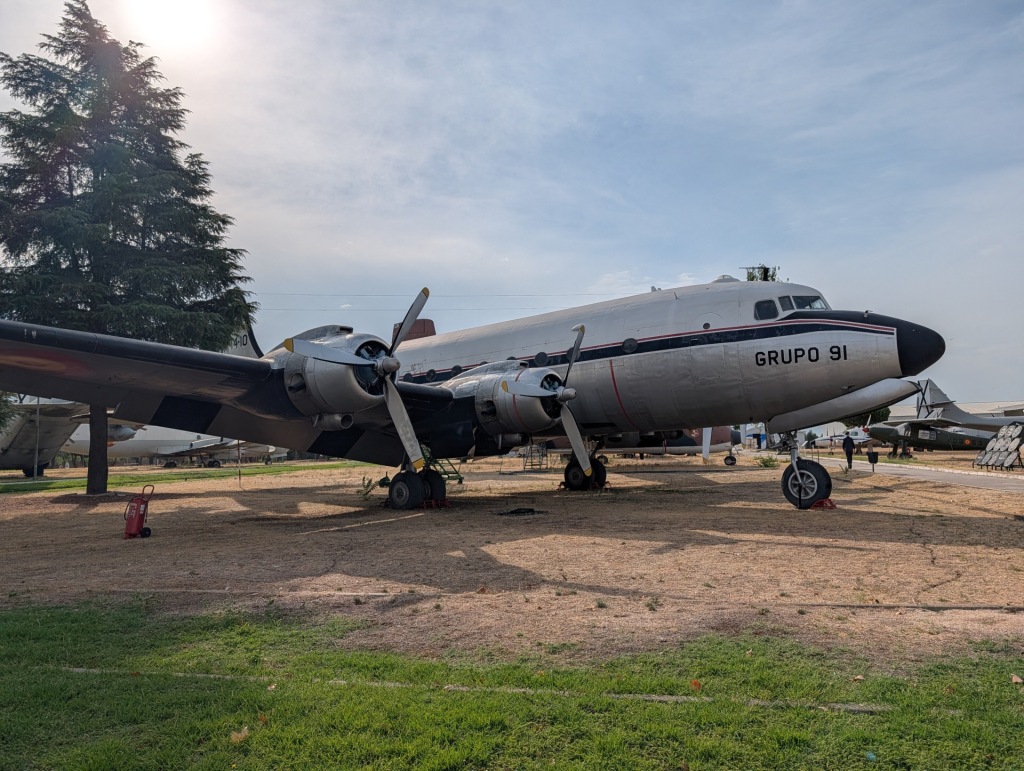
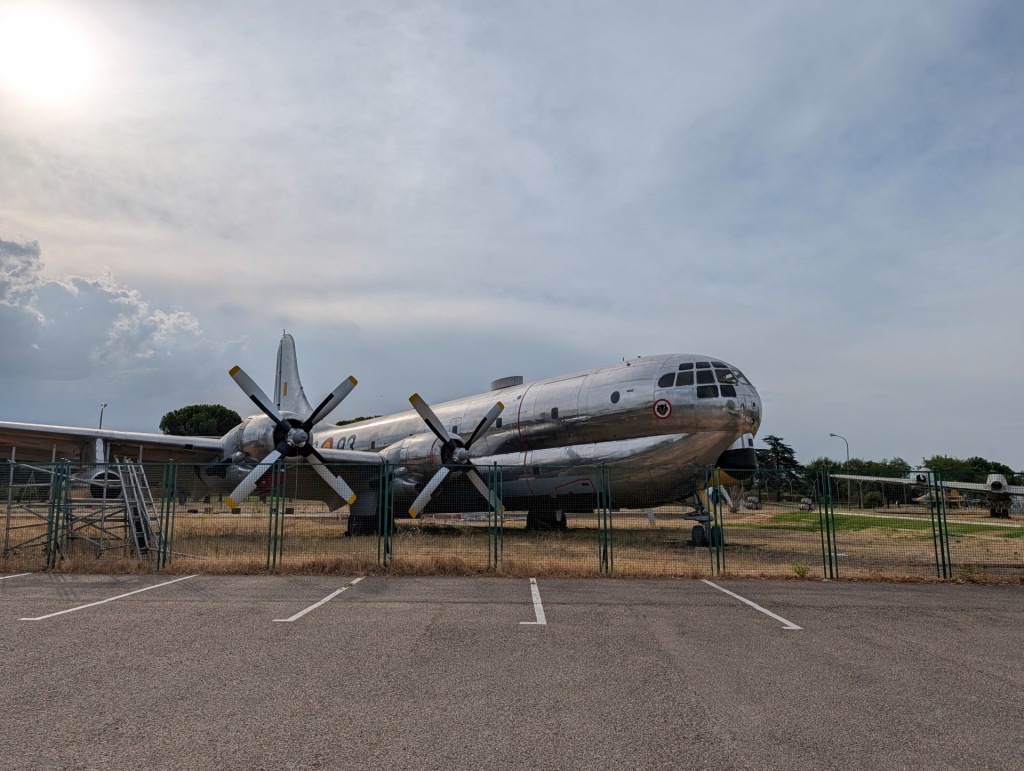
An air-refuelling tanker plane.
A lot of stuff.
Although not all of that has been professionally restored.
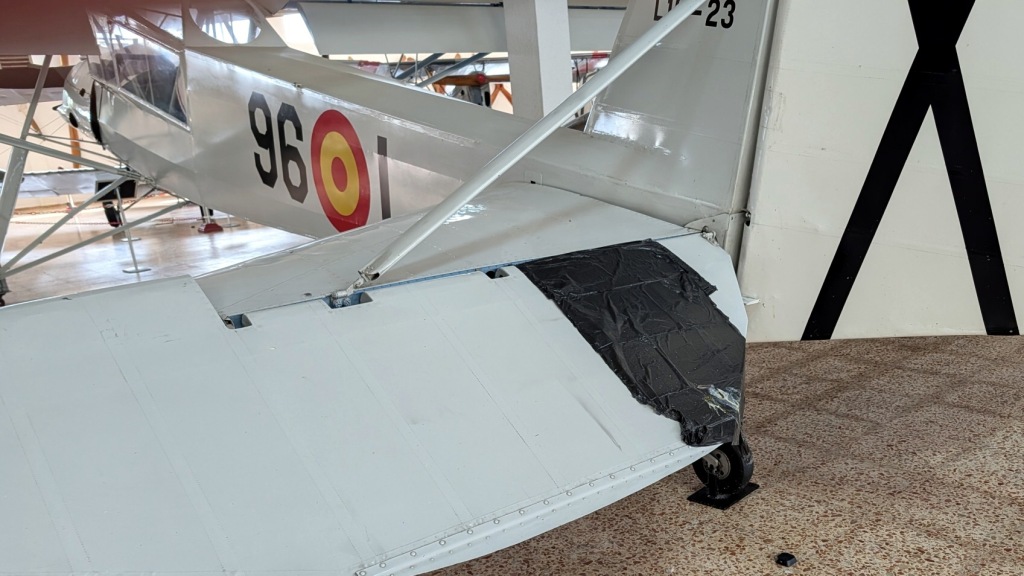
(At least not by the standards of the aviation industry. In the movie industry, fixing things with a roll of duct tape counts as the professional standard.)
Of course, there was also the expected collection of cold war planes. It's almost like a checklist for airplane museums. There has to be a Mirage, a Phantom, an F-104 Starfighter, a MiG-17 and a MiG-21.
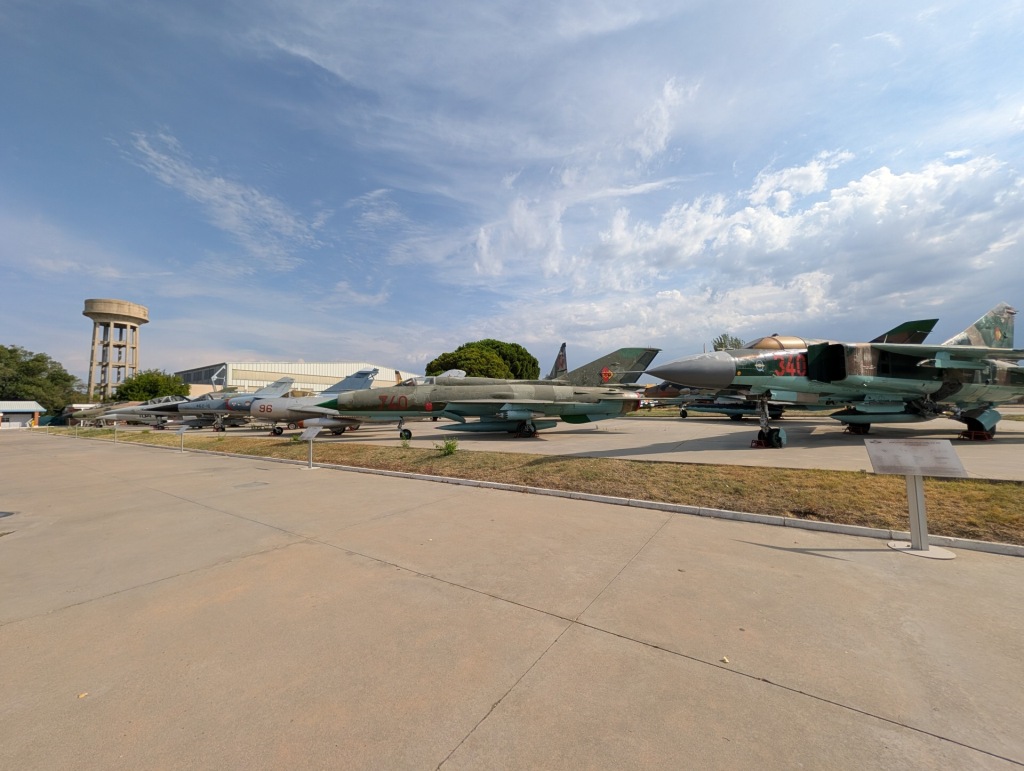
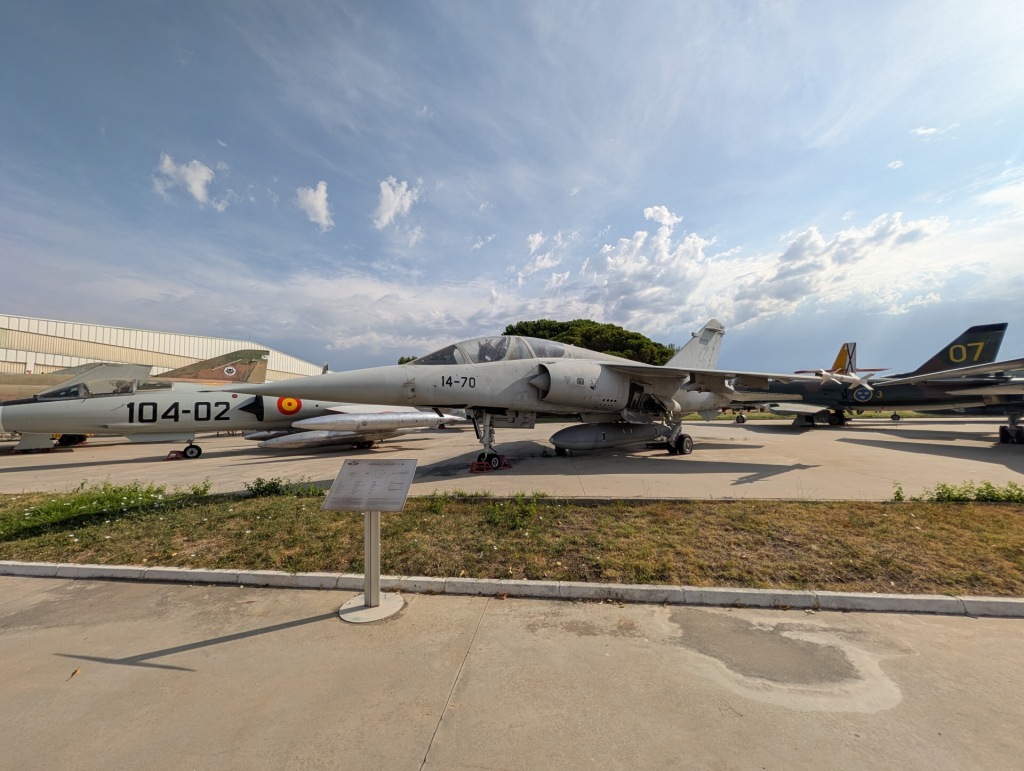
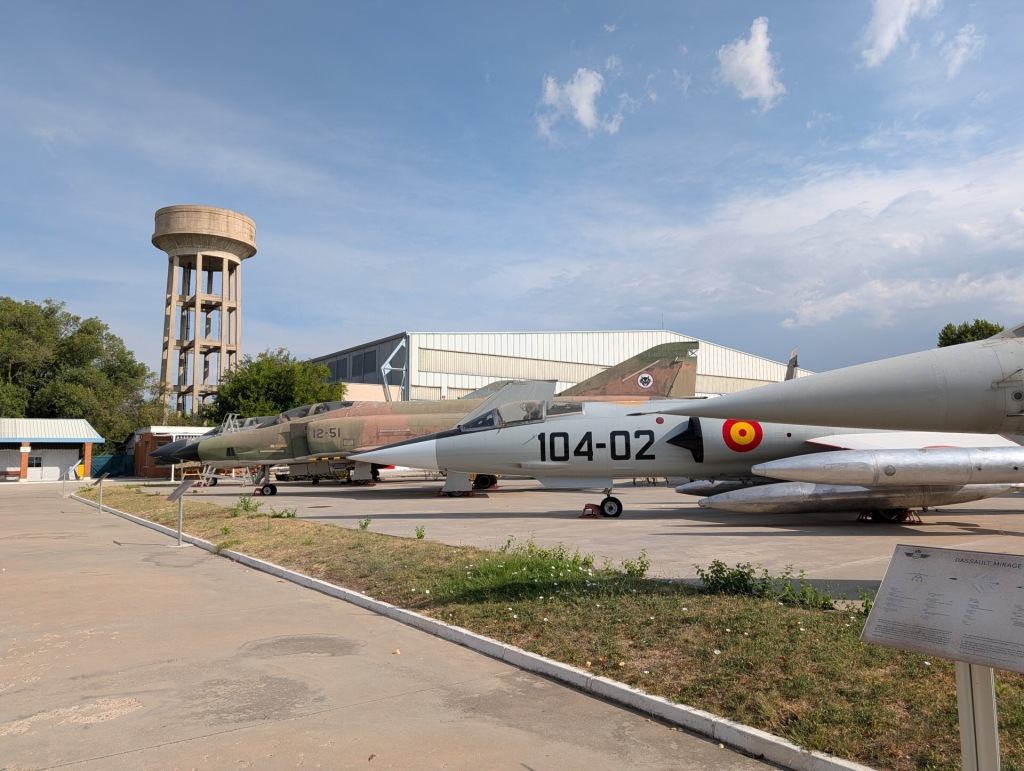
Somehow it feels a bit like there's some standard set of planes that every airplane museum has to have (like a starter pack).
Although this museum also has the Sabre and the Saab Viggen, which kind of represent the first booster pack of airplane collections.
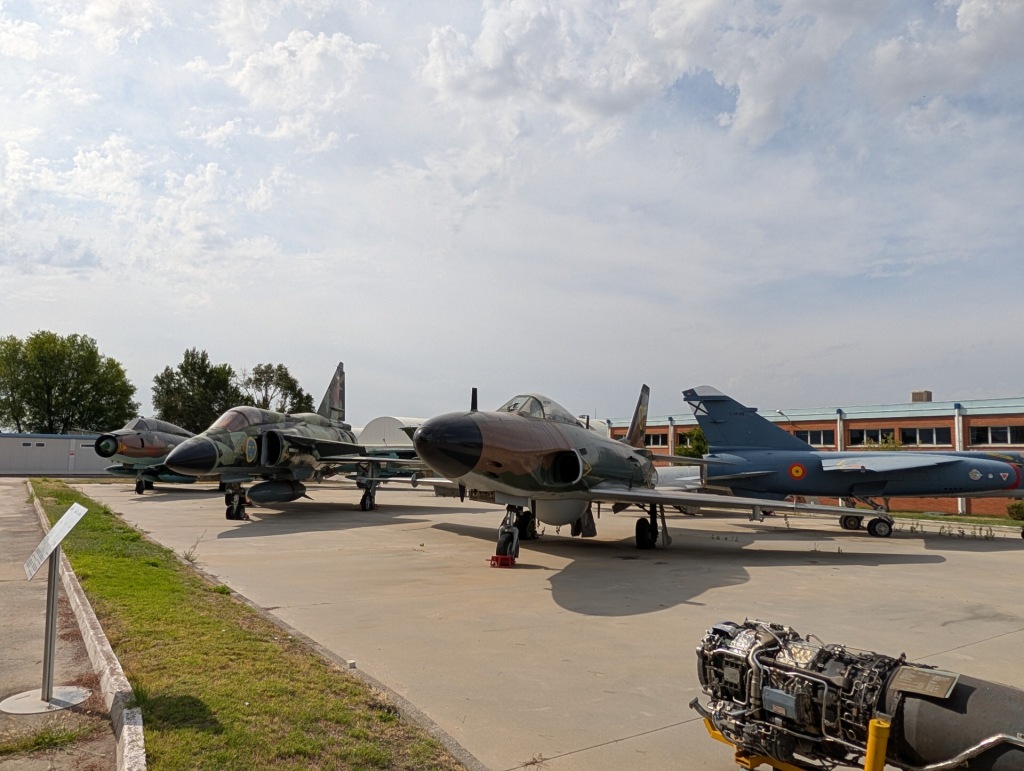
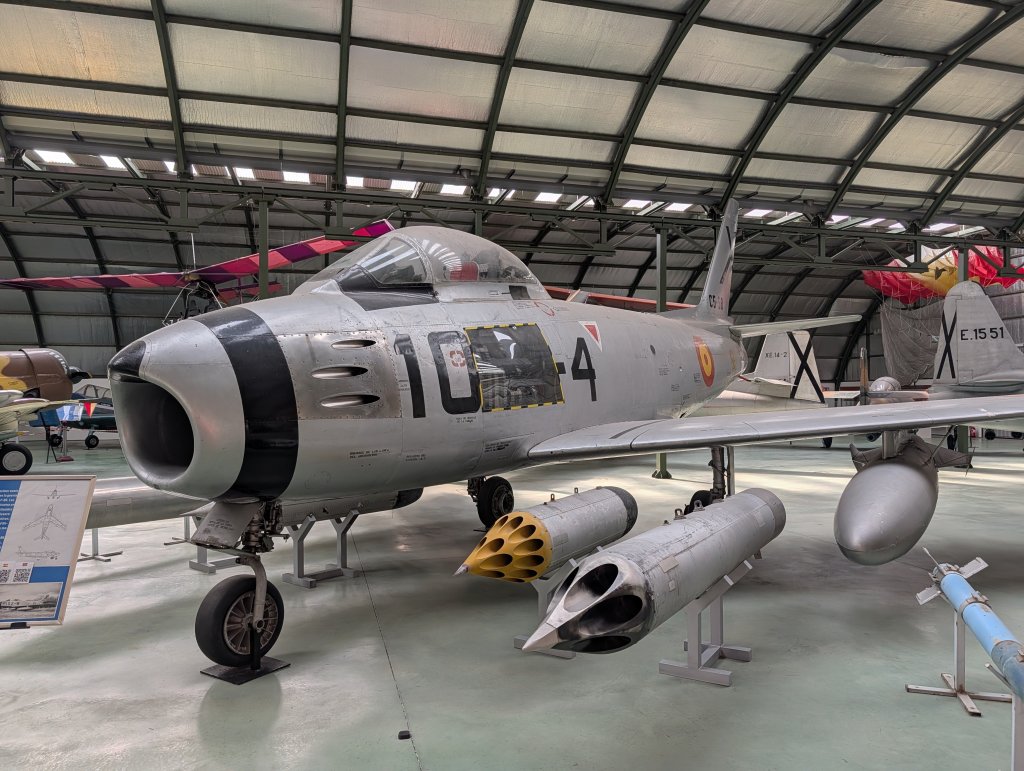
Including some oddities, where you can see that the aircraft designers tried to fix an obvious problem, but hadn't quite come up with the solution modern planes use.
Like the issue of a pilot wanting to see where he's going.
On this biplane, for example, the top wing blocks most of the forward view of the pilot.
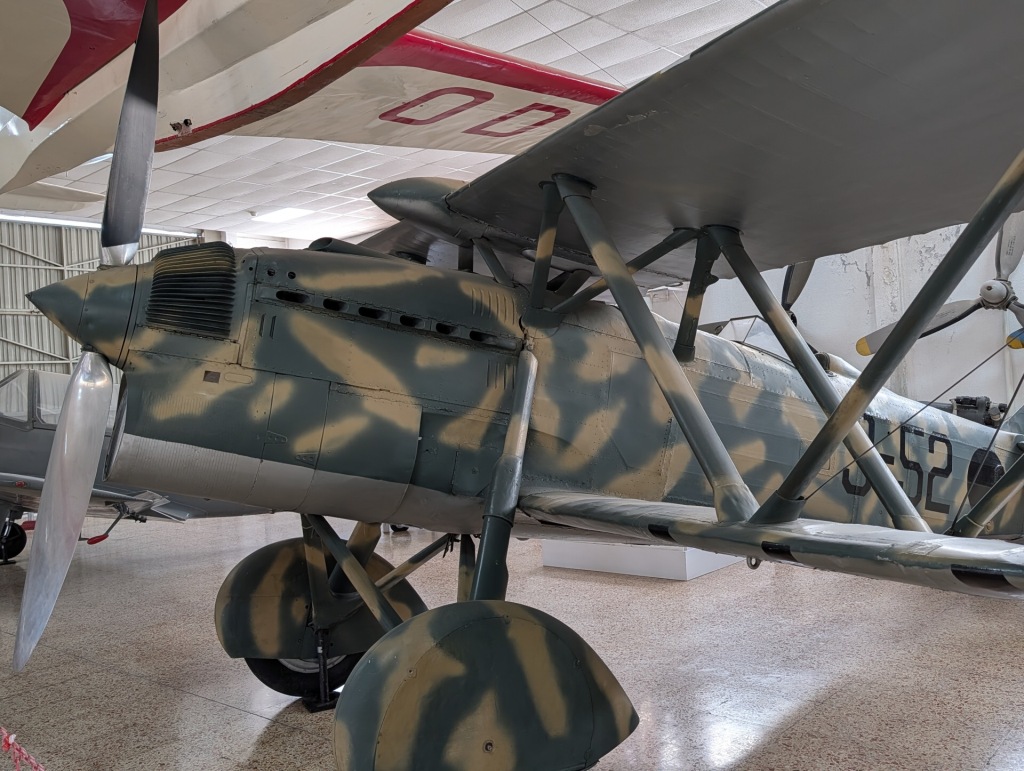
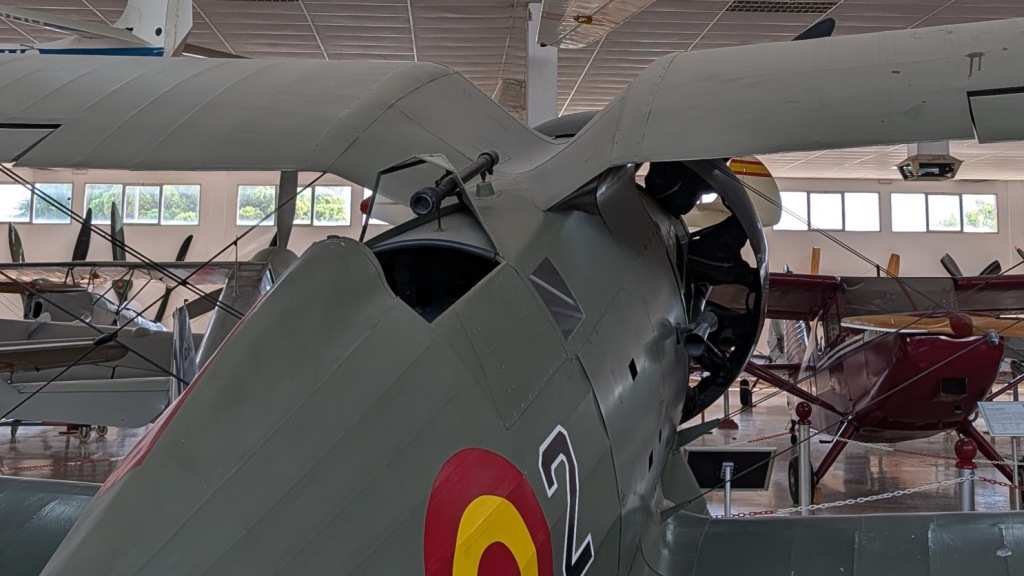
With modern planes, that's easily solved. Put the pilot in front of the wings. (And don't build biplanes.)
A solution they did try was putting a V-shaped kink into the wing. (Though that looks like it would make the wing more likely to break.)
There were also some odd designs, like the Transavia PL-22, which looks as though they have forgotten to build the second half of the plane.
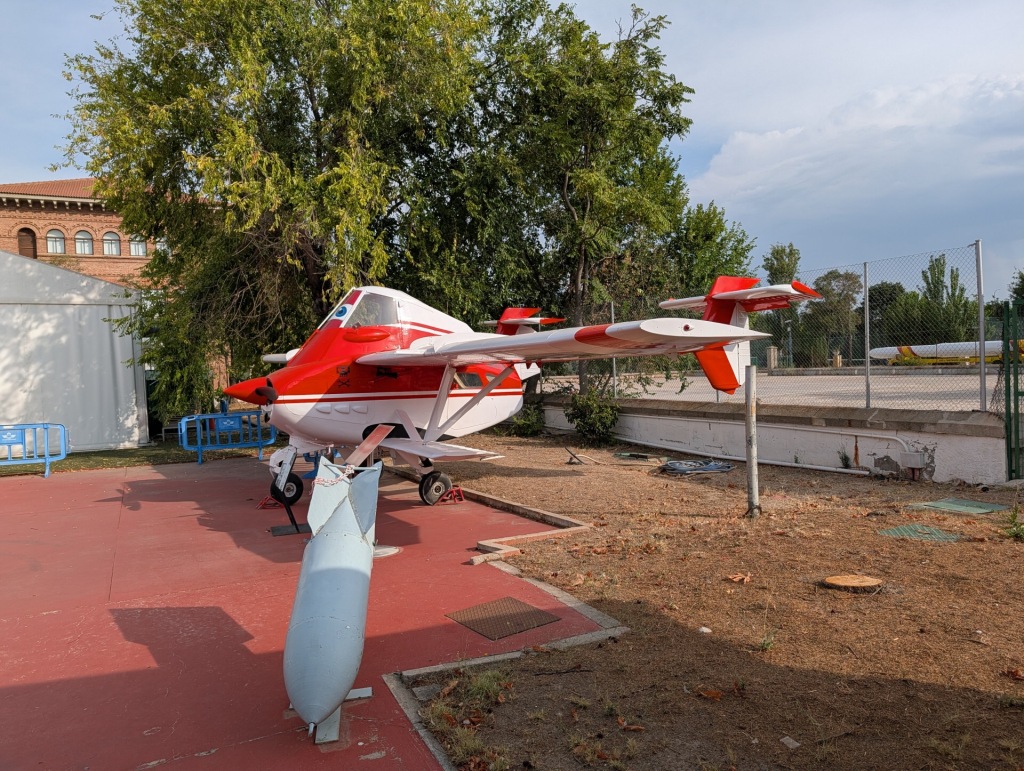
The fuselage appears unusually short. And the plane doesn't have a tail. The tail fins, with the rudders and elevators, are attached to the wings instead of the fuselage.
Some parts of the collection itself seemed strange as well.
There was this big display of metal plates. At first, I thought it might be some sort of regimental insignia.
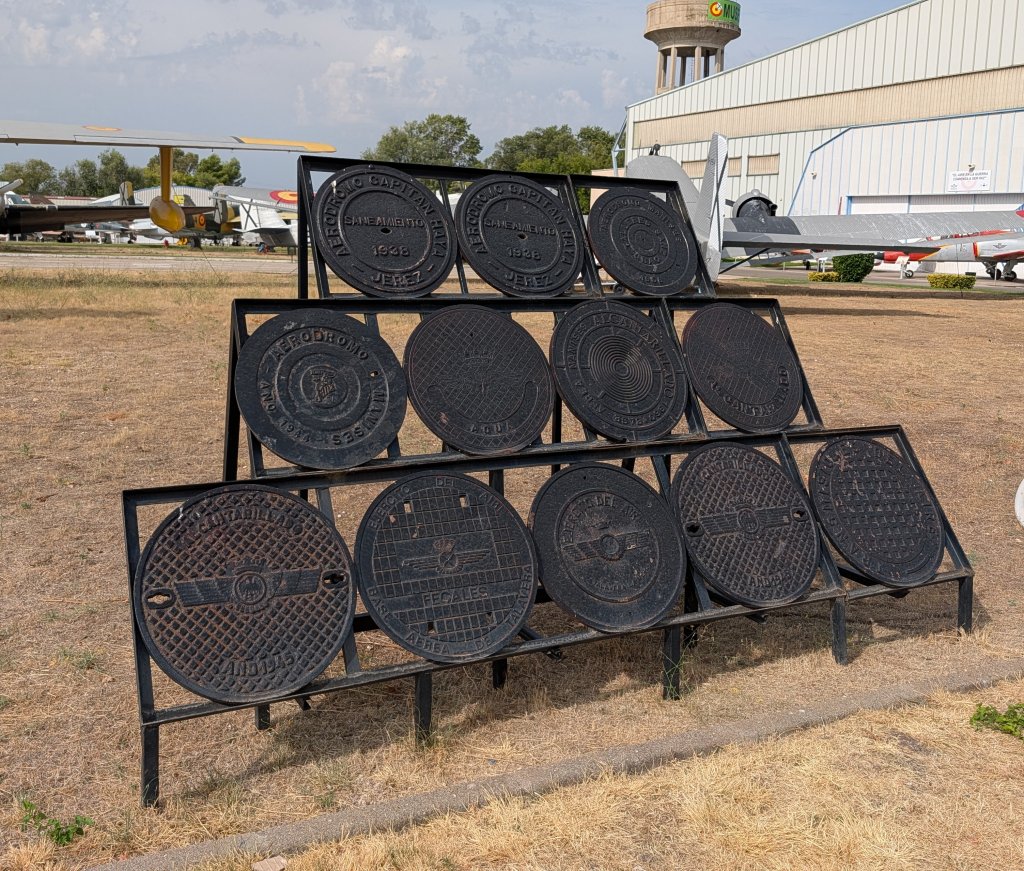
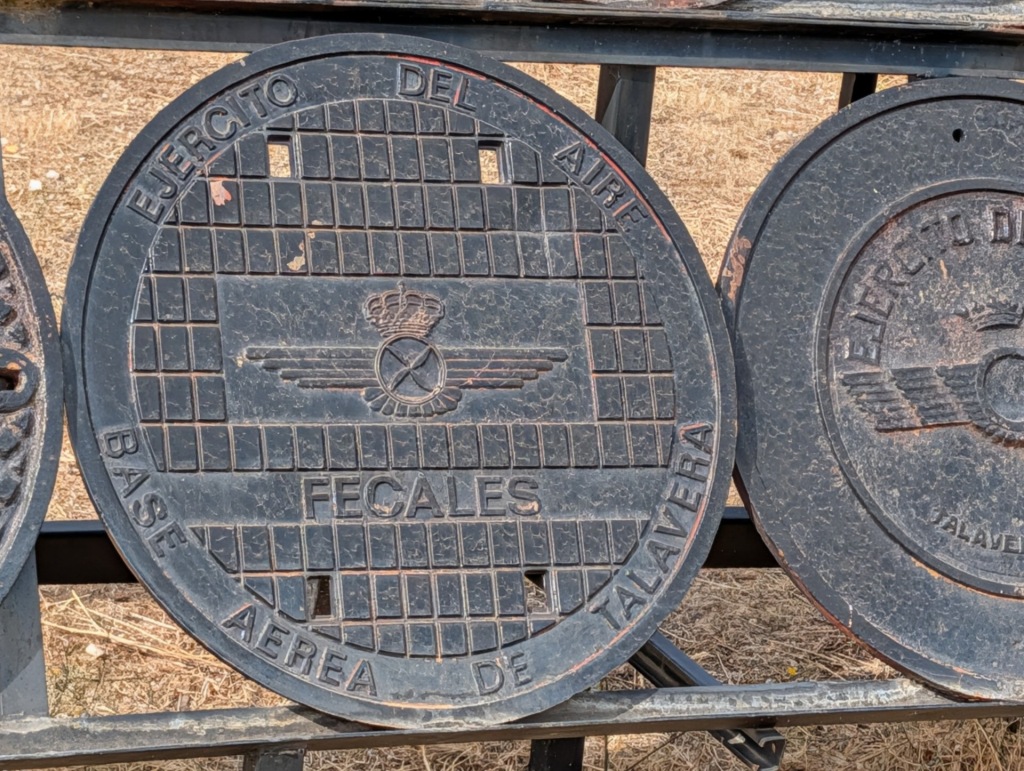
But it turned out to be nothing more than a set of manhole covers.
One surprising, somewhat ambiguous, thing was the inscription on a display of rockets, stating how hopeful they are that all weapons will end up as decoration on monuments.
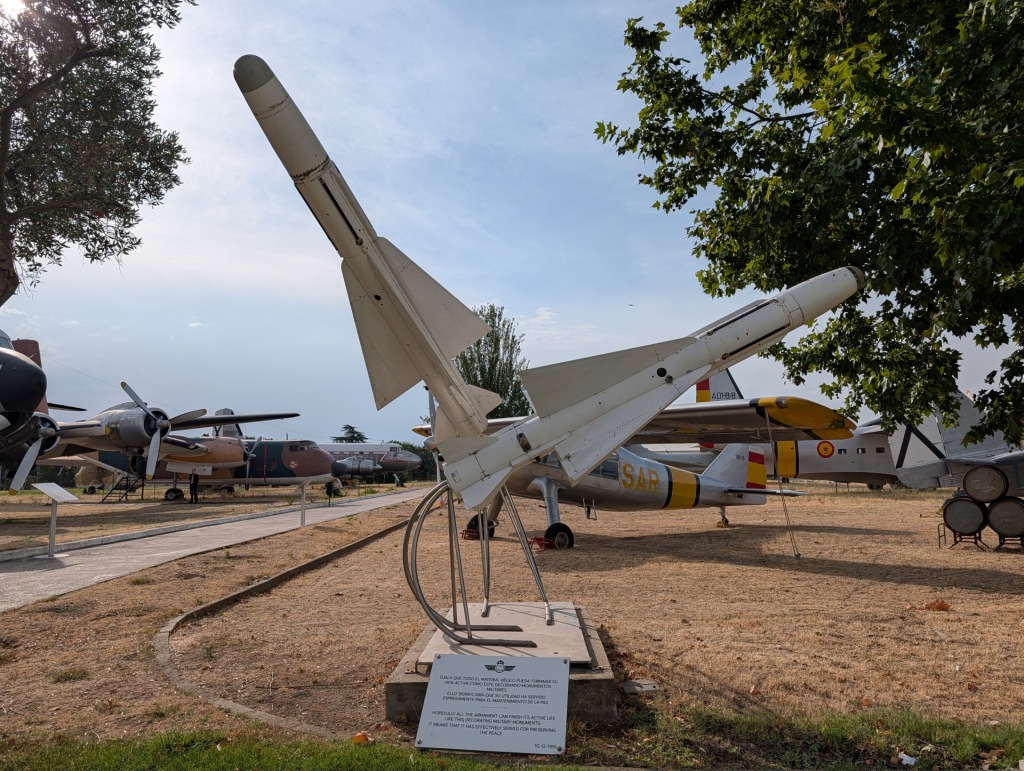
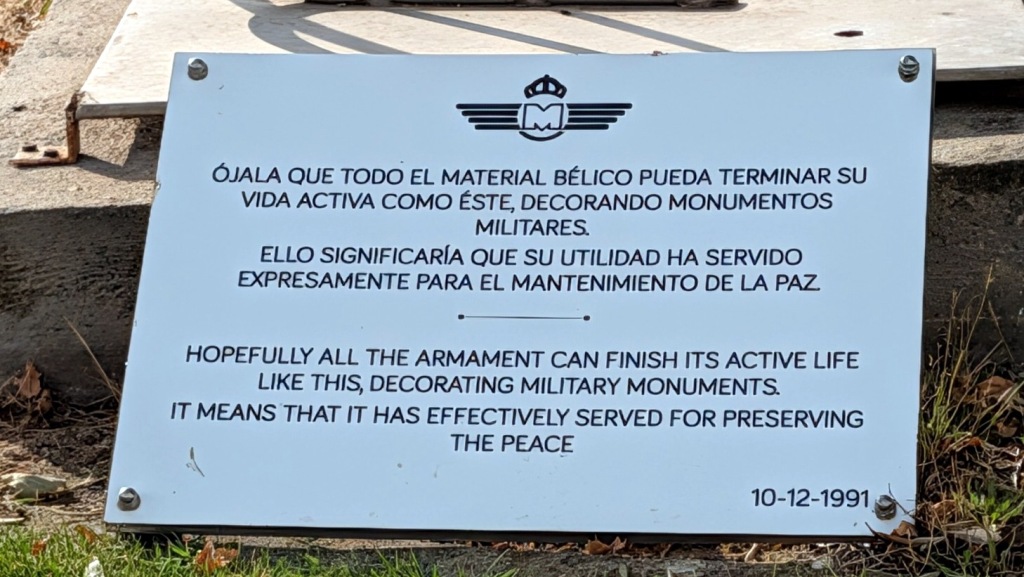
While the statement itself is meant as peace loving, it, on one hand, ignores the sheer amount of military weaponry. If all armament finishes its active life by decorating military monuments, then, even with the large number of existing monuments, each one would end up deeply buried under obsolete hardware.
And, on the other hand, it begs the question of why having it at all, if what you hope for in the end are unused museum pieces.
It feels a bit like putting a dozen knives on the steering wheel of your car. And express gratitude, when retiring the car, that you never had an accident where you got skewered by these knifes.
Yes, of course that's a good thing. But, for peace of mind, it might have been better not to attach knives to your steering wheel in the first place...
Or, to provide another example, like giving a child a bomb (instead of a teddy bear or maybe a puppy) and then being thankful if she's not blown to pieces at the end of the day.
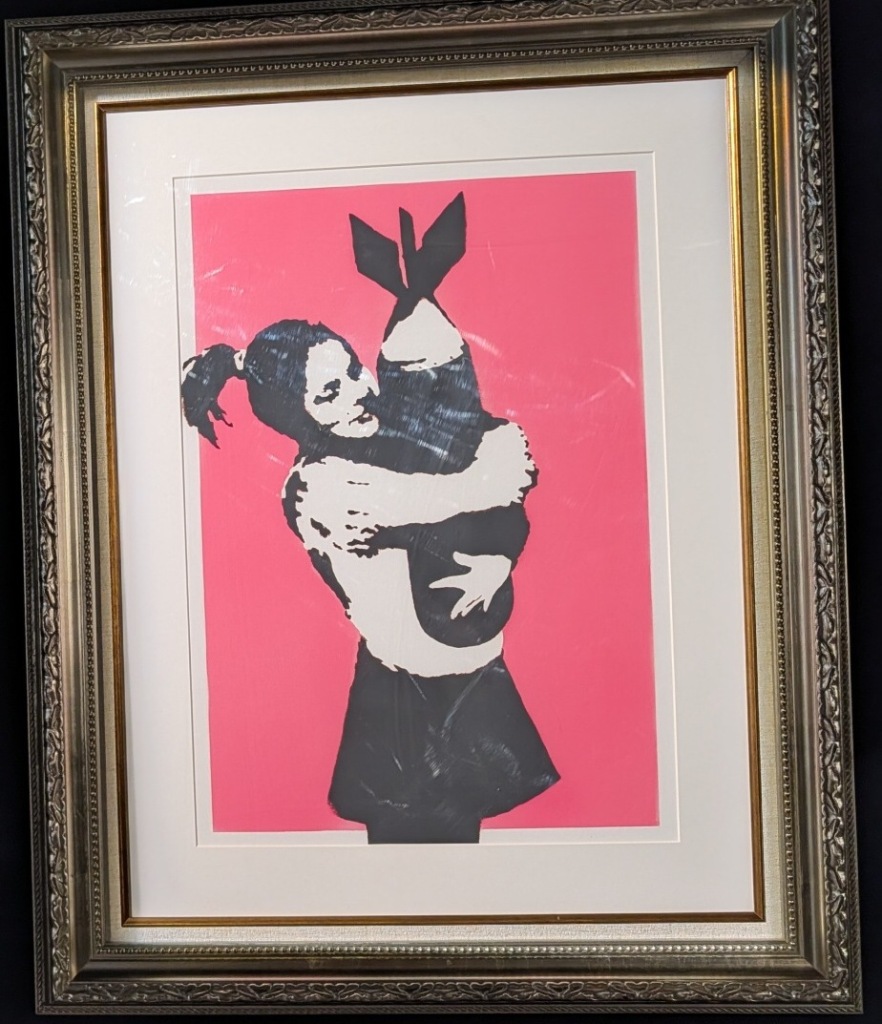
I know that this isn't really what the image above is about, but it provides a convenient link to what I did next.
I hadn't really intended to head into Madrid itself. The idea was mostly to stay on the outer areas.
But I noticed that there was a "Banksy Museum" in Madrid.
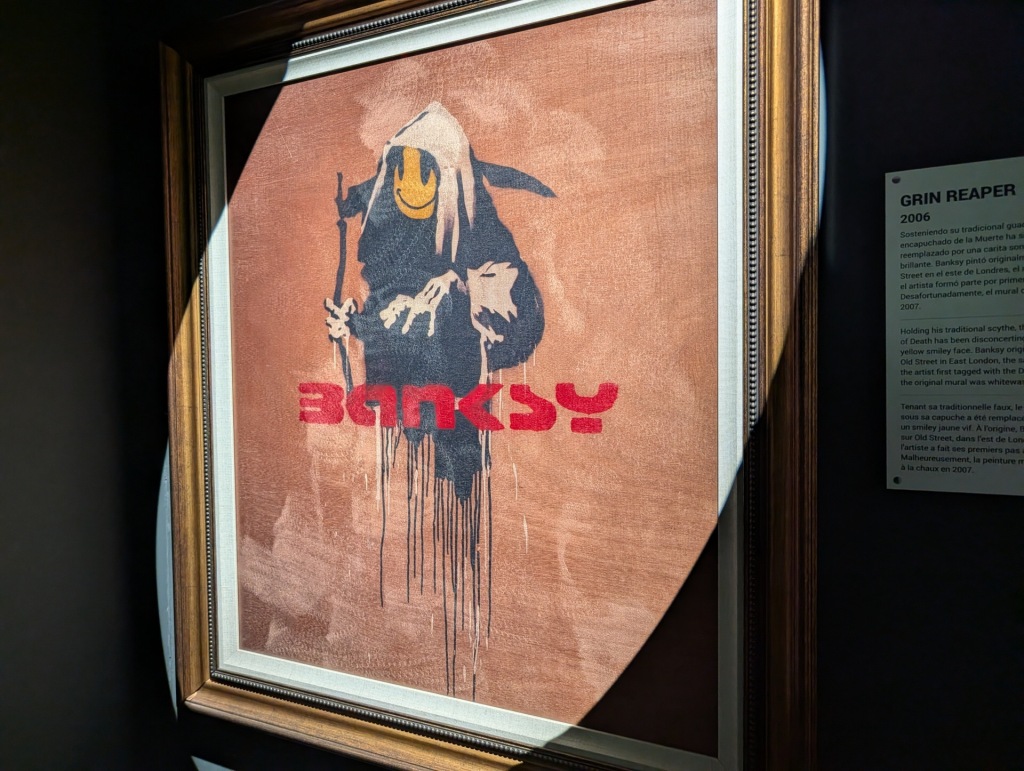
And that seemed worth a visit.
It definitely was, even though it was somewhat unclear what a "Banksy Museum" actually is.
Usually, an art museum means that original works of the artists are on display.
But as most of the famous works of Banksy have been sprayed onto walls somewhere, it would have been difficult to collect the original walls and place them in a museum.
As Banksy often uses stencils to create his work, probably the closest thing to an original would have been the use of the original stencils to paint the walls of the museum.
But that would have required the original stencils (and I have no idea whether Banksy keeps them somewhere or discards them immediately.)
And it, presumably, would mean that Banksy was involved in the exhibition in some way.
Though the exhibition catalogue states "This Exhibition has not been endorsed by Banksy. This Exhibition is 100% unauthorized by Banksy."
So, none of the artwork in the Banksy museum is by Banksy.
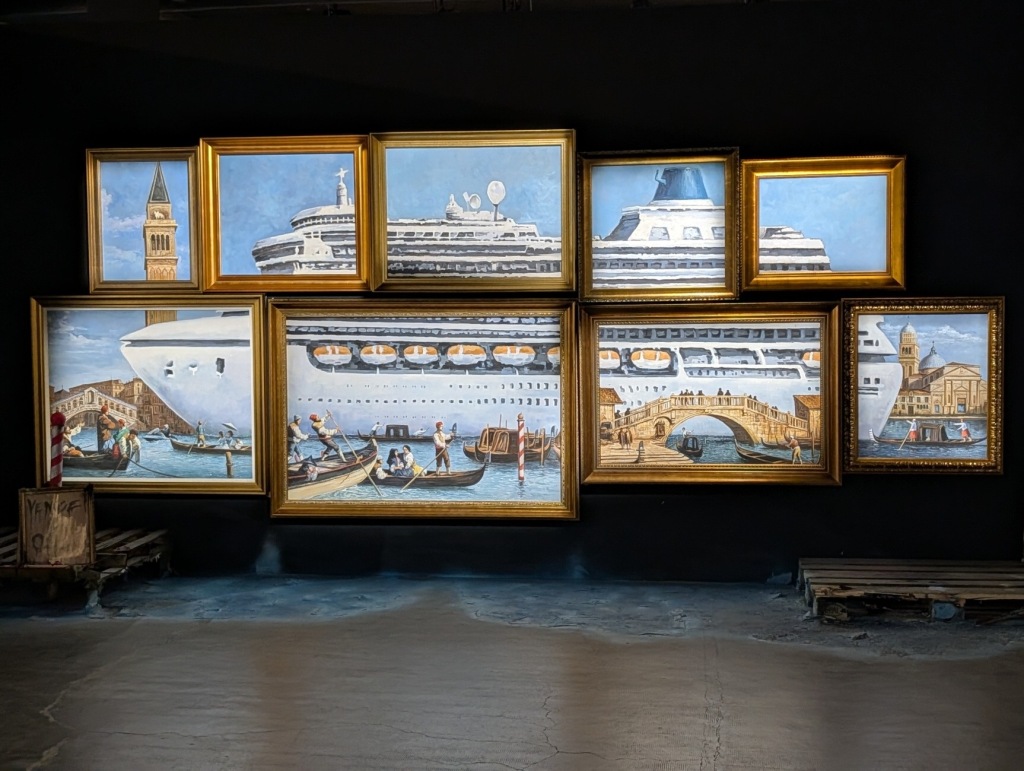
The museum page is a bit coy about it. After advertising "the largest collection of Banksy's works in Europe" it goes on to talk about "life-size reproductions of his most iconic murals".
In effect, the "Banksy Museum" seems more like an "Exhibition of stuff that local artists sprayed on the walls of an underground garage, based on Banksy pictures they've seen on online."
Or, at least, one of those exhibitions.
As there is no original art (or approval by the artist) required, it seems like every city can open a "Banksy Museum" as valid as the one in Madrid. (For example, Barcelona seems to have one as well, featuring most of the same works. And there's another one in New York, which is the reason why the one in Madrid only claims to be the largest collection in Europe.)
Oddly enough, given that it's Banksy, that seems appropriate.
Even if a museum could show the originals, by transporting the original walls, it would remove the context and environment they appeared in and, possibly, commented on.
And while it would be possible to bring the smaller, more 'sellable' works, like stencils on cardboard, together, it would be rather odd to exhibit them. Especially due to a Banksy quote stating: "When you go to an art gallery, you are simply a tourist looking at the trophy cabinet of a few millionaires."
Based on this, having a 'proper' art exhibition with 'confirmed' originals would seem wrong.
In the end, the not-really-a-museum idea seems kind of right.
Especially as Banksy is more about ideas than about execution.
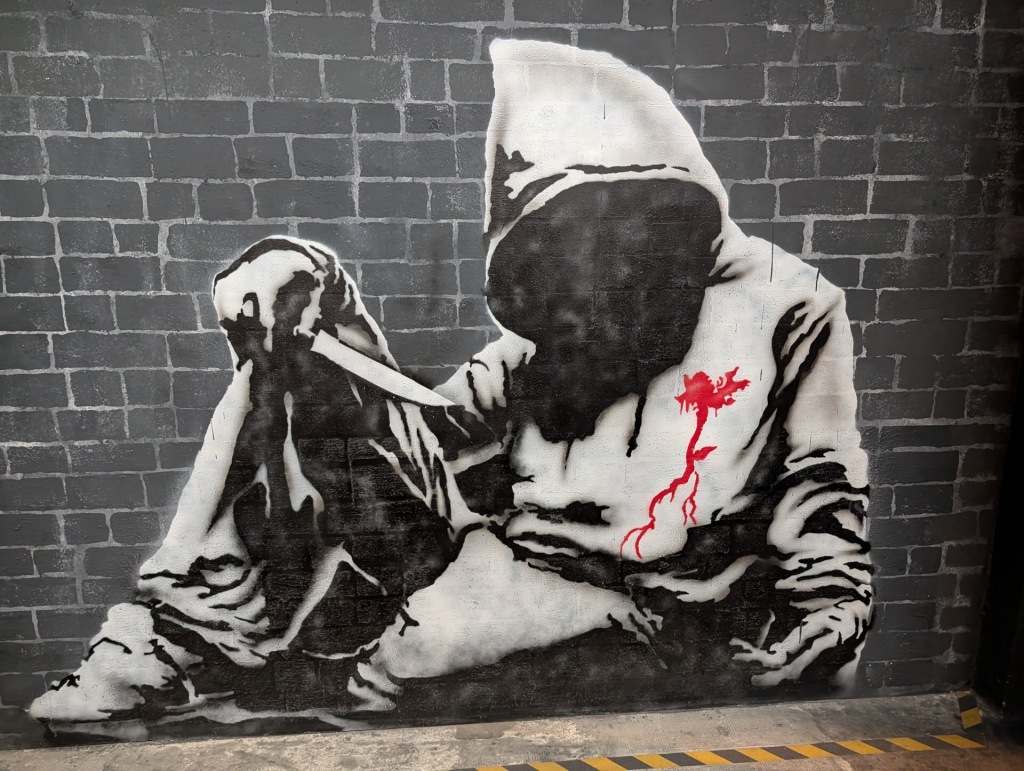
Or how accurate the copies are.
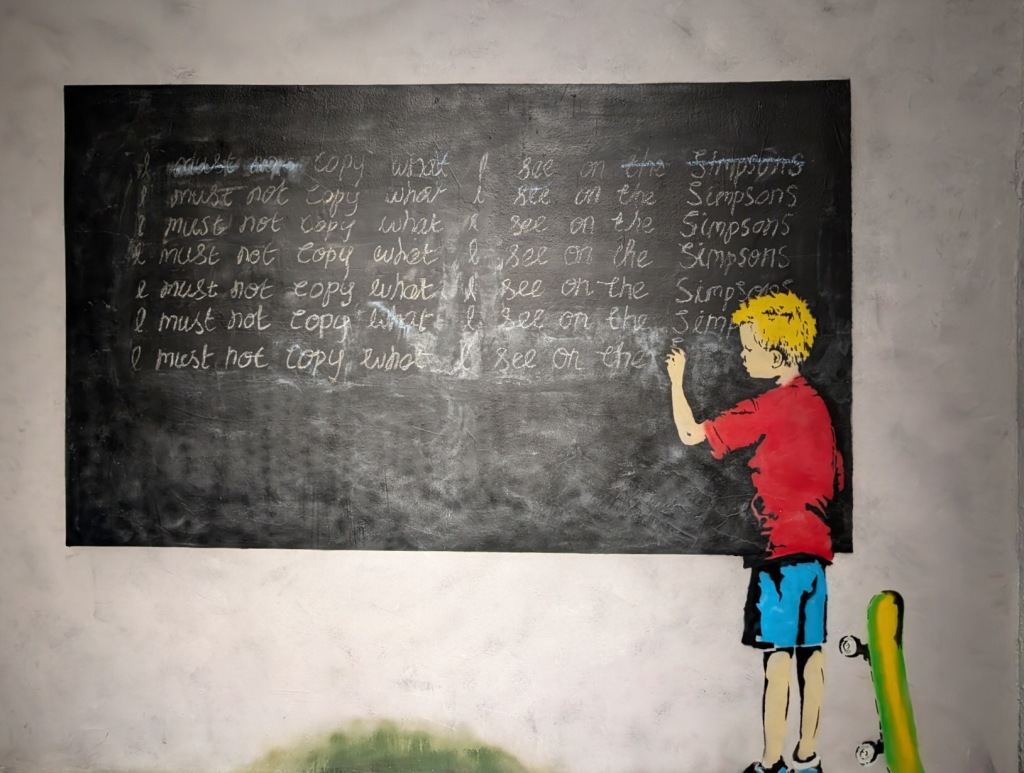
It's not like he's admired for a spectacular competent way of wielding a spray can.
The main point of his works is the ideas. Ultimately, he's a cynical cartoonist, though often working on walls instead of paper.
And while there are (or have been), obviously, original works somewhere, a proper reproduction works surprisingly well.
A lot of that, obviously, depends on how the work is presented. And in this respect the museum in Madrid is doing really well.
That it's not located in a museum building but in an underground garage already helps a lot.
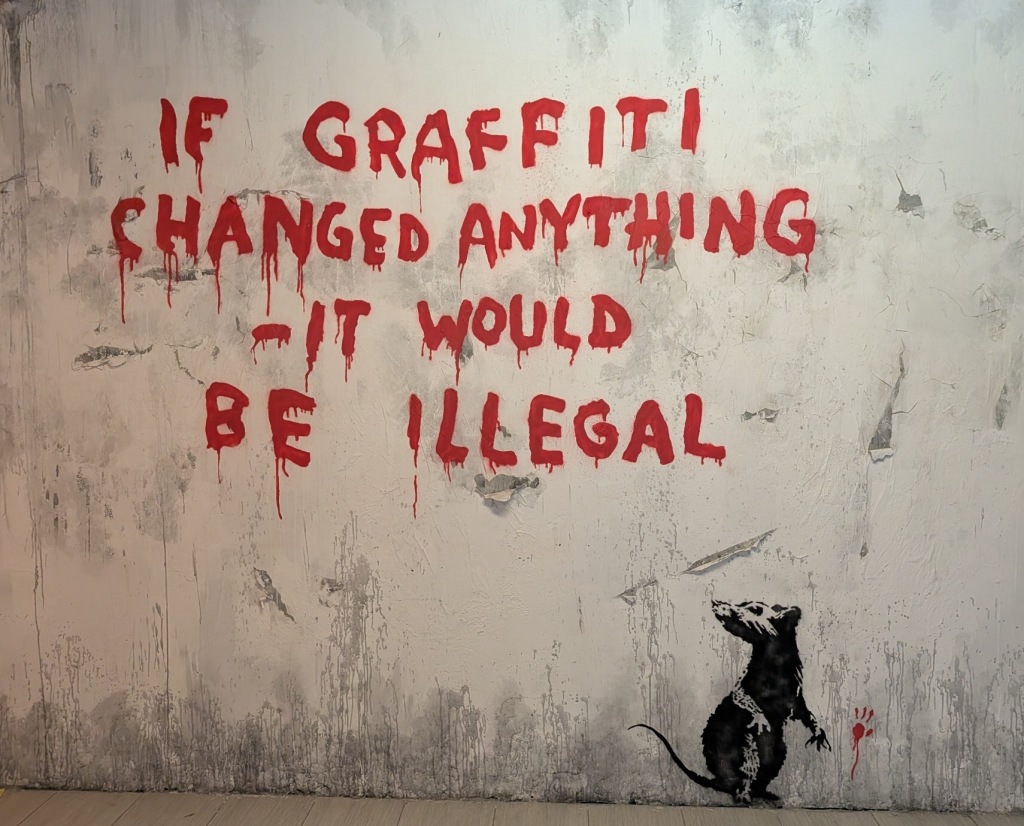
And in most cases, there was a reasonable amount of effort to re-create the original setting, i.e., if there were physical objects involved in the original art, like a car, a hydrant, a warning sign, or a broken bicycle, they haven't been represented by drawings or photographs, but by actual physical objects.
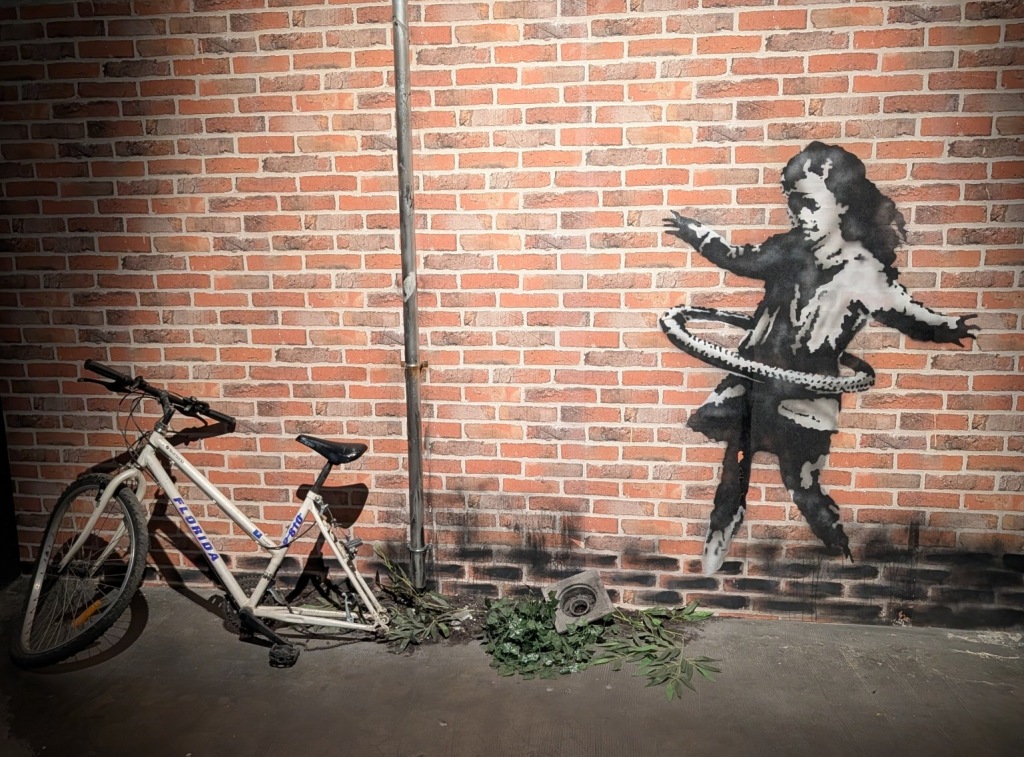
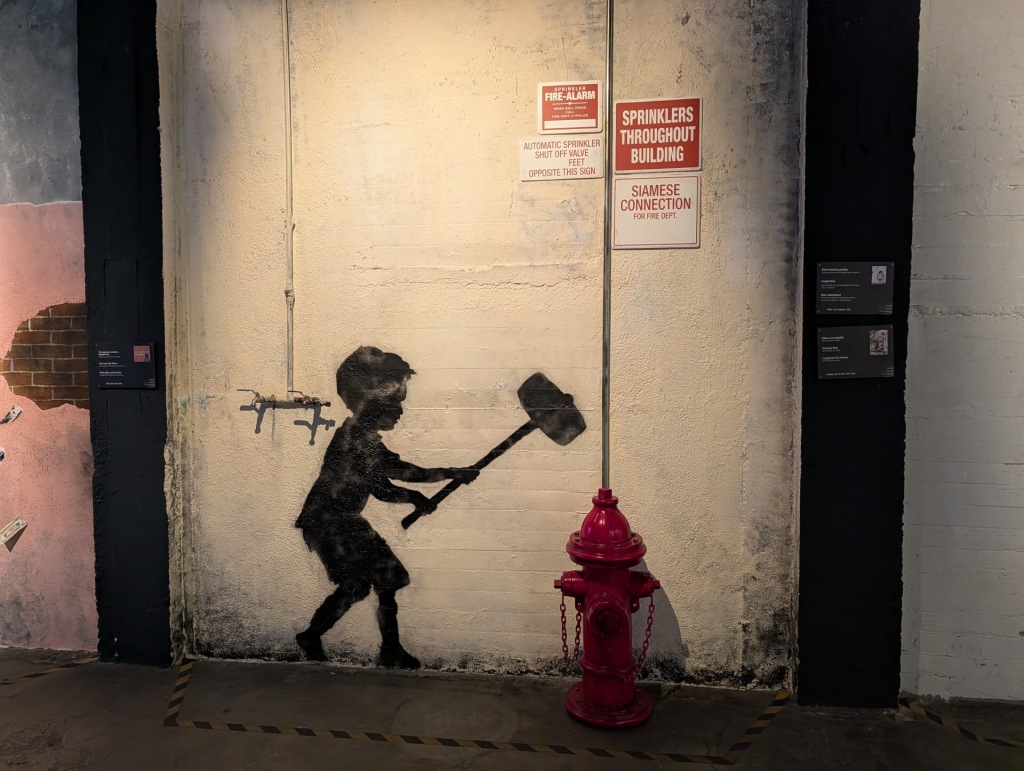
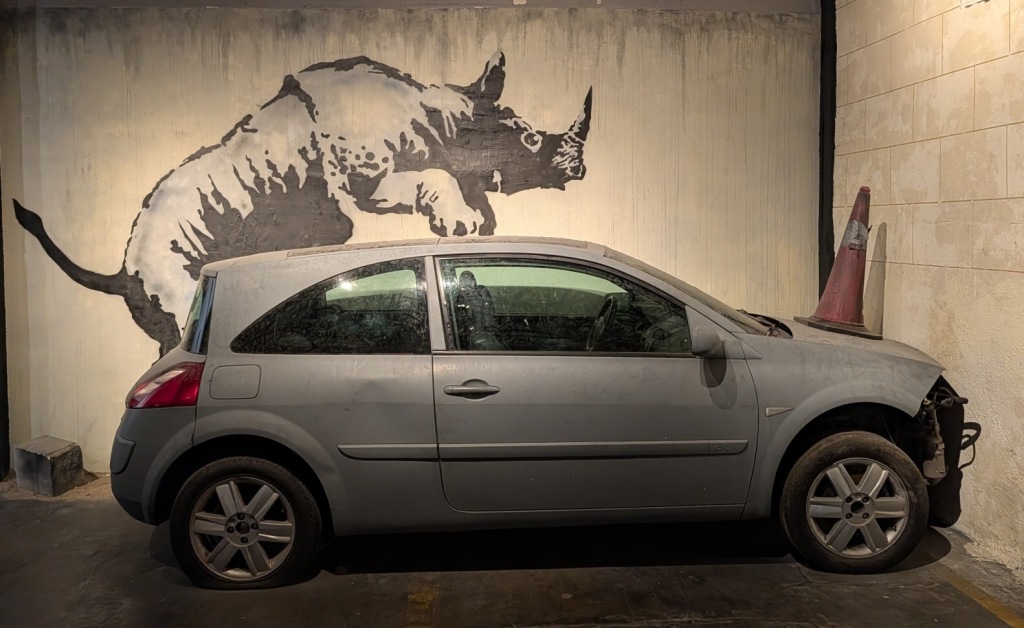
Trivial. But it helps to make the art feel more 'appropriate'.
While the graffiti works were well presented, for me the interesting thing was 'the other stuff'.
I had not been aware that his works had become more directly political in recent years.
What I had seen was a lot of the street art against 'authority' as a general idea (whether that was expressed by signs, policemen or guards).
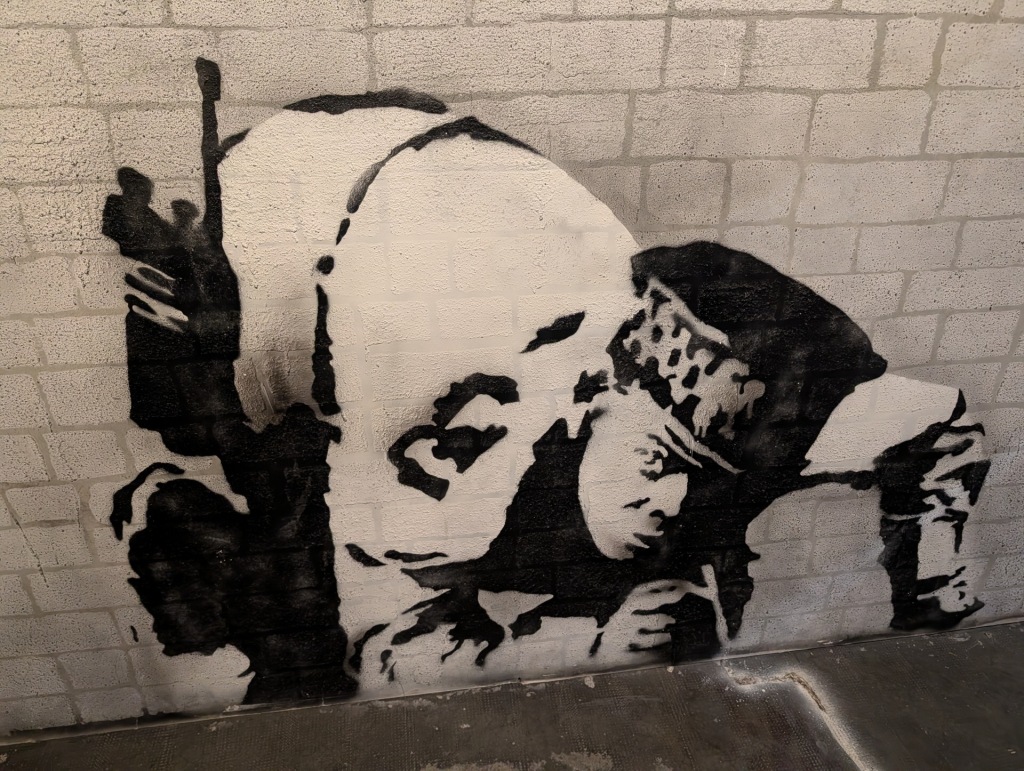
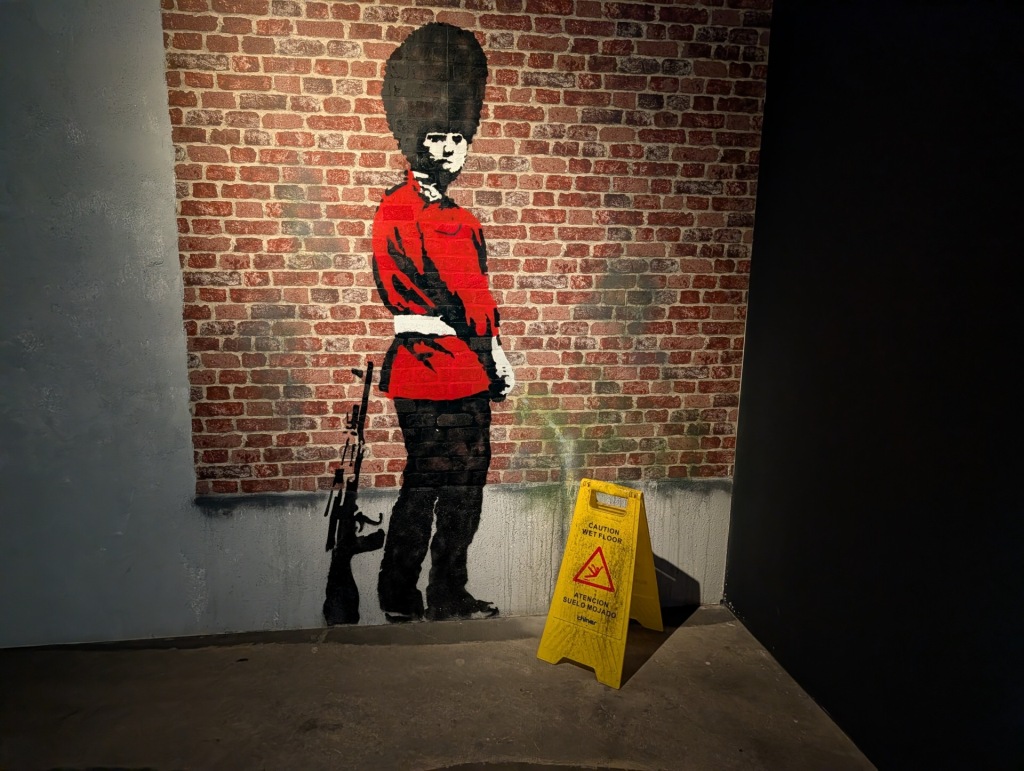
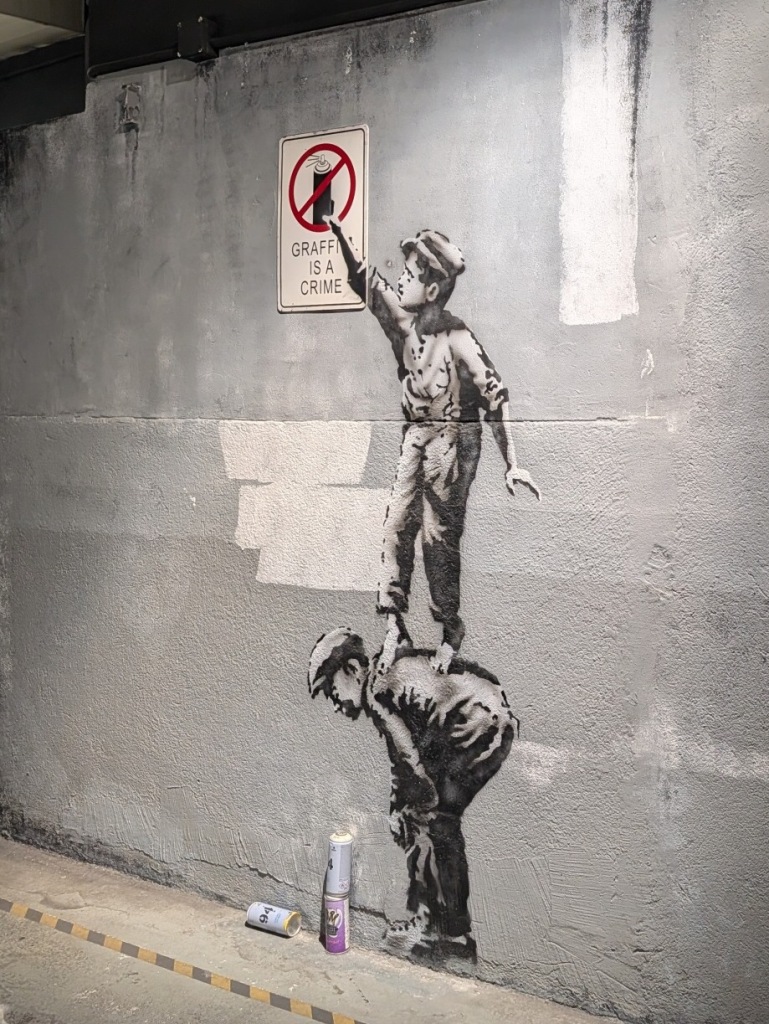
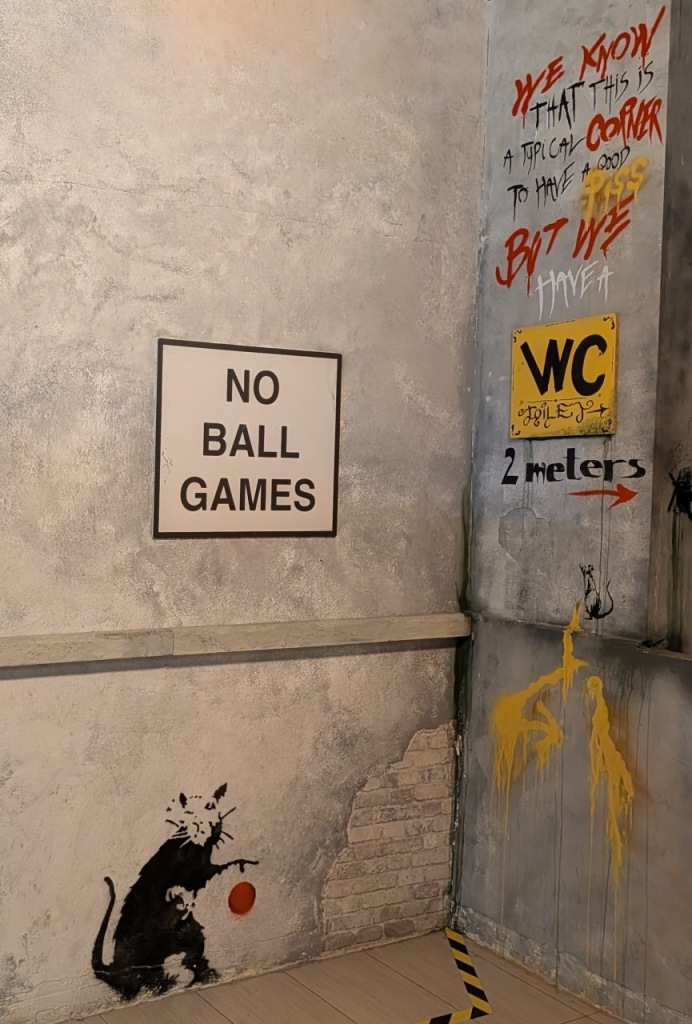
There were, of course also the rats, most of them doing whimsical things.
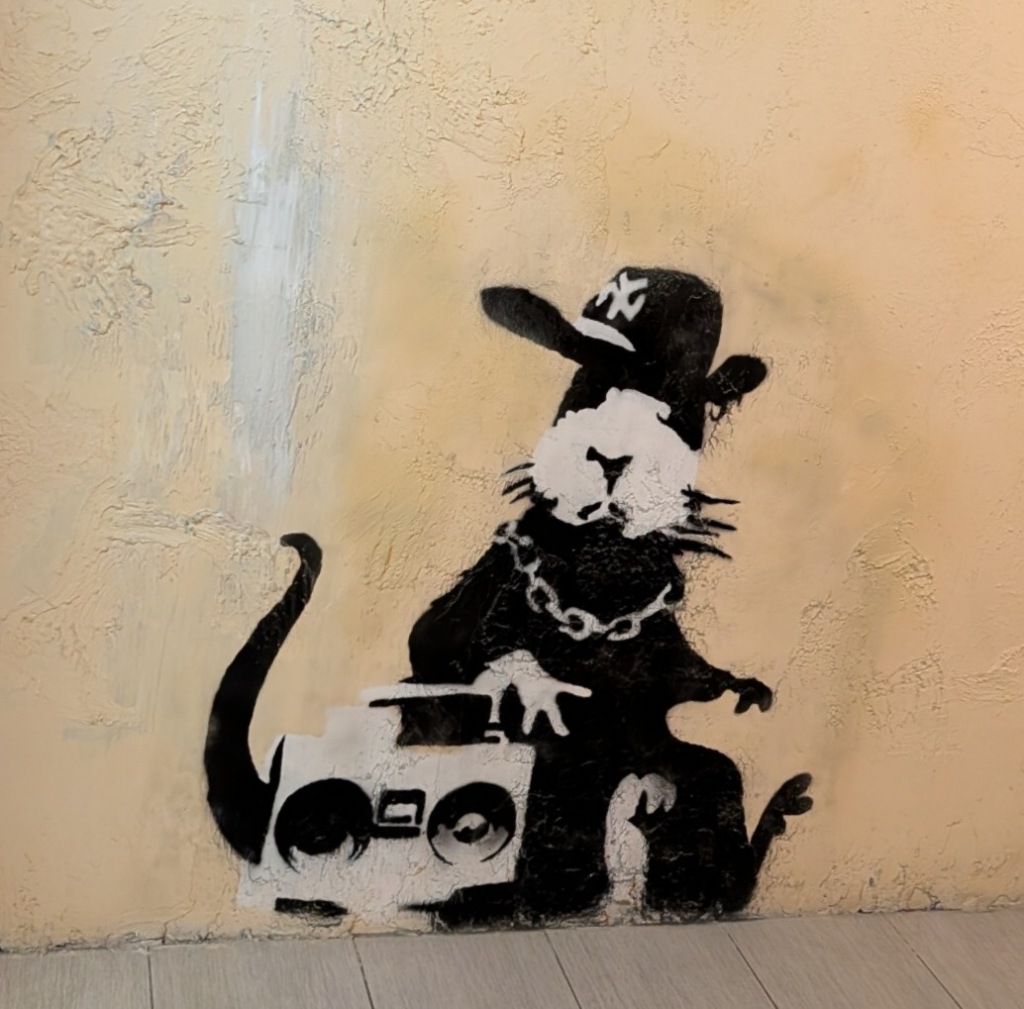
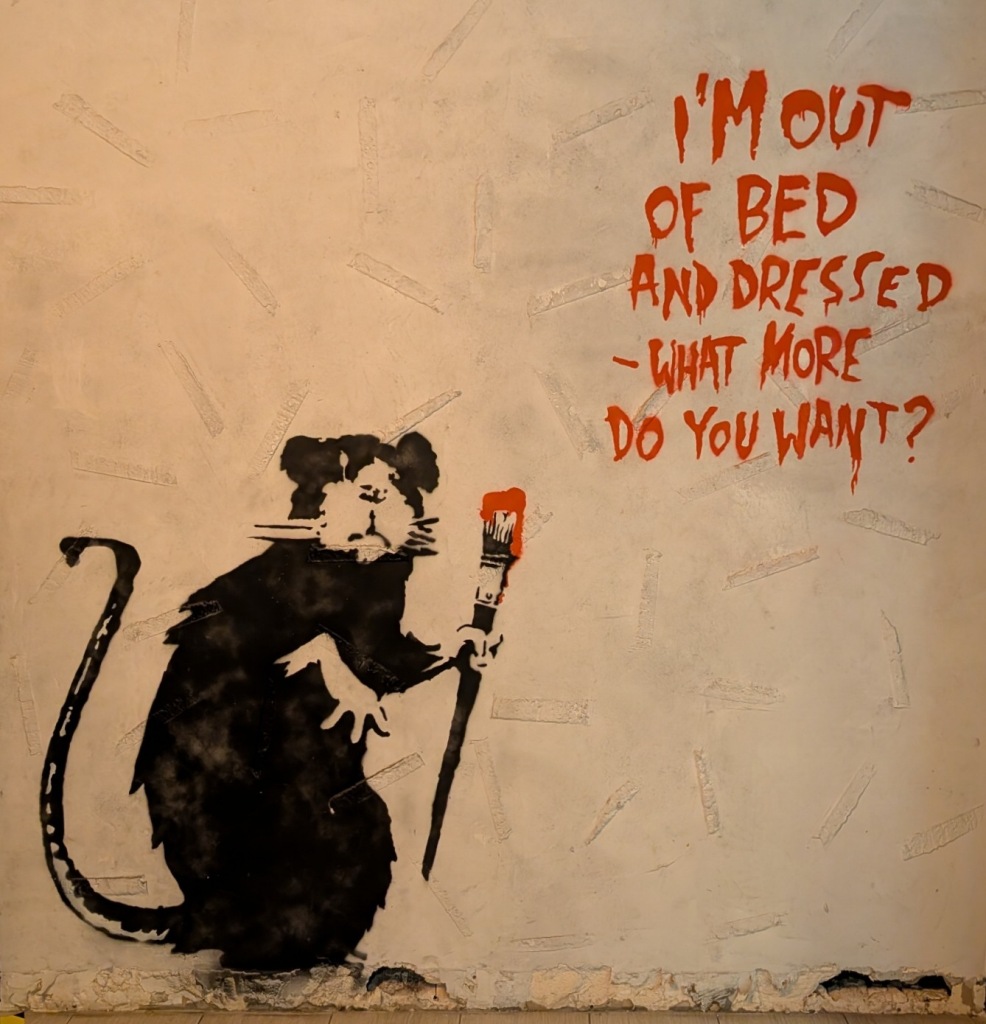
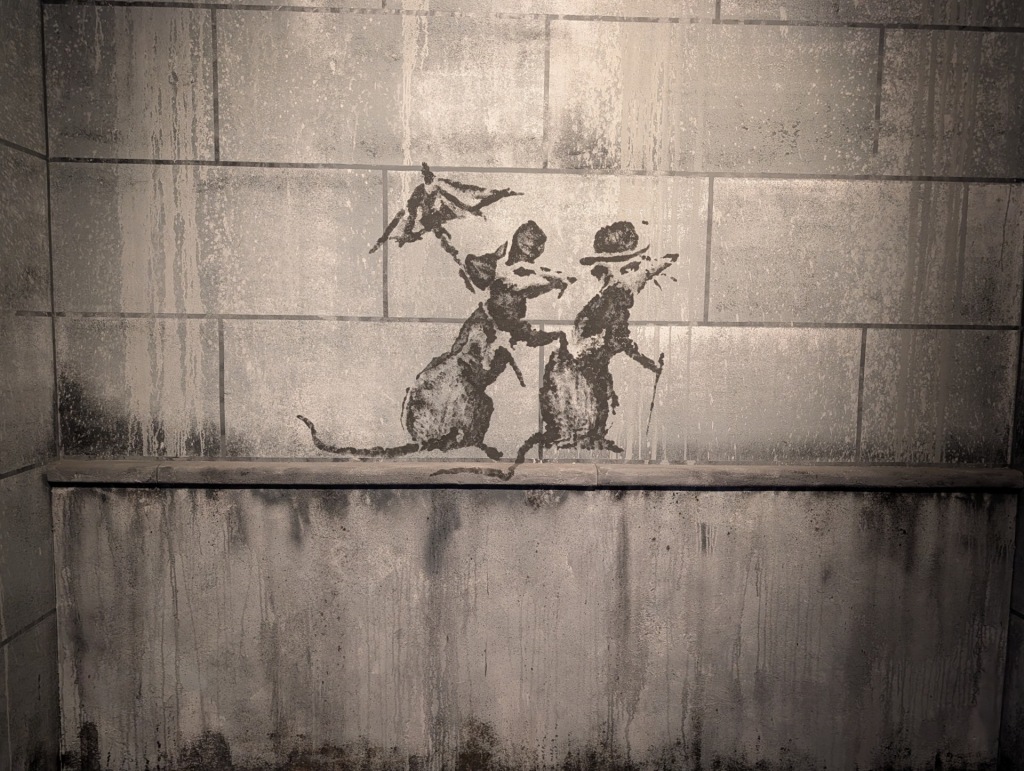
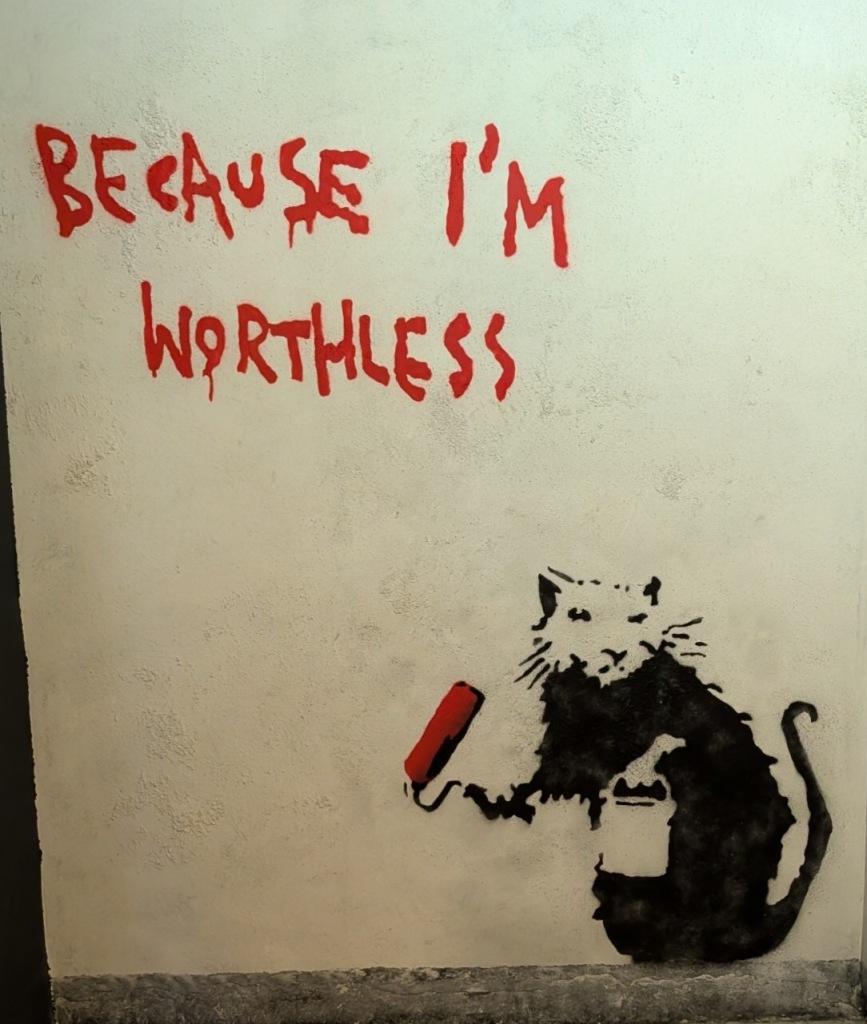
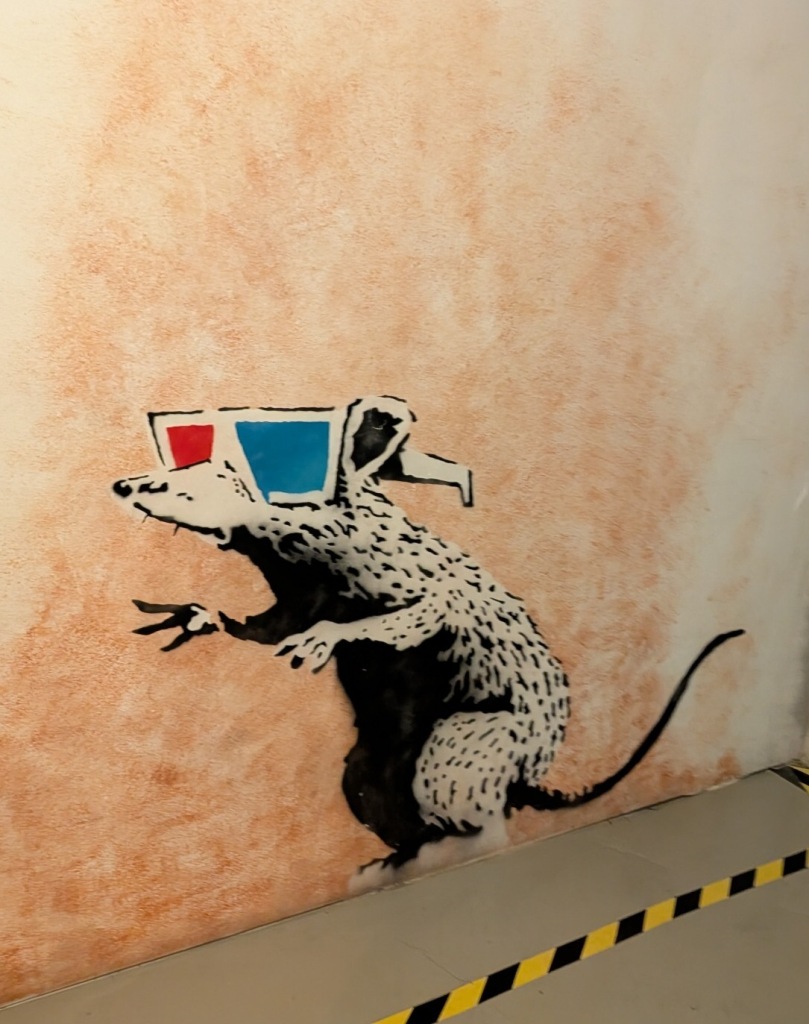
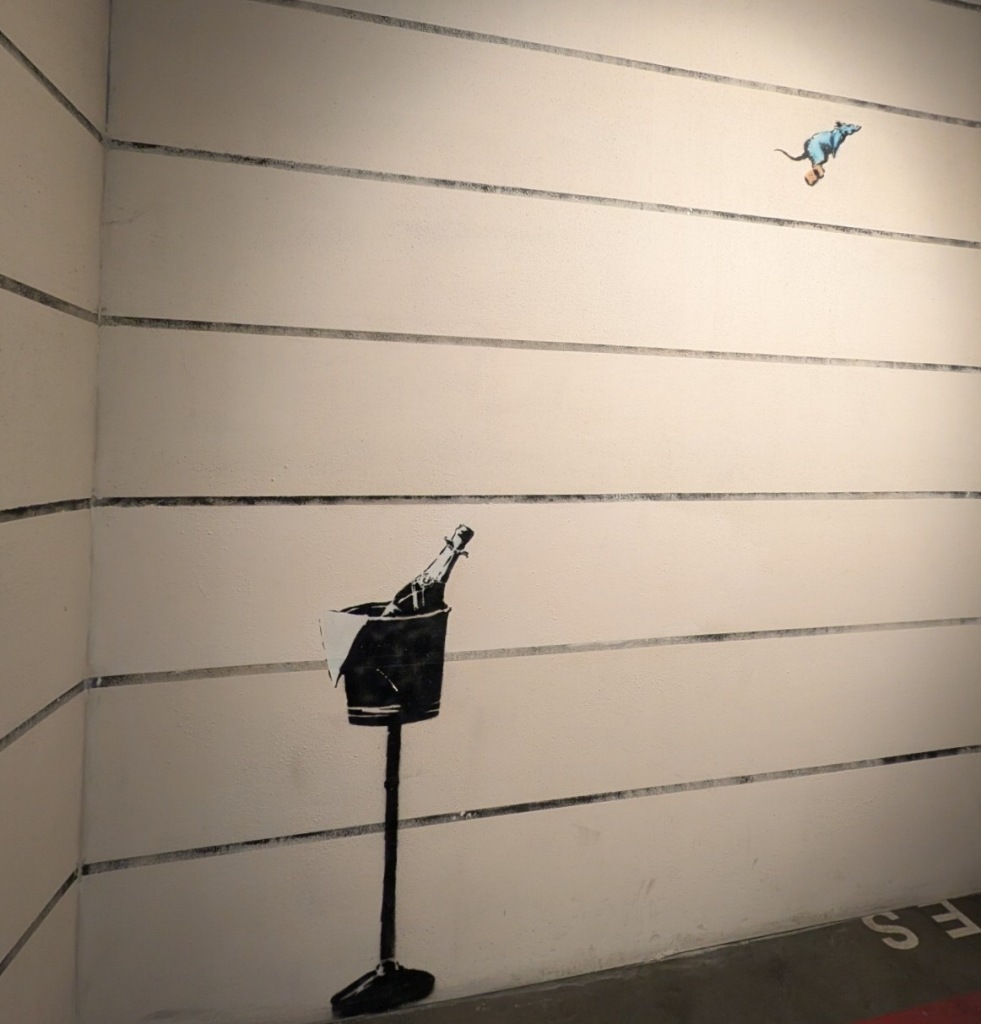
I knew a lot of those.
But the exhibition also showed a lot of pictures that addressed specific issues, like refugees in the Mediterranean Sea, prisoners at Guantánamo Bay or the situation in Palestine.
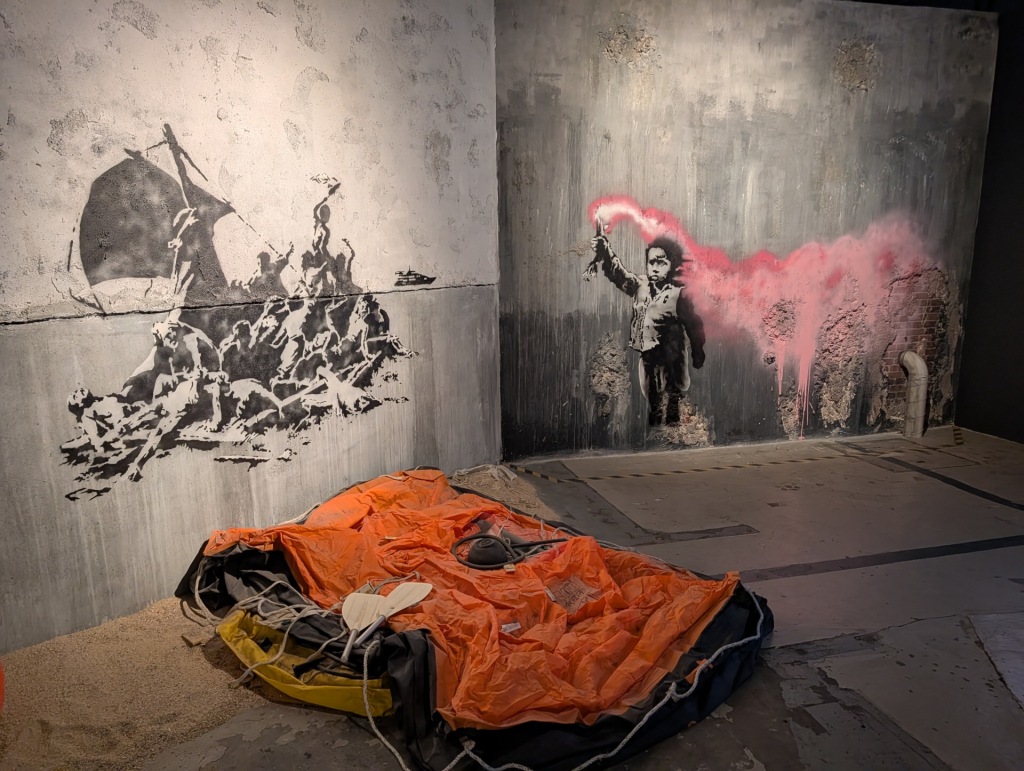
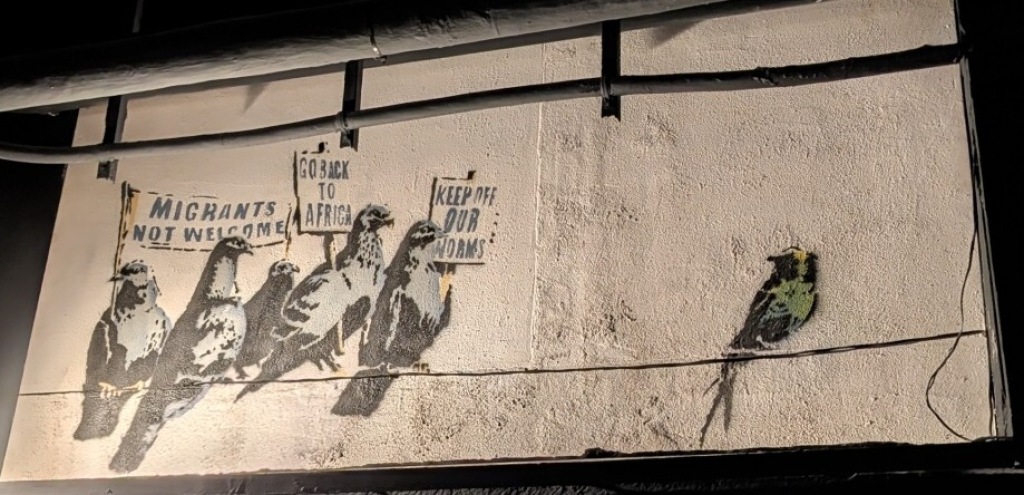
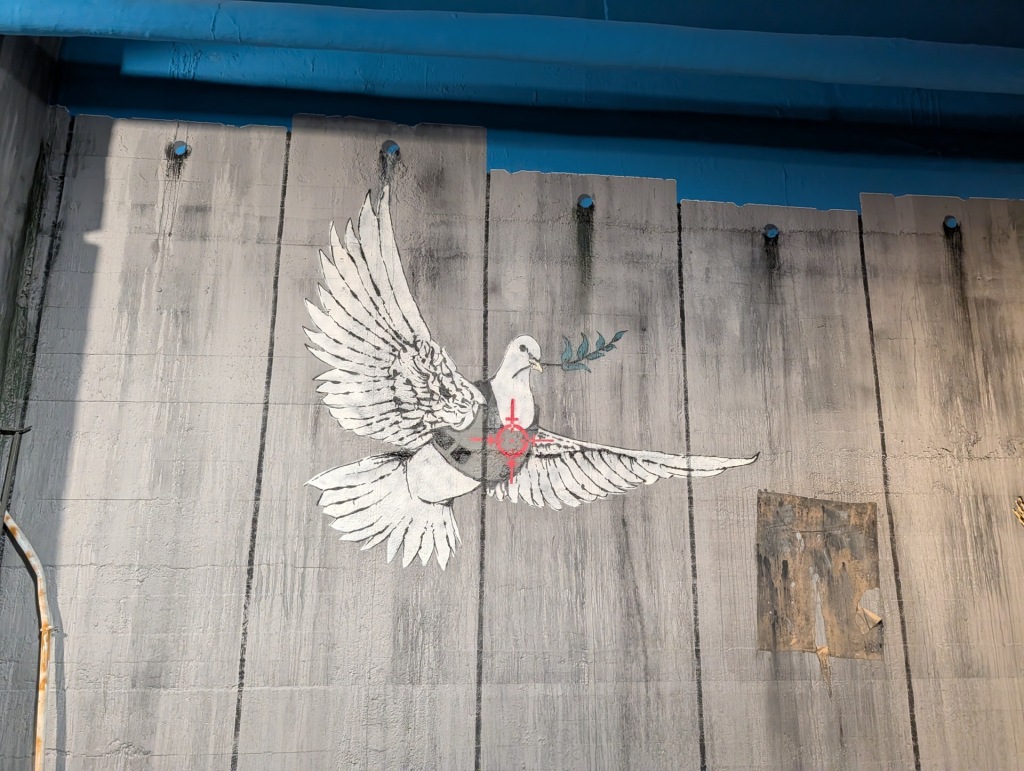
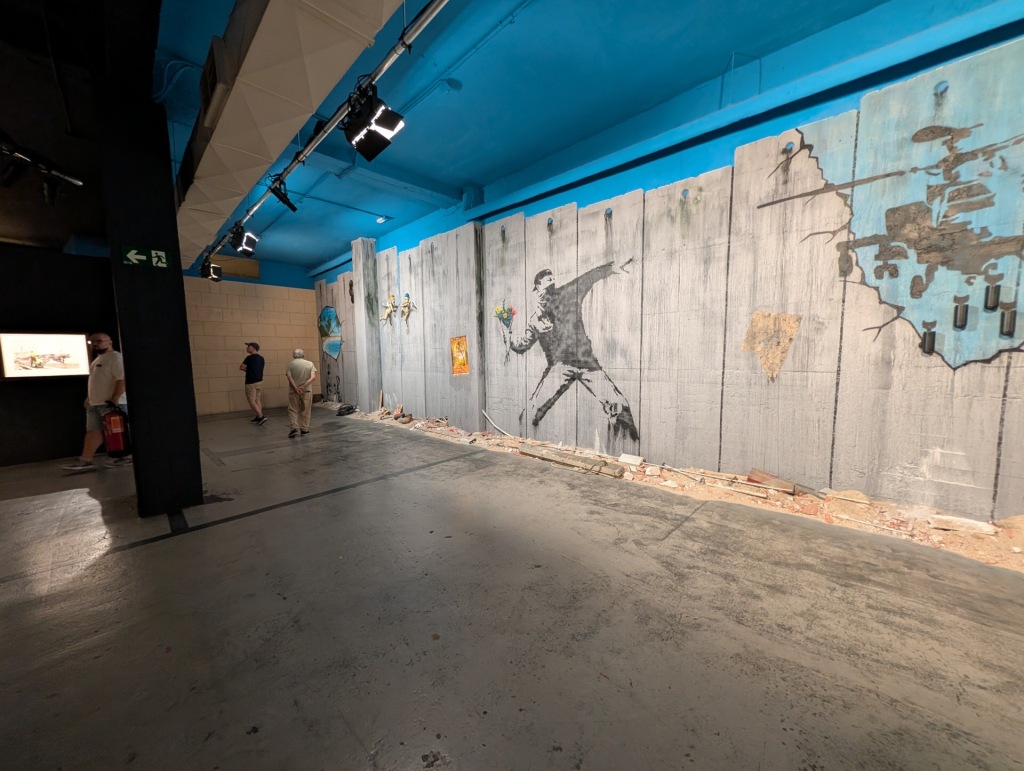
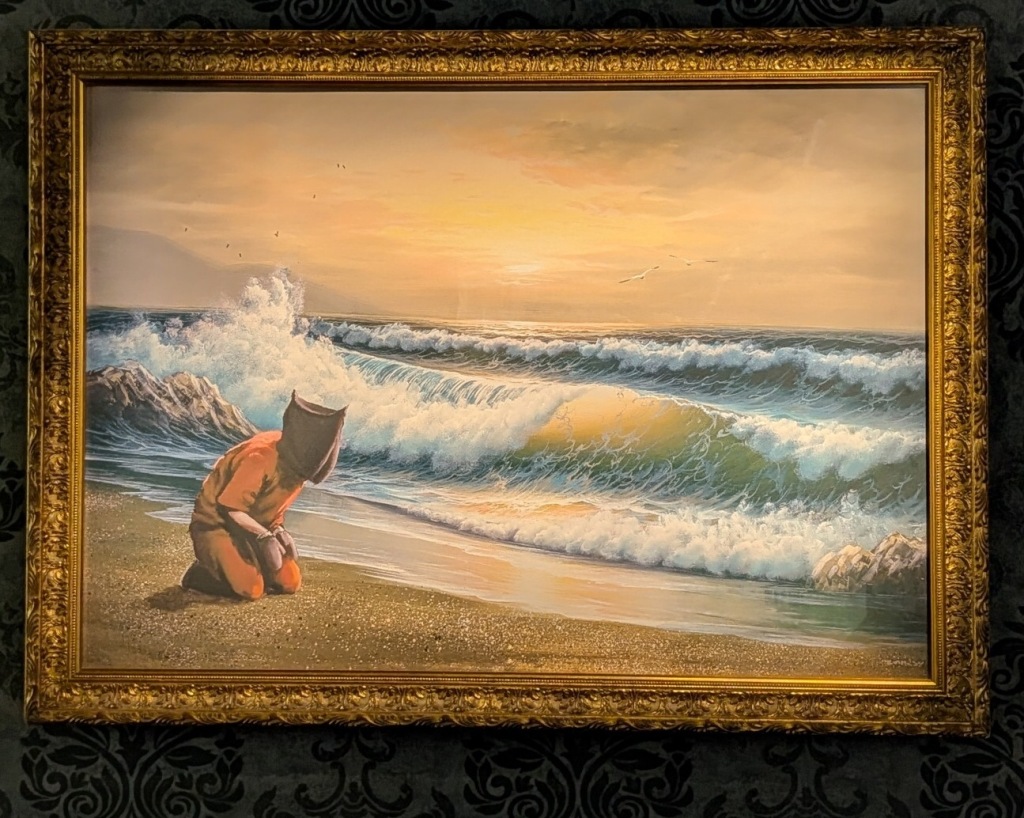
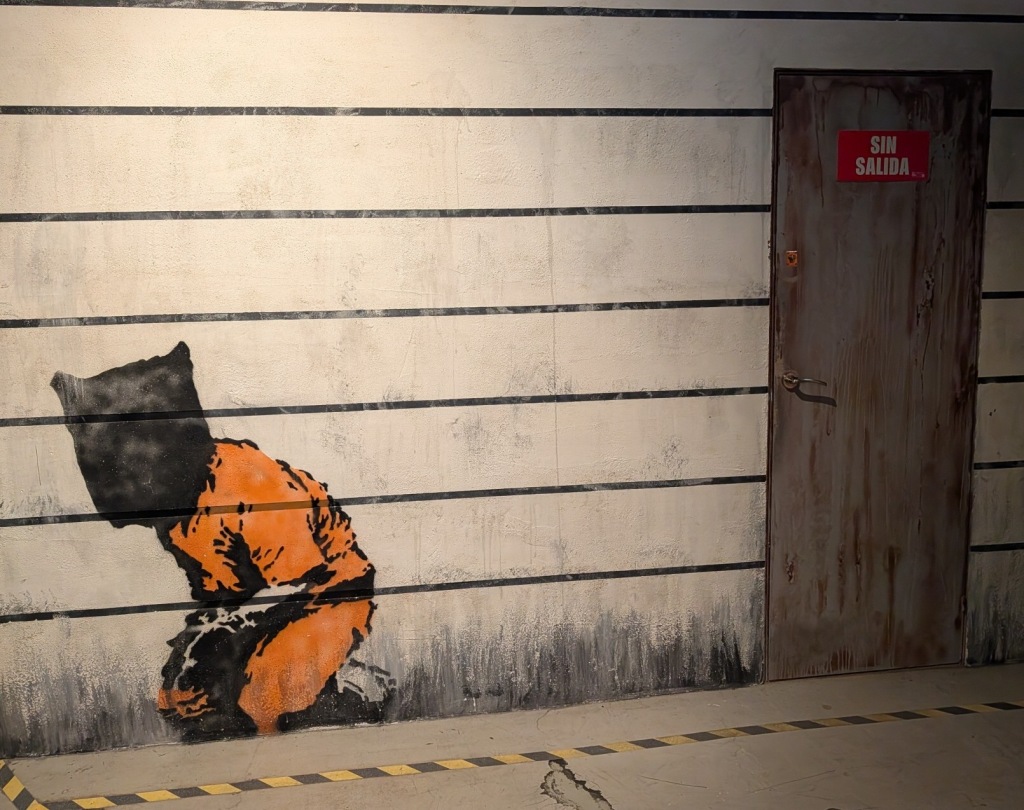
And I knew almost none of these.
(Though I had heard about the "Walled Off Hotel", an installation/exhibition next to the wall between Israel and Palestine.)
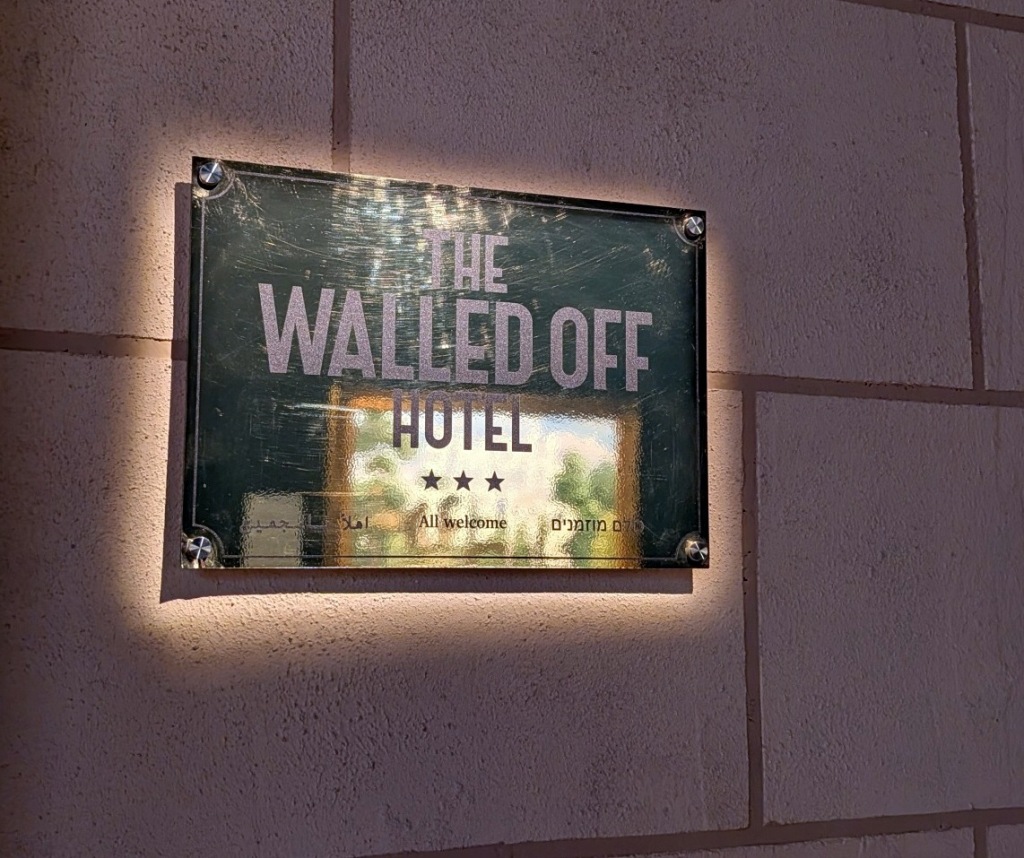
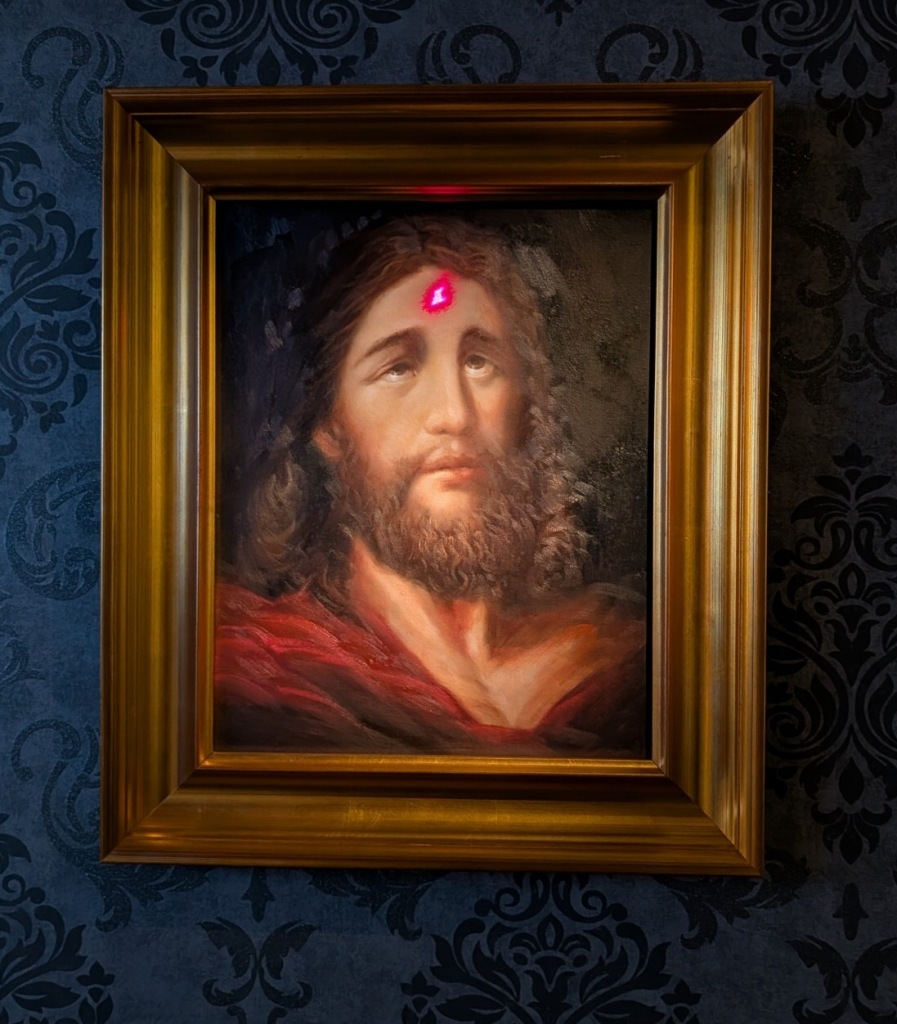

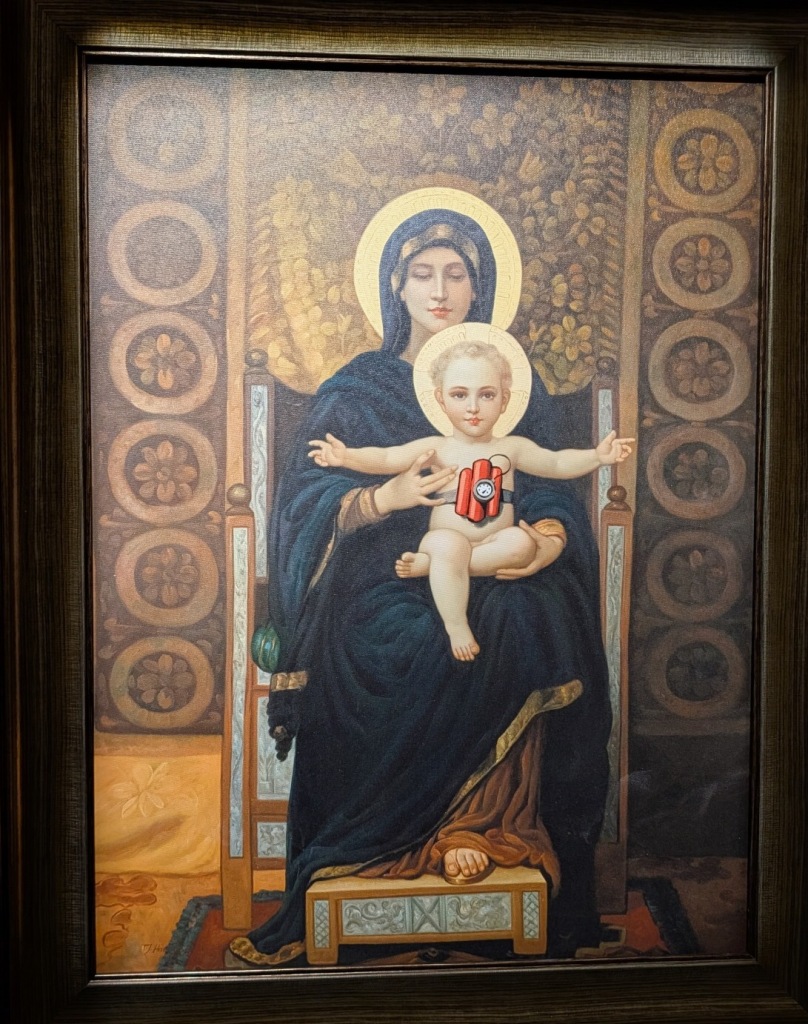
I also hadn't been aware of his recent activities in the Ukraine.
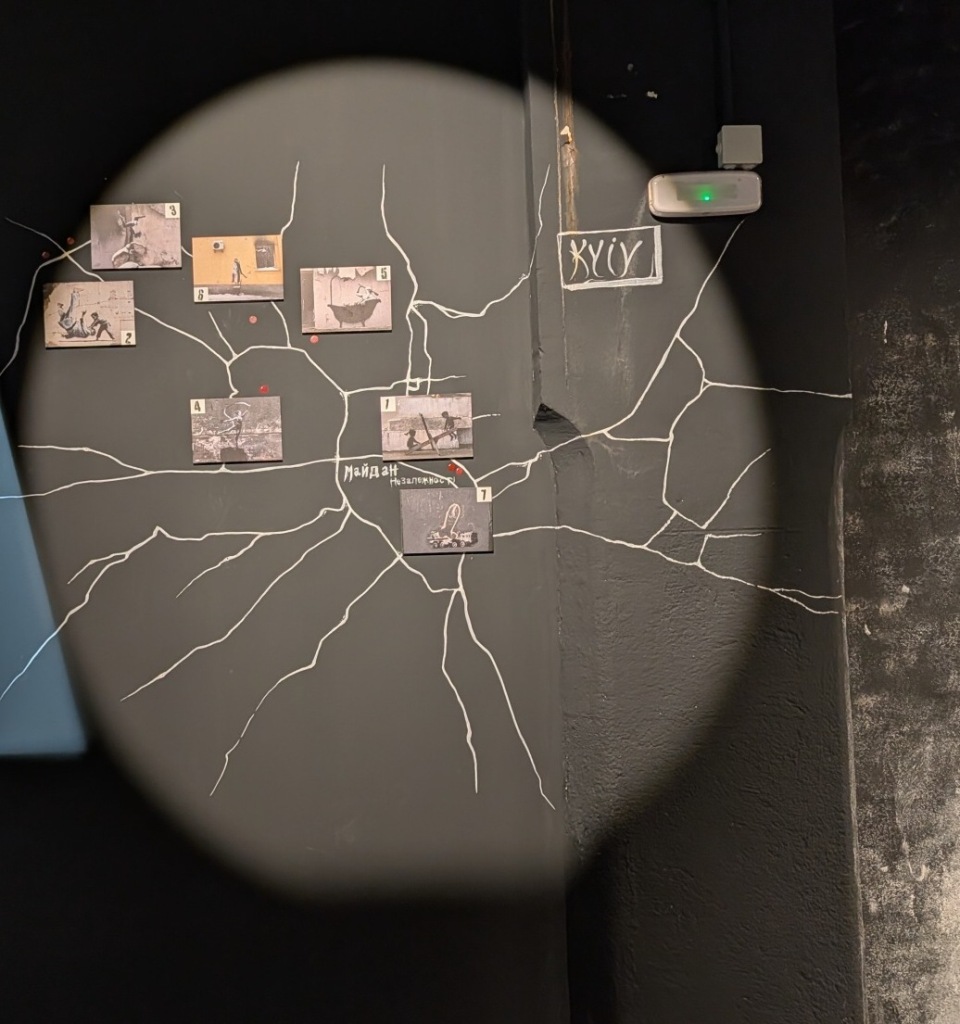
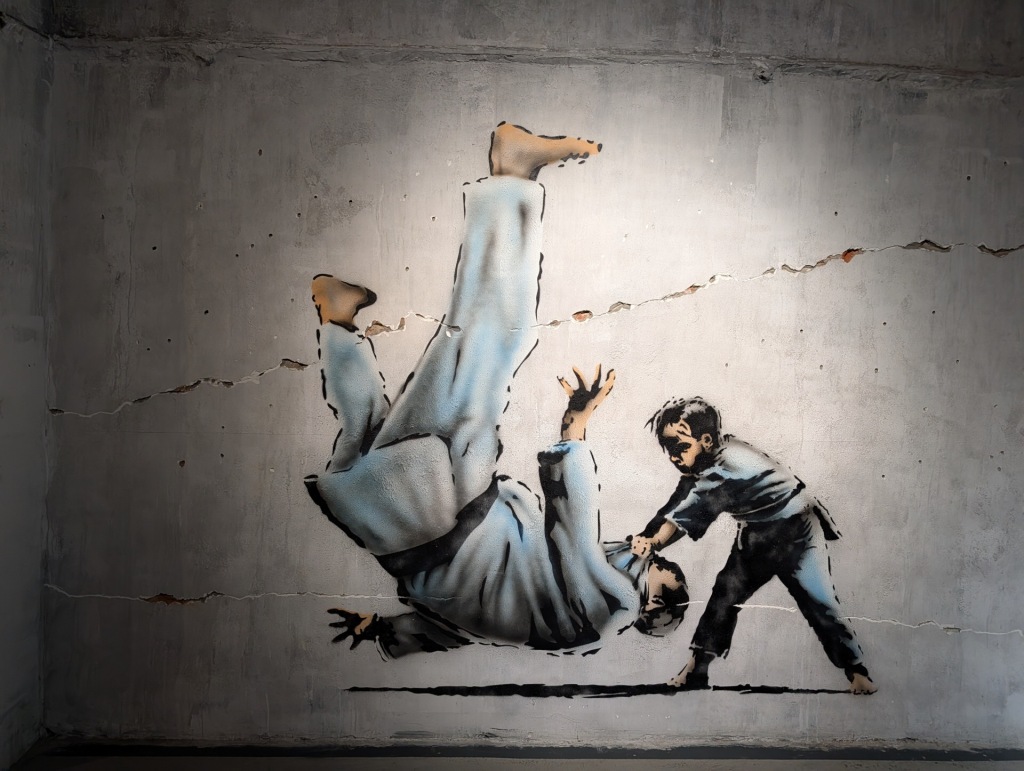
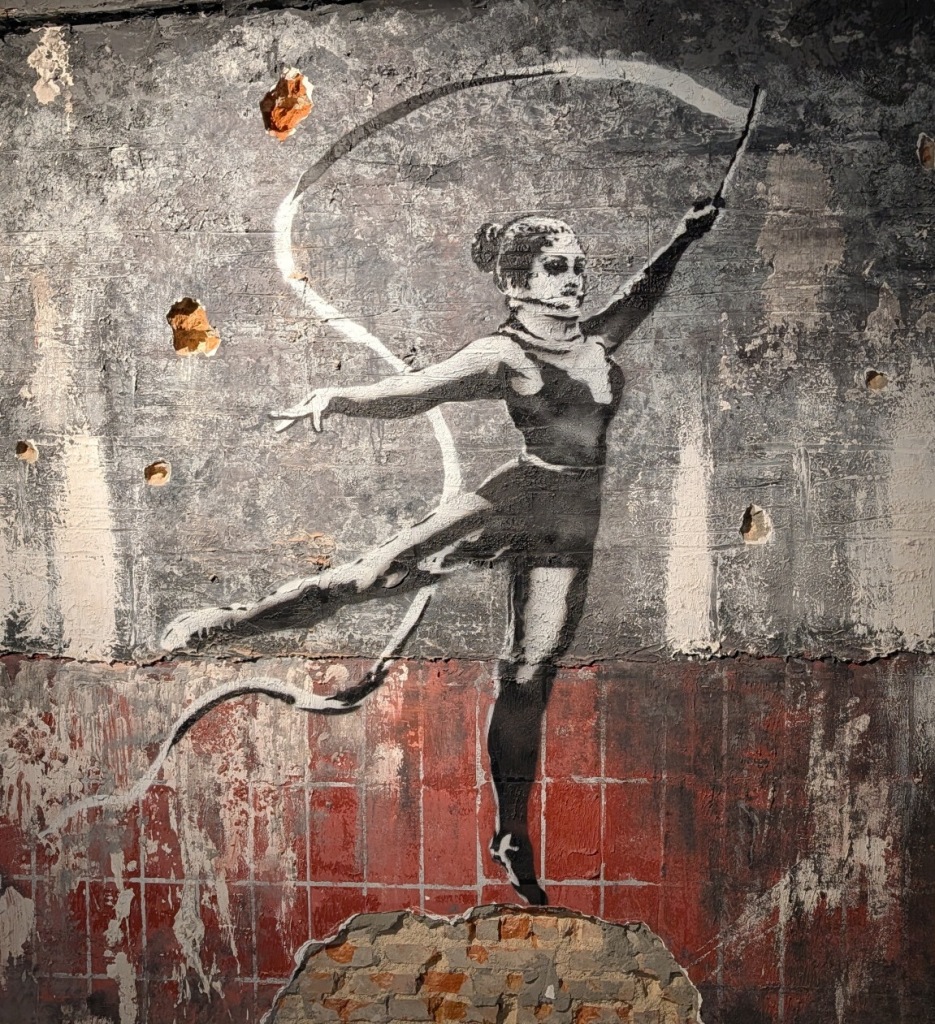
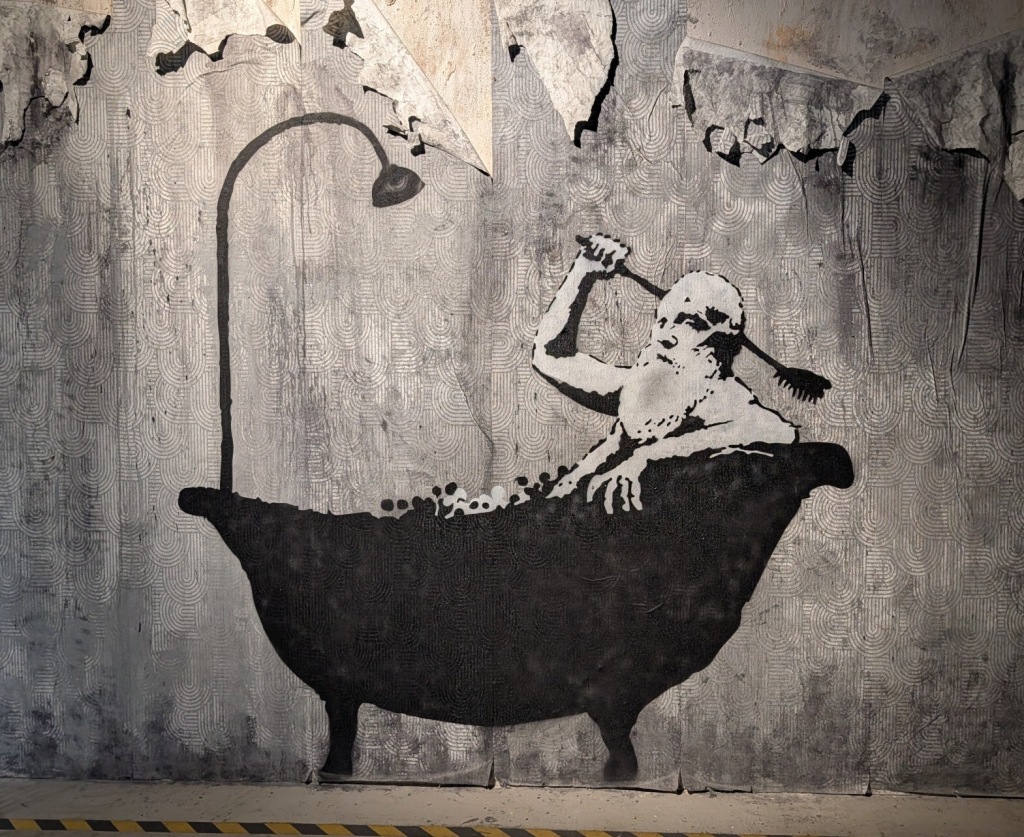
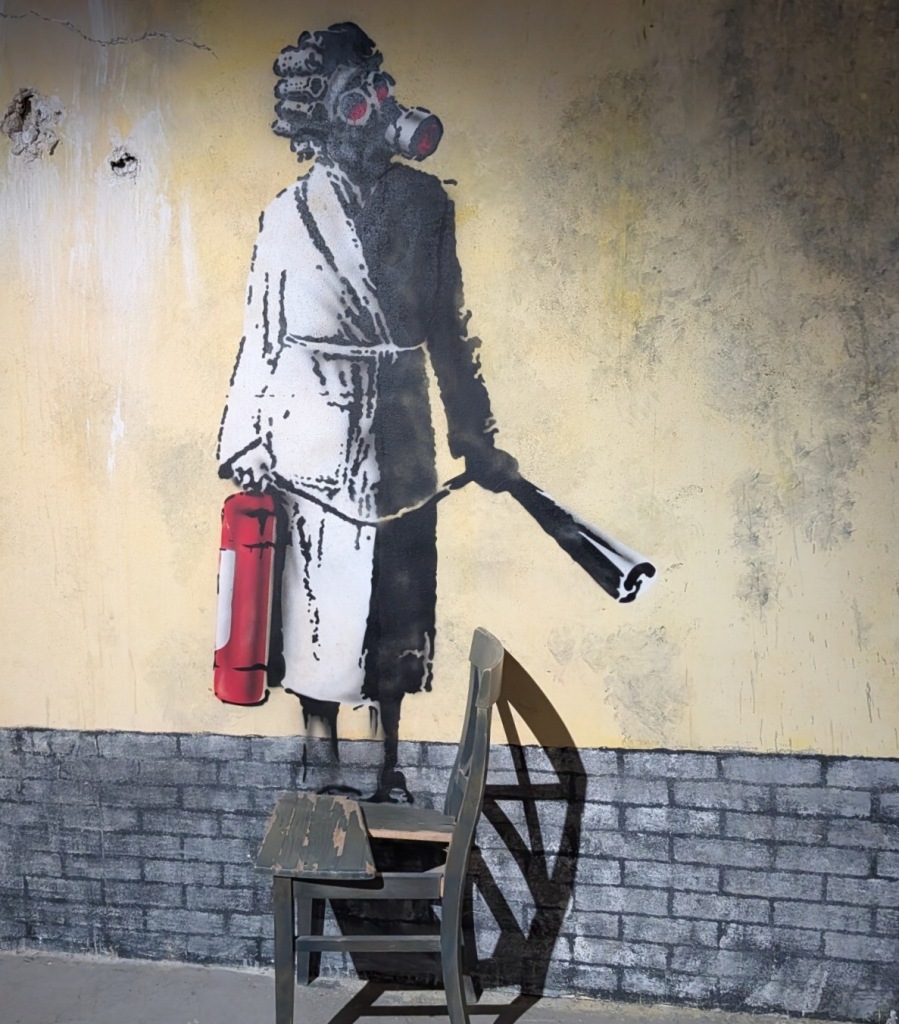
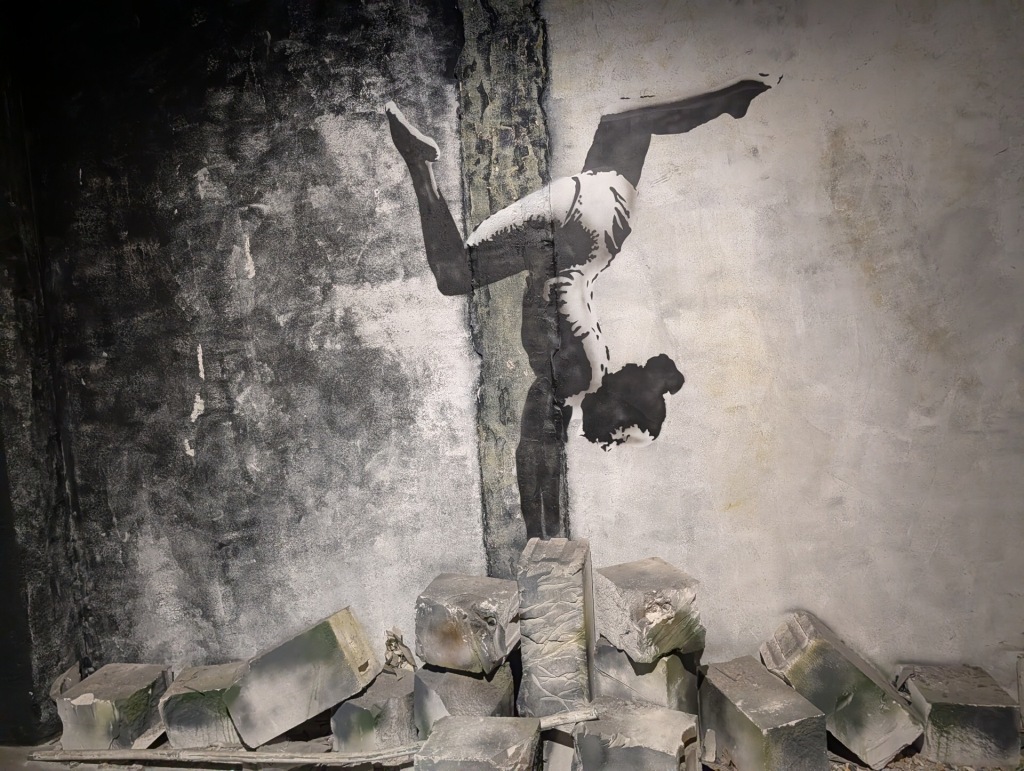
In the end, I wasn't sure whether this was not as well known because such 'propaganda' isn't reported as much as the cuter and more generic 'disobey authority' art, whether it's selective perception on my side, whether the other pieces are more 'timeless' and more often shown than the topical images (criticising Guantánamo Bay seems a bit dated now), or whether reporters shy away from showing anything overly political in art, as they are afraid of being seen as taking sides.
Having a lot of such works in the exhibition was an interesting addition to what I had already known.
The other things I wasn't aware of were smaller works.
I knew that there wasn't only the big street art, but also 'officially sanctioned' smaller pieces, suitable for the art market and hanging on the wall.
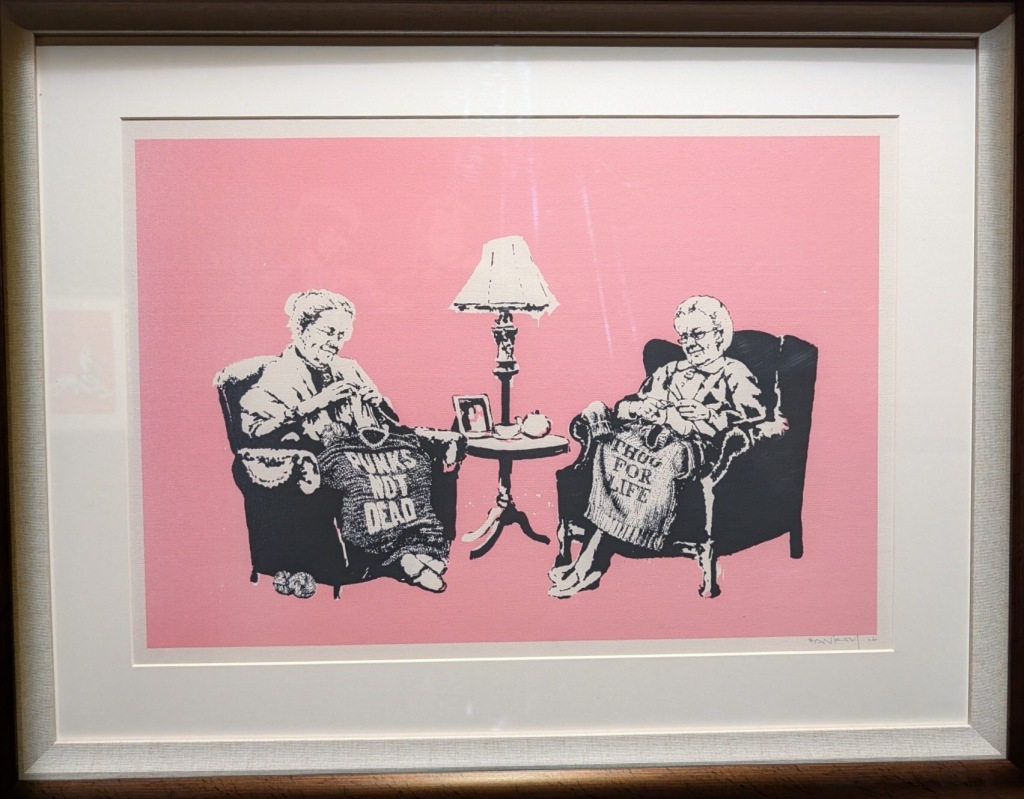
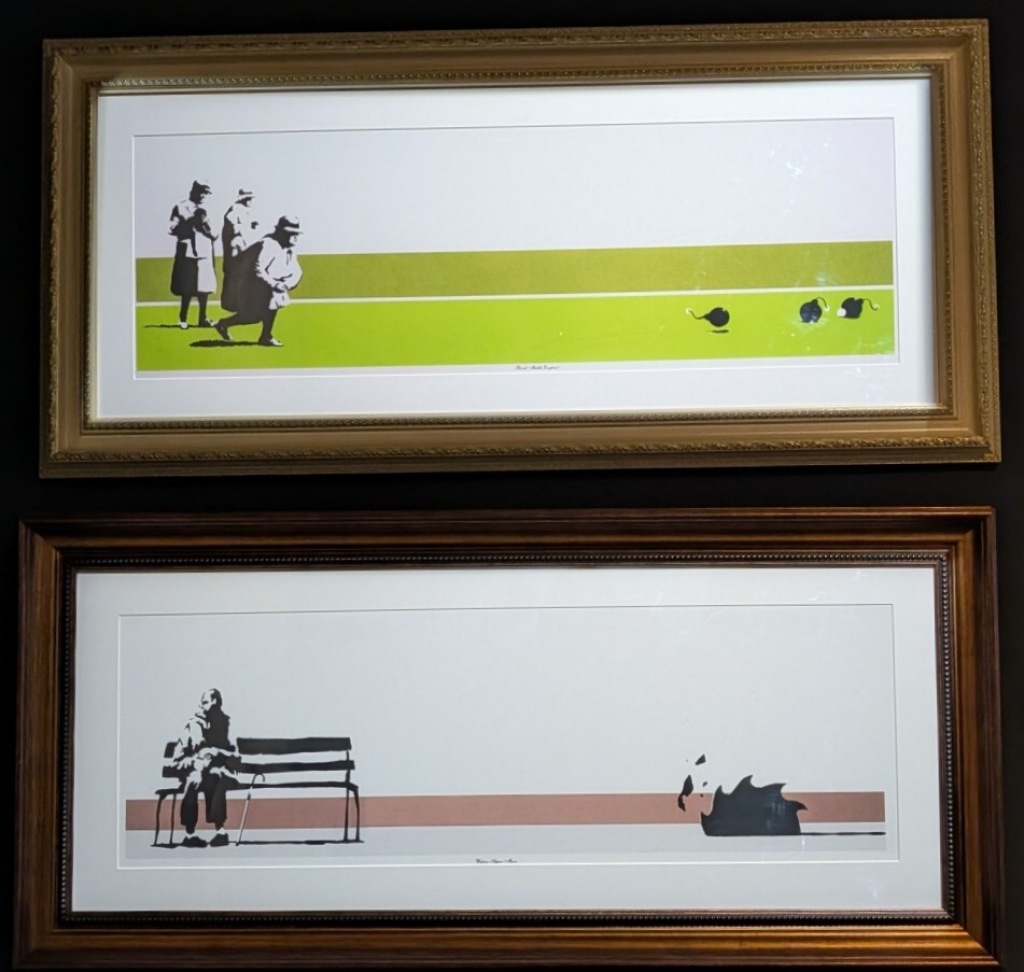
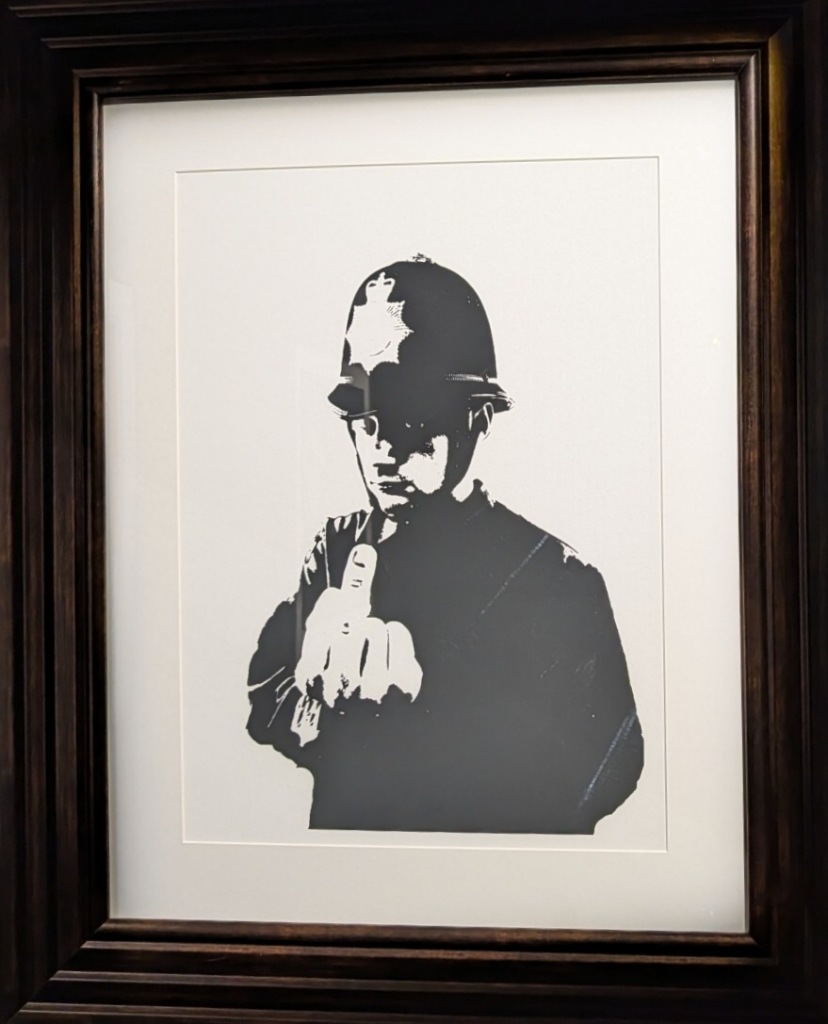
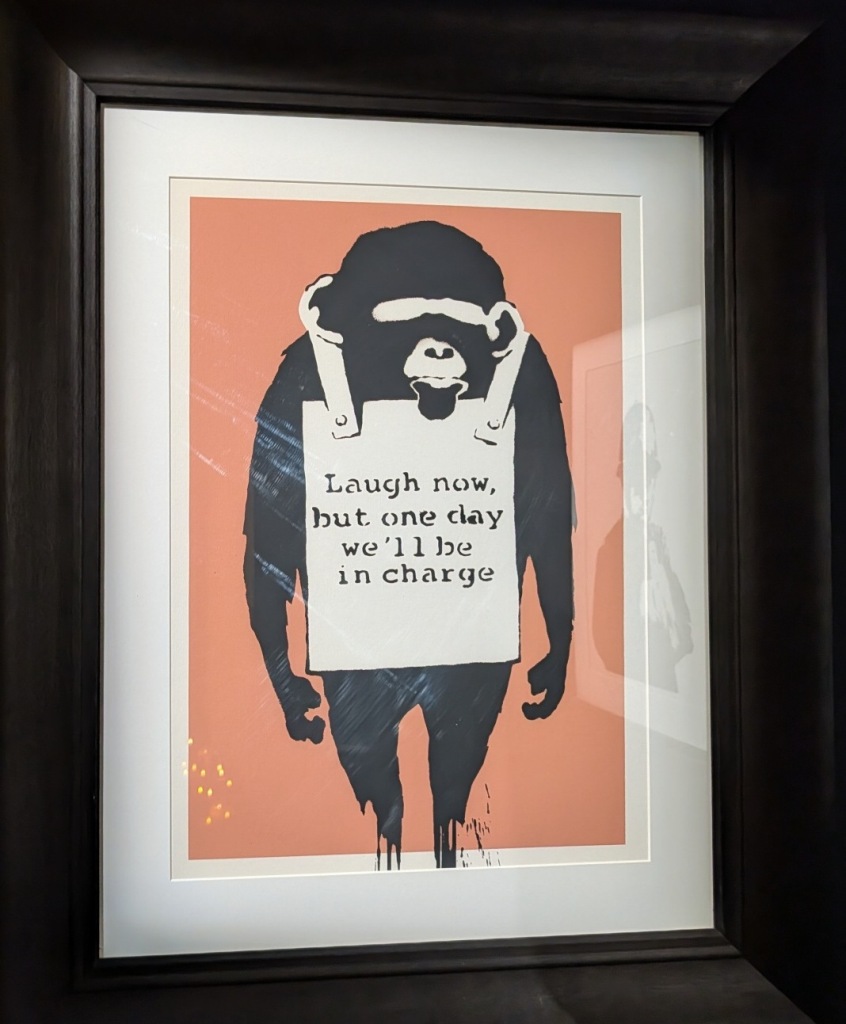
But I hadn't known about the more 'traditional' looking pieces, which weren't stencilled or screen printed, but oil painted (or at least made to look like it).
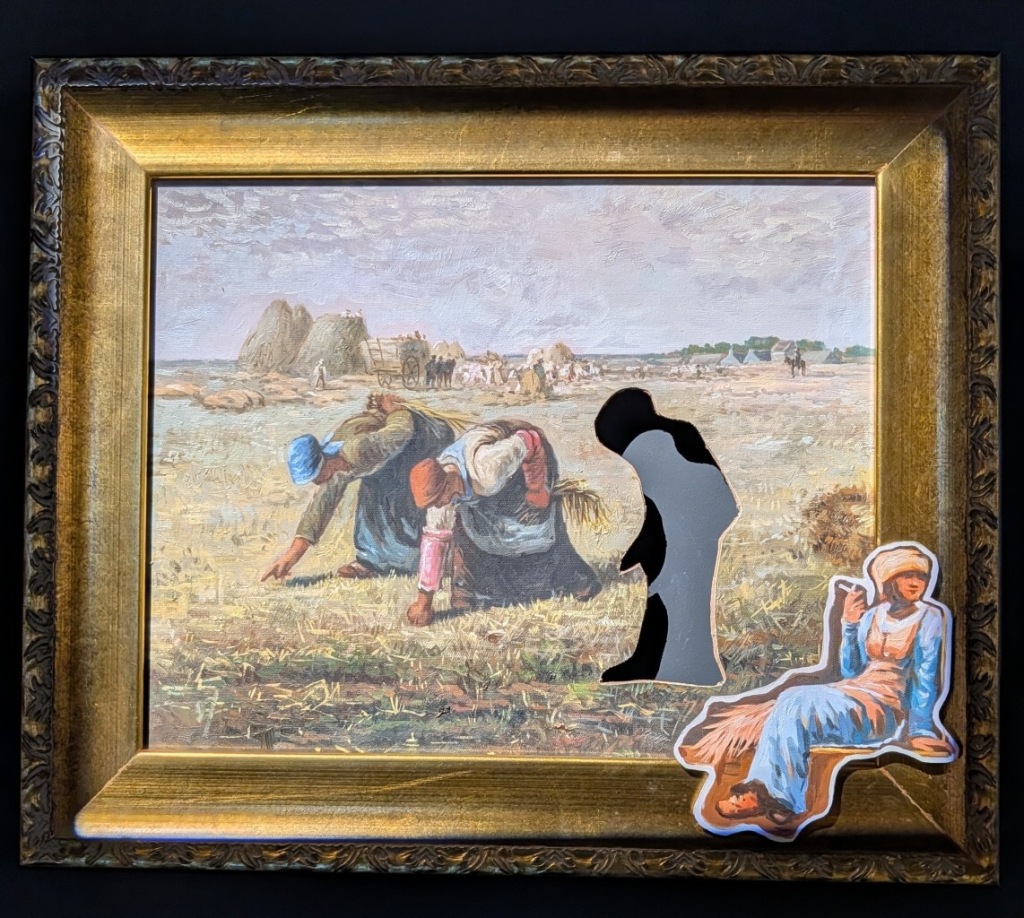
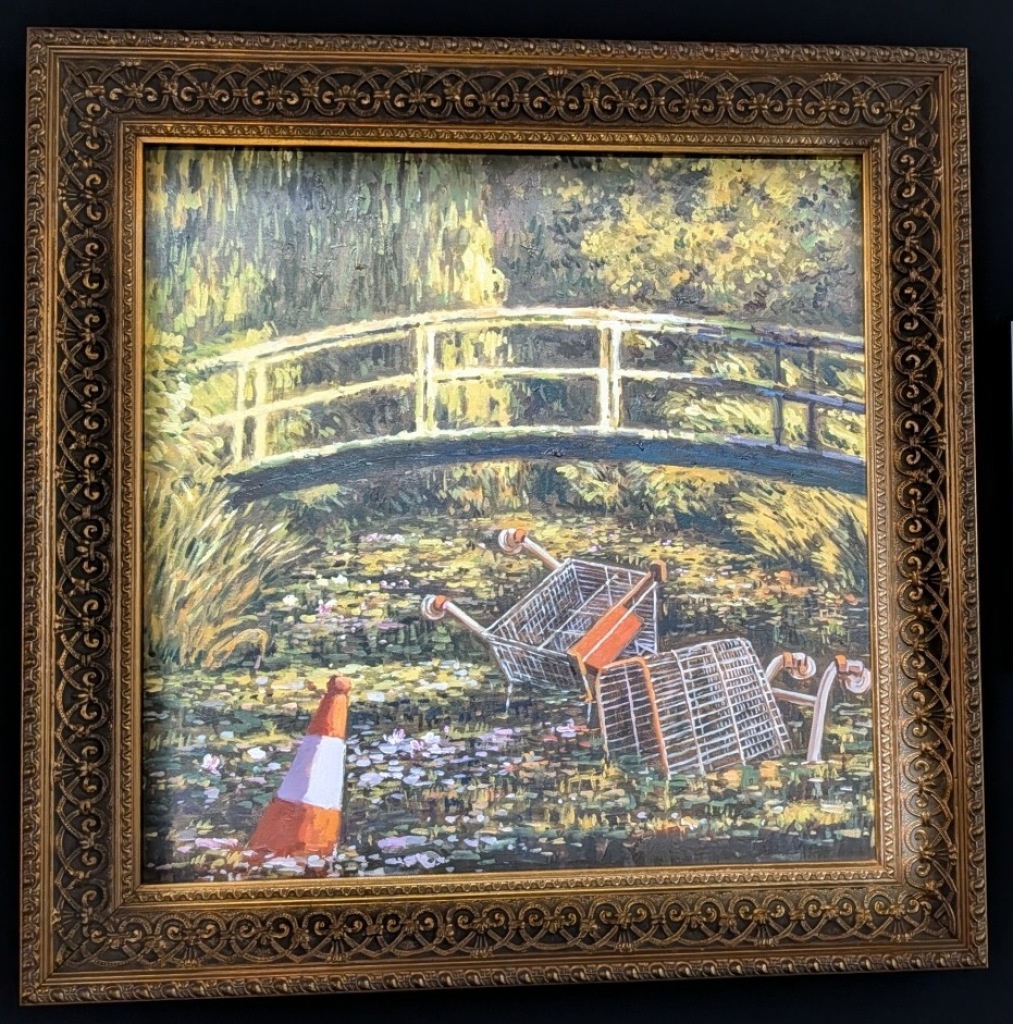
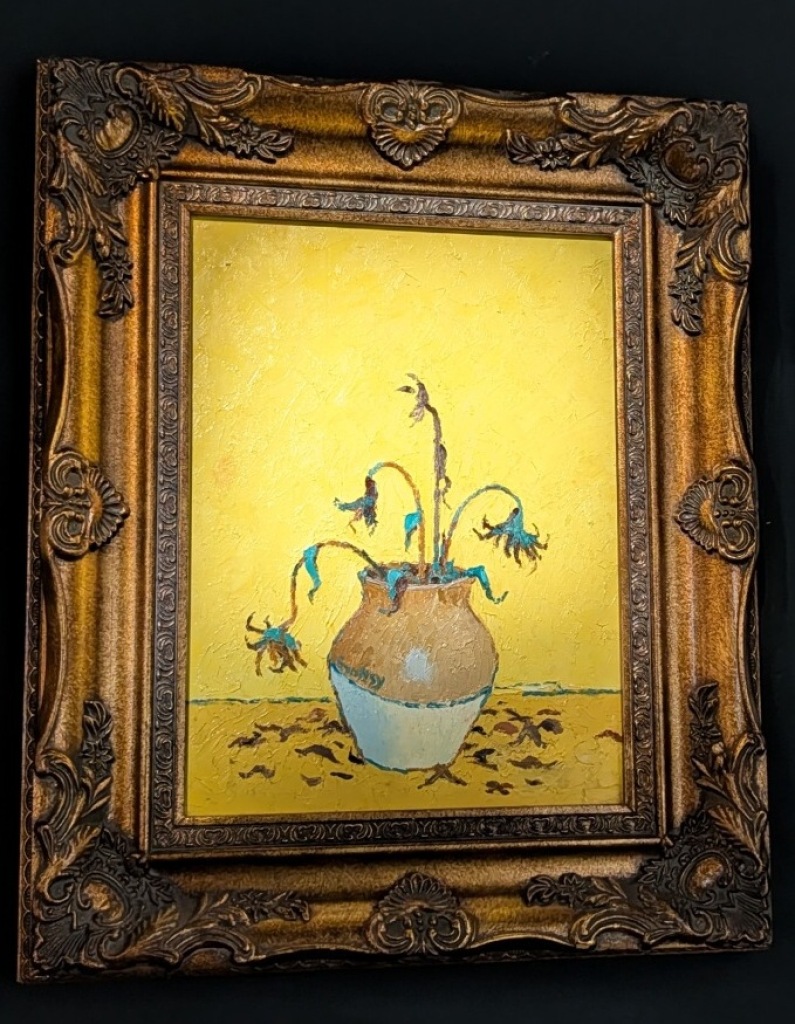
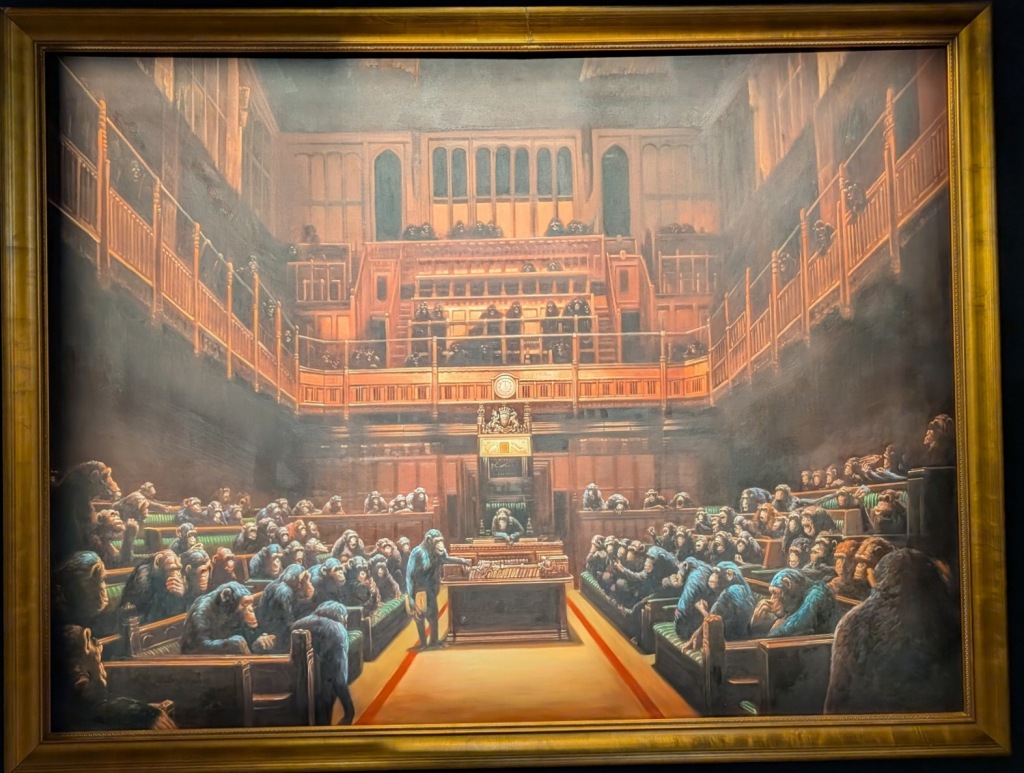
I also didn't know that Banksy used to buy original paintings and modify them. (I had never heard about his "Crude Oils" exhibition.)
The exhibition wasn't clear about what works were modified originals and which ones were 'in the style' of someone else, made by Banksy. (The "Monet" with the shopping carts and the "Van Gogh" with the wilted flowers were obviously the latter, but the image with one of the field workers having a cigarette break or the "Home Sweet Home" idyllic scene were less obvious.)

Ultimately, it didn't matter much, as the works in the exhibition were all reproductions anyway.
All in all, an interesting museum, which turned out to be better than expected. Especially as it wasn't a museum in any meaningful sense.
More like a 'tribute act' for some rock band. Trying to emulate the original and giving fans the feeling of 'being there' at an original show, but ultimately all fake.
Talented fake, though.
The next day, I had a late flight home.
I did what I often do. I looked for a kart track close to the airport.
Going karting before flying home is something I sometimes do.
As airports and kart tracks are perceived as noisy, both are often located in the same area.
And if you go karting somewhere near the airport, you're already near the airport.
For example, the hotel in Móstoles was about 40km away from the airport.
Which normally should be a 45-minute drive.
But there might be a traffic jam or a road closure or some other delay. And I don't want to be late for the plane. Hence, I tend to drive to the airport really early, in order to be on the safe side.
Which means I can either sit at the airport for an additional hour or so.
Or start out even earlier and find something to do near the airport.
Like going karting.
An added advantage is that it provides at least some form of activity, which is convenient when you know that you'll be sitting at the airport for an hour or two, before sitting in the plane for another three hours.
And, conveniently, Madrid indeed has a kart track not far from the airport.
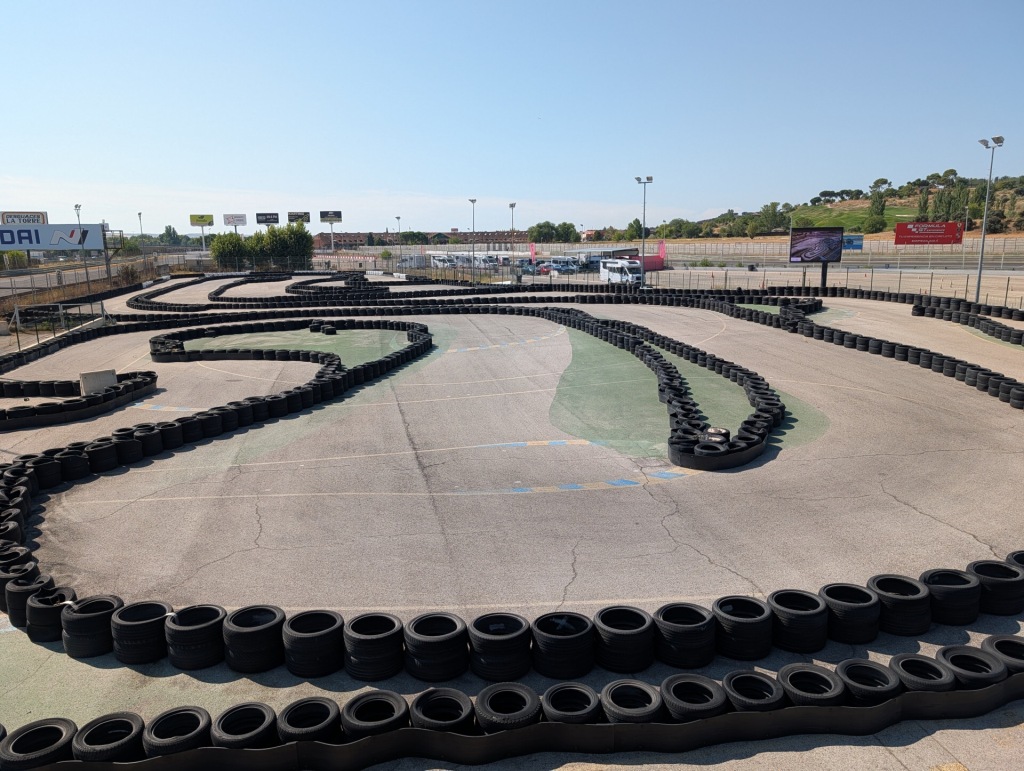
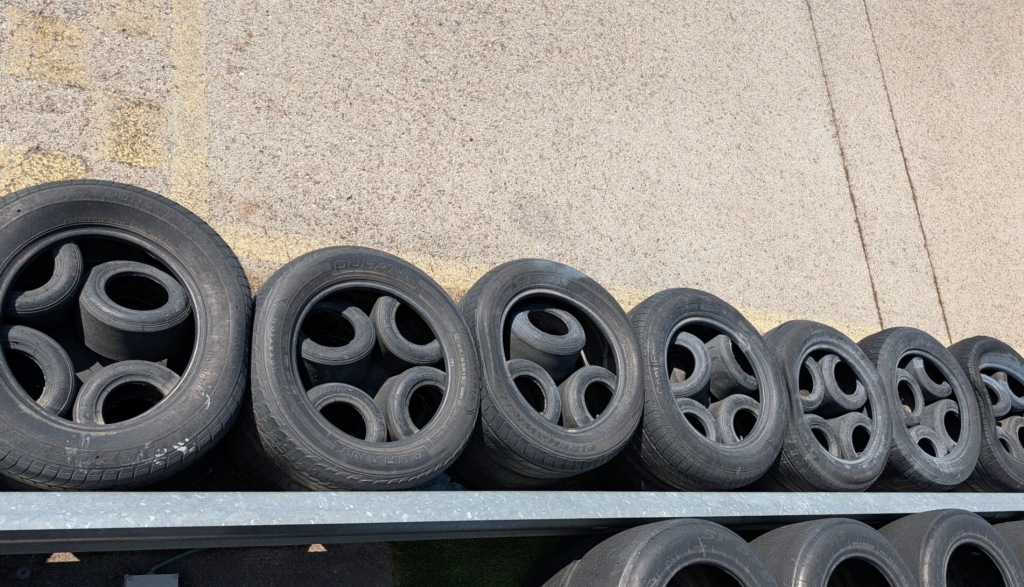
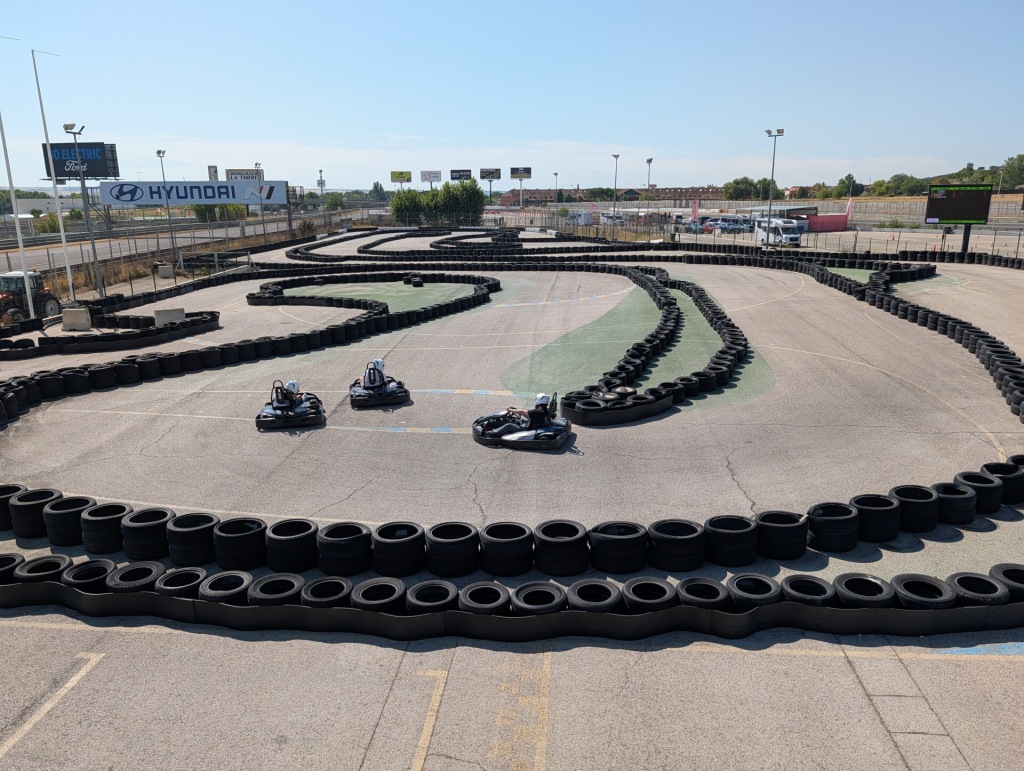
The track had a decent size, and the layout was fun to drive, with a few tight corners and some speedy bits. And the technology was decently modern, with a display board at the end of the pit area. I think it's the first time that I could properly read my position and lap times while driving.
Also, after driving the rental car carefully for more than a thousand kilometers along the regular roads, it was fun to do a bit more reckless driving for a while.
What I hadn't been aware of was that there wasn't only a kart track at the location, but a full-scale racing track as well, the Circuito del Jarama.
It was used in Formula 1 racing (but that's been a while now - more than 40 years ago), but now there doesn't seem to be much going on there. It seems like there are races of the Spanish Touring Car Championship there, some truck races and, more recently, a Formula E race. But mostly it seems to lie deserted. I tried to find out more on the track's web site, but the most recent 'calendar of events' there is six years old and most recent bit on the 'news' page is from 2018. (But they seem to offer 'driving experiences' on the track sometimes.)
In any case, on the day I was there, the track was deserted, so I took the opportunity to look at parts of the track and visit the pitlane and the starting grid.
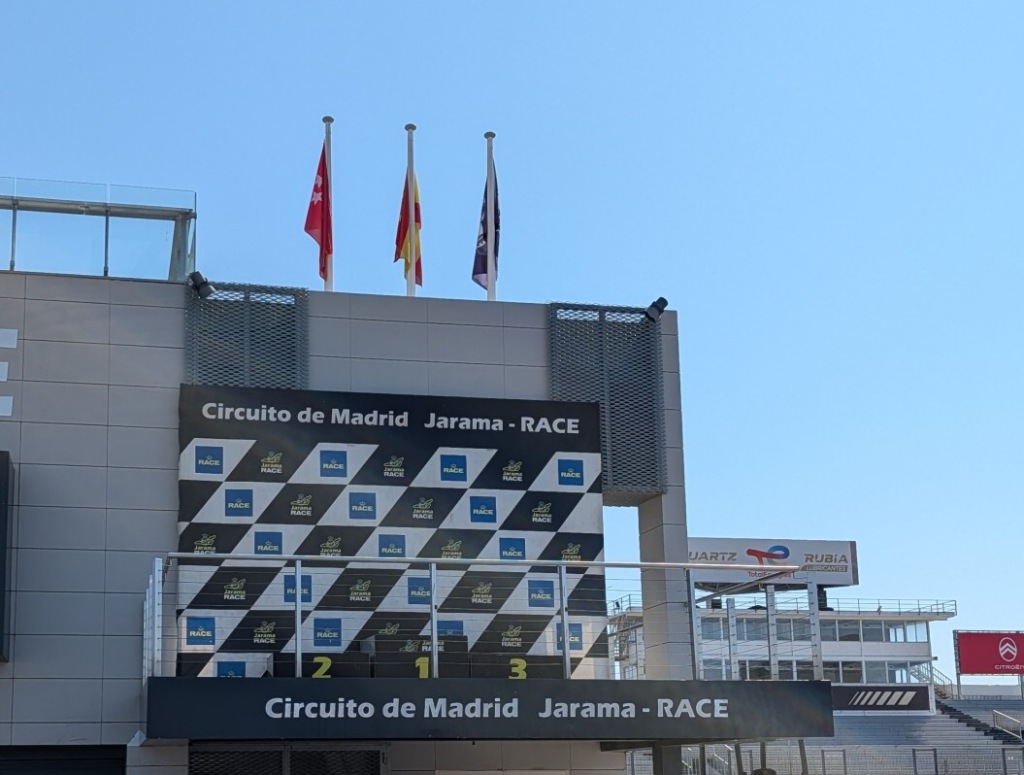
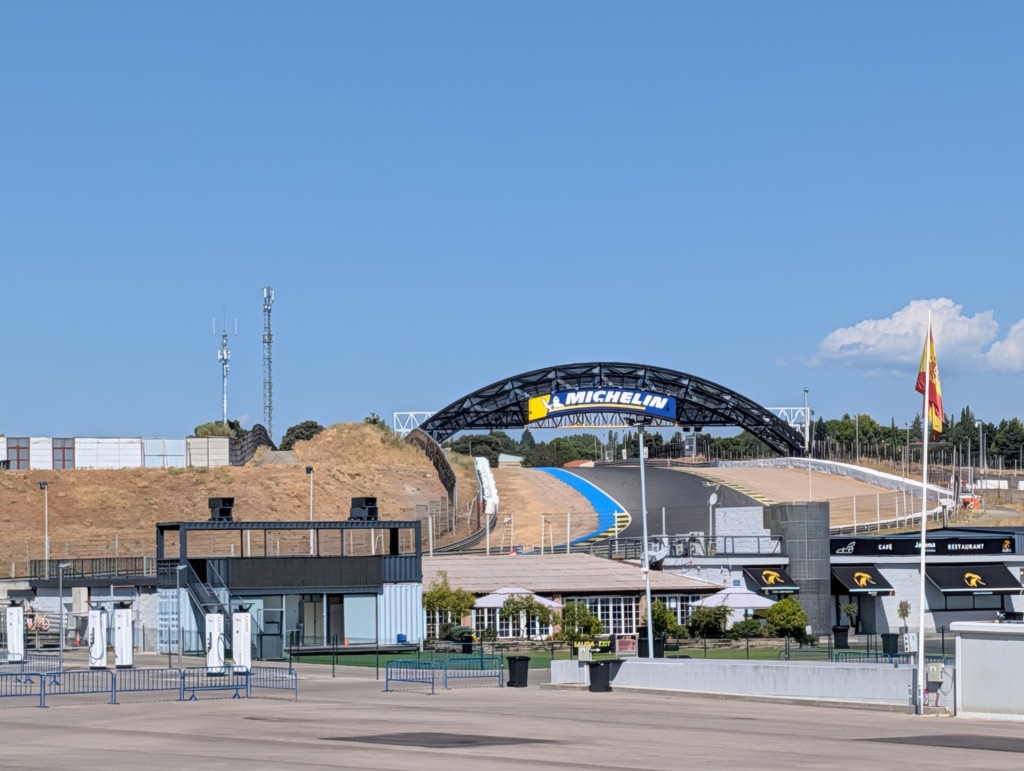
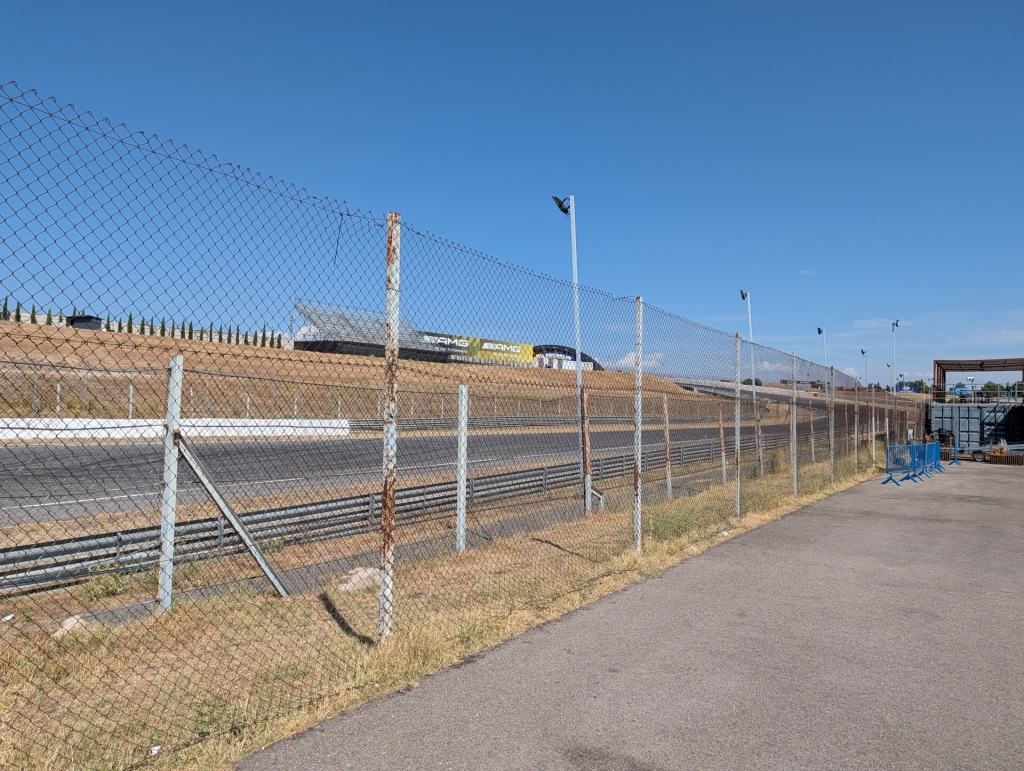
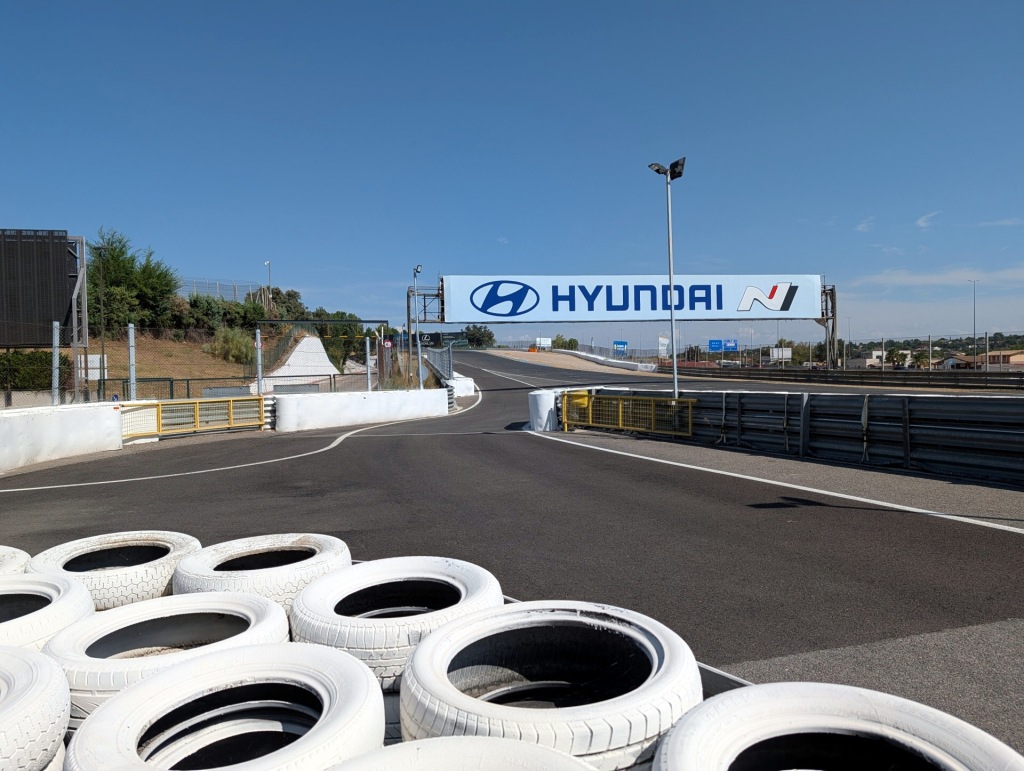
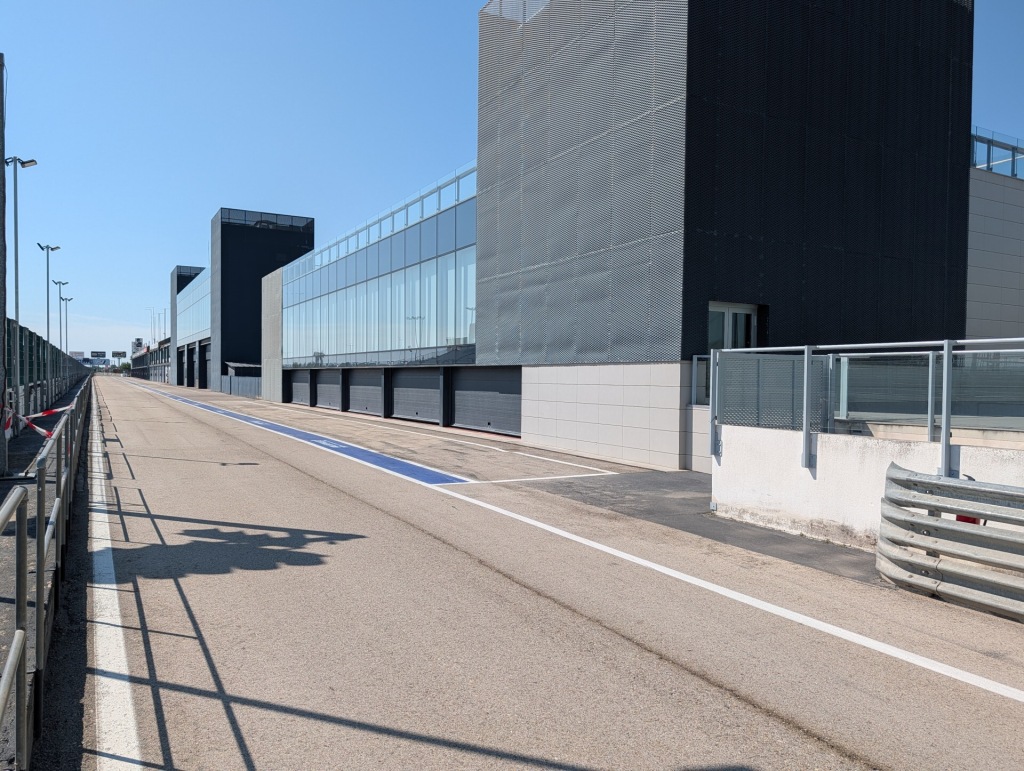
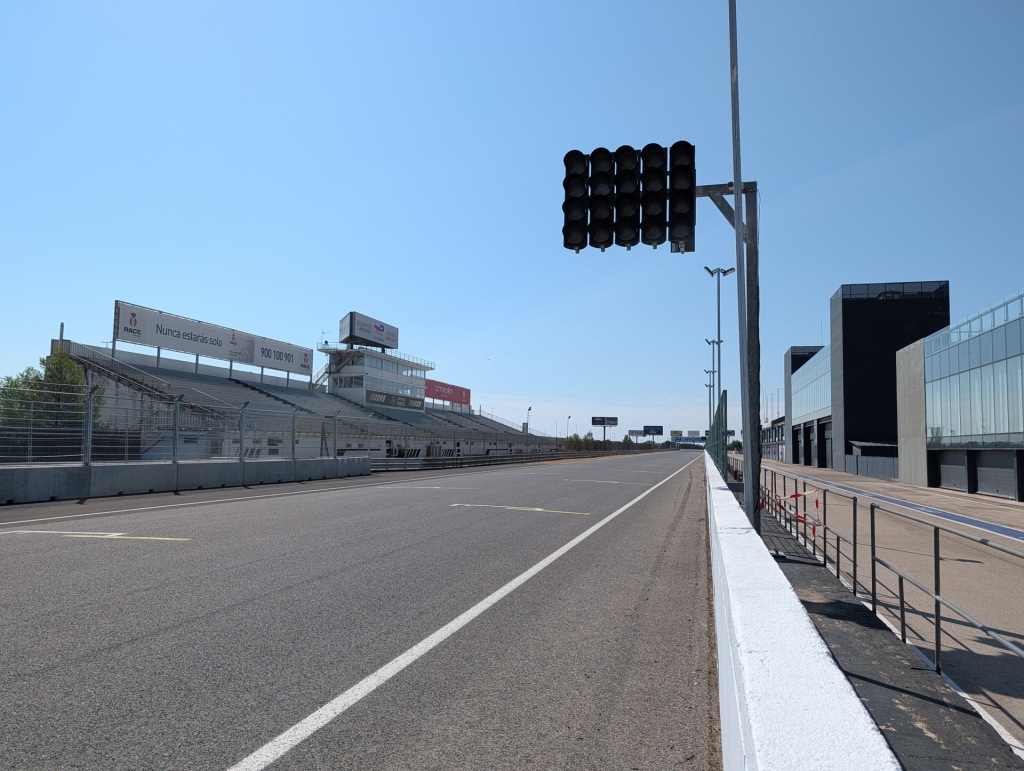
I walked back to the car, looking at some other section of the track along the way and then drove the short bit to the airport and flew home.
And that's almost all about the eclipse trip to Spain.
Except for one final curtain.
Which I noticed on the flight home and found it an engineering solution that was stupid and smart at the same time.
There is usually a little curtain that separates the business-class seats from the economy seats. For safety reasons, the curtain has to be open during take-off and landing and for reasons of privacy and to reduce envy, it is closed for most of the rest of the flight.
So how do you ensure that it stays open during take-off and landing?
You attach a short cloth strip with Velcro on it, so it can be quickly fastened and opened again.
But as everyone knows - Velcro doesn't really work that well.
It provides a stable connection if you use it only a few times. Or if it's closed most of the time, and opened carefully in a clean environment for a moment.
If you keep it open too long or use it too often, all sorts of fluff attaches to the 'hook side', the tiny hooks attach to loose threads and similar things (and some of them break during use anyway), so after a while they stop working.
That is precisely what happens with the fasteners for those airplane divider curtains.
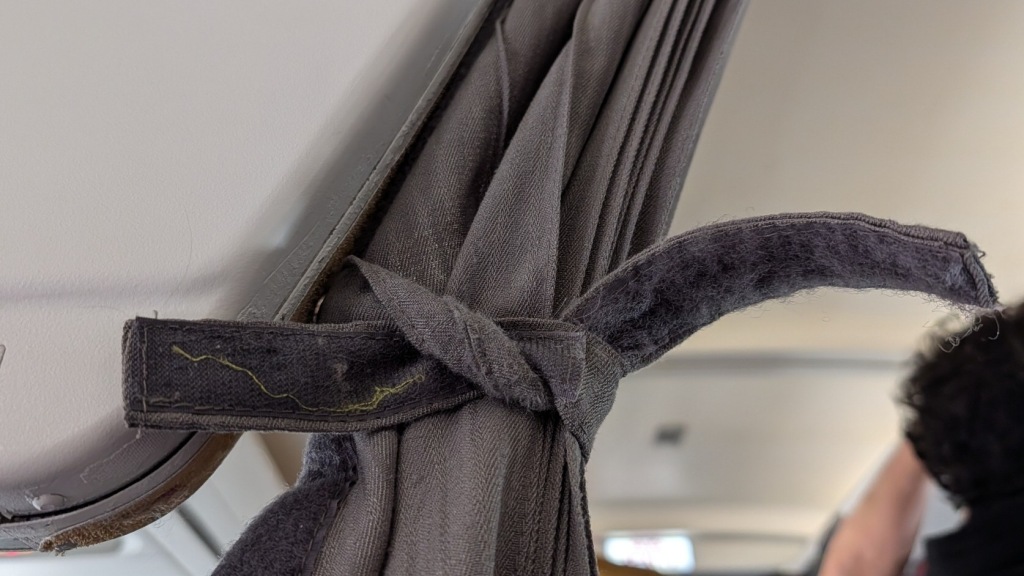
Which means that ultimately, the flight crew ignores the Velcro and ties the two cloth strips together to keep the curtains in place.
And the interesting thing, from an engineering point of view, is that this works.
Because the Velcro strips are much longer than it would be necessary. If you really put one on top of the other, the curtain would hang fairly loose.
Also, if you'd really wanted to fasten the curtain with Velcro strips, you wouldn't use two cloth strips, as it would be fiddly to properly bring them together. (For one thing, you would need both hands to do it.) It would be better to attach one of the Velcro strips to the plastic frame of the curtain holder. Because then you'd only need to grab the cloth strip with the other side of Velcro and press it to the frame. Which you can easily do with one hand. And get the curtain tighter. And probably put more pressure on the Velcro and get a more stable connection.
But at some point it would still fail.
The clever/stupid thing is to have a Velcro fastener at all on that thing, but then have the cloth strips long enough that, once the Velcro inevitably fails, the two ends can be simply tied together.
Which makes the Velcro pointless, of course. You could simply have two strips of cloth and be done with it.
But I found it fascinating that someone came up with a stupid solution, but at the same time made sure that there's an alternative way of doing it. Instead of coming up with a better solution in the first place.
And in case anyone (probably including me when I re-read this at a later date) wonders how I could get so invested into thinking about something so trivial - that's what happens if you're stuck for three hours in an airplane seat with nothing to do and no entertainment system. And end up staring at that curtain in front of you...